
The Gap Between DIY and Industrial-Grade Tested on the A2+ Size UV Printer Embossed Glossy Printing
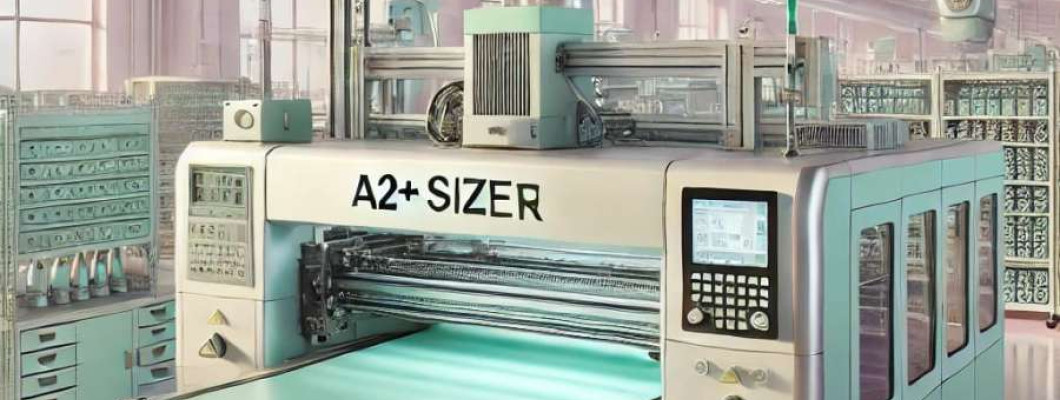
The Industrial Reality of Transitioning to A2+ UV Embossed Glossy Printing
In the realm of industrial printing, the leap from DIY or semi-professional equipment to true industrial-grade solutions is often marked by hidden intricacies and challenges. The adoption of an A2+ size UV printer designed specifically for embossed glossy printing confronts manufacturers and service providers with complex demands—from substrate handling to precise UV curing, and embossing mechanics integrated with high-definition glossy output. This is not merely a scale-up in size or print speed but a fundamental shift in operational parameters that expose limitations in workflow infrastructure, asset capital allocation, and print output verification.
Embossed glossy printing at A2+ size requires stringent mechanical precision to maintain micron-level registration between embossing plates and UV ink layers, which is a challenge often underestimated in DIY or prosumer environments. The mechanical tolerance on embossing layers typically must not exceed ±50 µm to avoid visual artifacts, a threshold difficult to ensure without industrial-grade servo controls and feedback loops integrated into the printer’s hardware.
Furthermore, UV ink chemistry alongside glossy layering introduces complexity in drying times and curing uniformity. Uneven UV exposure or premature curing may induce micro-cracking or incomplete embossing adhesion, causing significant scrap rates and downtime. These effects multiply exponentially when scaled beyond A3 or smaller formats, rendering DIY solutions inefficient or outright unviable for sustained production.
Operationally, the integration of a large A2+ platform demands robust material transport systems capable of handling substrates up to 450 mm x 600 mm with repeatable feeding accuracy within ±0.1 mm per cycle. This precision underpins color registration and embossing alignment, which directly impacts throughput and quality standards required in competitive industrial settings.
Technical Deep-Dive into Key Hardware and Process Components
1. Mechanical Precision and Servo System Architecture
The A2+ UV printer embodies state-of-the-art closed-loop servo motors coupled with high-resolution linear encoders enabling positional accuracy around 10 µm along both X and Y axes. Compared to less precise open-loop stepper configurations often found in prosumer machines, this system assures minimal backlash and repeatability essential for embossed layers.
Hypothetically, assuming a maximum print area of 450 mm by 600 mm, a 10 µm positional error translates to maximum misalignment of 0.0022% of the printing area—negligible in industrial standards but unattainable in most lower-grade devices whose errors can exceed 0.5%.
2. UV Ink Chemistry and Curing Kinetics
The UV inks deployed combine nano-particle pigments with photoinitiators optimized for rapid polymerization under 365-395 nm LED UV sources. Curing kinetics studies show that with controlled power densities of 1000 mW/cm2, full curing occurs within 500 milliseconds per pass, balancing speed and print integrity.
In contrast, traditional mercury lamp curing systems often require longer exposure but risk substrate overheating and energy inefficiency.
3. Embossing Mechanism and Gloss Layer Integration
The embossing unit utilizes pneumatic pressure actuators synchronized via real-time feedback modules, applying up to 300 N force evenly across the plate surface. This ensures embossed depth consistency typically between 30-70 µm, critical for tactile finish and light reflection characteristics defining glossy prints.
4. Substrate Feeding and Registration Accuracy
Substrate transport relies on vacuum suction belts with integrated optical sensors for edge detection. Repeatability tests indicate a mechanical feeding variance within ±0.1 mm after 1000 continuous cycles.
5. Comparative Hardware Performance Table
| Feature | A2+ UV Printer (Industrial-Grade) | DIY UV Printer (Typical Prosumer) |
|---|---|---|
| Positional Accuracy (µm) | 10 | 100-500 |
| Embossing Pressure (N) | Up to 300 | Below 100 |
| UV LED Power Density (mW/cm²) | 1000 | 300-500 |
| Substrate Feeding Repeatability (mm) | ±0.1 | ±0.5 to ±1.0 |
| Print Area (mm) | 450 x 600 | Up to A3 (297 x 420) |
Scenario Analysis on Business Applications
Use-Case 1 Industrial Packaging Prototyping
Packaging manufacturers benefit from the A2+ platform’s ability to render embossed glossy effects on prototype boxes, with tight dimensional control to verify design intent before mass production. Misregistration beyond 0.1 mm risks prototype rejection, emphasizing the critical relevance of the printer’s precision servo system and curing reliability.
Use-Case 2 Luxury Printing for Marketing Collateral
High-end marketing agencies require tactile embossing combined with vibrant gloss finishes on short-run runs of brochures or presentation folders. The printer’s rapid curing kinetics enable quick turnaround times, while uniform embossing depth ensures visual consistency across batches, reducing rework often encountered in smaller machines.
Use-Case 3 Small Scale Industrial Production
Small industrial print shops gain a competitive edge by adopting A2+ UV embossed glossy printing for limited edition packaging or specialty labels. The printer’s robust substrate feeding system allows a variety of coated and uncoated substrates to be processed without manual intervention, increasing throughput and operational efficiency.
Expert FAQ on Technical and Operational Challenges
1. How does the embossed glossy finish affect ink curing parameters?
Gloss layers introduce additional thickness and refractive interfaces that can attenuate UV light penetration. The printer compensates by modulating LED intensity and exposure duration dynamically based on sensor feedback, ensuring complete polymerization.2. What maintenance challenges arise from integrating embossing with UV curing?
Combined mechanical and optical subsystems require periodic calibration of embossing pressure and UV LED output uniformity. Preventative maintenance schedules target actuator seals and LED cooling modules to maintain constant performance.3. Can the system handle flexible substrates with embossed glossy effects?
The feeding system's vacuum belts and pneumatic embossing units are designed to accommodate flexible media up to 0.5 mm thickness, maintaining registration through tension control and compliant embossing mechanisms.4. How is thermal management handled to avoid substrate warping?
Low-heat LED UV sources minimize thermal load, complemented by substrate cooling racks and ambient airflow controls ensuring substrate dimensional stability during processing.5. What are the risks of scaling embossing pressure above 300 N?
Excess force risks substrate deformation and embossing plate damage, requiring heavy-duty mechanical components and feedback control loops that exceed current system specifications and add costs.
Strategic Verdict and Recommendation for Industrial Adoption
The A2+ Size UV Printer Embossed Glossy Printing platform stands as a definitive solution bridging the significant gap between DIY or prosumer technologies and the demands of industrial-grade production environments. Its integration of precision servo-driven mechanical systems, optimized UV LED curing kinetics, and advanced embossing mechanisms qualifies it for enterprise-level deployments where micron-level accuracy and throughput consistency define operational success.
Investment in such a system directly mitigates common bottlenecks related to substrate handling, curing uniformity, and embossed texture reproduction that plague lower-tier equipment. Its robust architecture reduces lifecycle maintenance cycles and scrap rates, positively affecting ROI and long-term asset depreciation.
For organizations seeking a scalable, industrial-grade platform capable of producing embossed glossy prints at A2+ dimensions without compromise, the A2+ Size UV Printer Embossed Glossy Printing represents an authoritative and highly viable choice.