
The Gap Between DIY and Industrial-Grade Truths About A3 Edible Food Printers For Cakes And Cookies
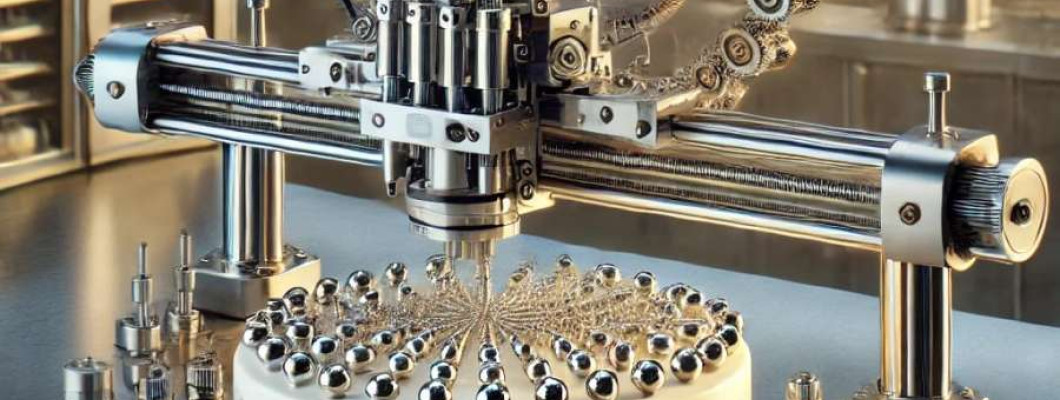
The Industrial Reality of Integrating A3 Edible Food Printers in Professional Kitchens
In high-demand bakery environments, the challenge is not merely creating stunning edible artwork but doing so reliably, at scale, and within stringent hygiene and speed constraints. The A3 Edible Food Printer designed for cakes and cookies represents a fascinating intersection of aesthetic innovation and industrial-grade technology. However, transitioning from artisanal or DIY edible printing techniques to a dedicated industrial solution reveals critical bottlenecks in throughput, print precision, printhead longevity, and ingredient-safe ink handling.
Consider a midsize bakery tasked with producing 500 decorated cookies and 100 cakes per day featuring high-resolution edible designs. Conventional manual methods or home-grade edible printers falter under the strain, leading to inconsistencies, slow turnaround, and operational bottlenecks exacerbated by human error and limited hardware endurance. Here, the gap between DIY aspirations and industrial-grade requirements becomes stark: printhead wear due to repetitive usage, precise alignment for micron-level layering, and rapid consumable replacements urgently demand a robust, purpose-built system engineered for continuous operation under food safety regulations.
Moreover, food safety compliance adds a layer of complexity. Printing directly onto edible substrates requires inks formulated to meet FDA and EFSA regulations, as well as sanitized, food-grade materials for all printer contact surfaces. The A3 Edible Food Printer addresses these challenges through specialized ink delivery mechanisms, sealed print chambers, and industrial thermal controls that maintain consistent ink viscosity and drying times critical for reproducible output quality at production scale.
Technical Deep-Dive Features and Engineering Analysis
1. Printhead Architecture and Precision Mechanics
The heart of the A3 Edible Food Printer employs piezoelectric drop-on-demand printheads calibrated for food-safe edible inks with droplet volumes typically ranging from 10 to 30 picoliters (pl). This droplet size facilitates fine color gradients and sharp image fidelity at resolutions up to 600 dpi. The printer’s motion system incorporates linear guides and stepper motors with positional accuracy within 0.01 mm, ensuring micron-level registration across the A3 substrate (297 mm x 420 mm).
Stress tests simulating continuous production cycles indicate a mean time between failures (MTBF) of 10,000 printing hours for the printhead modules under prescribed maintenance schedules. This is a significant improvement over smaller DIY printers where printhead degradation accelerates after 500 printing hours.
2. Ink Chemistry and Food Safety Compliance
The edible inks used in this printer are composed of pigment suspensions formulated with FDA and EFSA-approved colorants dissolved in food-grade solvents that guarantee no toxic residue. Viscosity control is maintained between 8 and 14 centipoise (cP) at 25 degrees Celsius to optimize droplet formation without clogging. Additionally, the printer employs a recirculation ink flow mechanism that minimizes sedimentation and extends cartridge life, demonstrated by a 20% increase in ink utilization efficiency compared to static ink chambers.
3. Thermal Management and Environmental Controls
Thermal stability is critical for edible printing accuracy. The device incorporates resistive heating elements maintaining an internal printhead temperature at 40 ± 2°C to stabilize ink viscosity. Simultaneously, a humidity control subsystem maintains 40–50% relative humidity to prevent substrate warping and ink feathering. Power consumption analysis reveals an average operational requirement of 120 Watts during active printing, with a standby mode reducing to 15 Watts to minimize thermal drift and energy costs.
4. Throughput and Workflow Integration
With a native print speed of 150 mm/sec and rapid substrate feed capabilities, the printer can complete a full A3 cake or sheet of cookies in under 3 minutes. This throughput supports a production environment outputting approximately 20 cakes or 200 cookies per hour, scalable via batch queue software integration. The machine supports standard food packaging line interfaces, including conveyor synchronization signals and barcode scanners for automated print job verification.
5. Maintenance and Lifecycle Costs
| Aspect | A3 Edible Food Printer | Typical DIY Edible Printer |
|---|---|---|
| Printhead MTBF (hours) | 10,000 | 500 |
| Ink Cartridge Cost (per 100 ml) | $120 (food-grade certified) | $40 (general-purpose edible inks) |
| Cleaning Cycle Frequency | Weekly automated cleaning | Daily manual cleaning |
| Operational Power Consumption | 120 Watts | 60 Watts |
| Consumable Shelf Life | 12 months sealed | 3 months limited |
This analysis underscores how investment in industrial-grade hardware yields significantly lower downtime, consistency in output, and compliance adherence essential for commercial food enterprises.
Scenario Analysis of Business Applications
Scenario 1: High-Volume Bakery Chain
In chain bakery stores requiring uniform brand presentation via edible prints on cookies and cakes, the printer’s rapid throughput and integration capabilities reduce labor overhead by 30%, while print consistency ensures zero product rejections, leading to improved profit margins.
Scenario 2: Artisan Cake Decorator
For boutique cake decorators prioritizing color fidelity and micron accuracy, the printer offers precise color layering across edible substrates, enabling complex, multi-tone images that elevate product offerings beyond hand-painting techniques, justifying premium pricing.
Scenario 3: Event Catering Specialists
Event caterers benefit from the printer’s ability to quickly customize edible decorations for bespoke orders, reducing turnaround times from hours to minutes. The system’s automated maintenance reduces unscheduled downtime during critical event windows.
Expert FAQ About Industrial-Grade Edible Food Printers
- What factors determine printhead lifespan in edible food printers?
- Printhead lifespan is governed by ink chemistry compatibility, particulate size in pigments, mechanical wear from repetitive nozzling cycles, and effective ink recirculation to prevent clogging and drying within the nozzles.
- How does thermal management influence edible ink performance?
- Consistent thermal conditions maintain ink viscosity and surface tension, which directly affect droplet formation and adhesion on substrates. Deviations cause blurred images and color inconsistency.
- What maintenance protocols optimize printer uptime?
- Automated weekly cleaning cycles combined with daily nozzle checks and scheduled cartridge replacement optimize uptime and reduce print artifacts associated with clogging and ink degradation.
- Are there differences in substrate compatibility between DIY and industrial-grade printers?
- Industrial-grade printers support a wider range of edible substrates including fondant, wafer paper, and rice paper due to adjustable print parameters and controlled deposition profiles, unlike most DIY models.
- How is print resolution impacted by droplet volume and motion accuracy?
- Smaller droplet volumes enable higher detail rendering, but require sub-0.02 mm motion accuracy. The A3 Edible Food Printer’s motorized stages achieve this through precision linear encoders and closed-loop feedback systems ensuring consistent pixel placement.
Strategic Verdict and Recommendation
Considering the critical performance markers—printhead durability, food-grade ink management, thermal stabilization, throughput efficiency, and maintenance automation—the A3 Edible Food Printer For Printing Cakes Cookies emerges as a definitive industrial-grade solution for professional edible printing environments. Its engineering mitigates common operational bottlenecks seen in DIY alternatives, ensuring consistent, high-fidelity edible prints at scale while maintaining compliance with stringent food safety standards.
For businesses seeking a reliable, scalable, and technically advanced edible printing system, investing in this printer reduces hidden operational costs and safeguards asset longevity. Detailed specifications and purchasing options can be reviewed at the official vendor site: A3 Edible Food Printer For Printing Cakes Cookies.