
The Hard ROI and Asset Depreciation Realities of Roll Laminator Single Side Laminating Machines for Scalable Business Owners
The Industrial Reality of Roll Laminator Investment in High-Volume Production
Consider a mid-size print finishing business aiming to scale its throughput with precise single-side lamination. The challenge begins with capital allocation. Roll laminators marketed as industrial-grade often face an unspoken gap between initial purchase price and the real return on investment (ROI) after factoring in operational wear, maintenance downtime, and depreciation. Unlike smaller or DIY laminators, industrial-grade machines must operate continuously under heavy load with consistent quality to justify their expense.
In this environment, downtime translates directly to lost output and delayed client delivery windows, which can erode both revenue and reputation. Asset depreciation occurs not only in a linear calendar timeline but accelerates with frequent mechanical stress, consumable wear, and environmental factors such as dust and humidity that degrade hardware integrity. Scalable business owners thus confront a dual reality: the high baseline cost of advanced roll laminators and the compounding operational bottlenecks if machine reliability falters.
Furthermore, throughput demands necessitate cycle speeds that push mechanical components to their operational limits, increasing the frequency of component replacement and calibration cycles. Understanding how these elements factor into true asset value is critical for sustainable scaling.
Technical Deep-Dive Into Roll Laminator Mechanics and Depreciation Factors
1. Mechanical Assembly and Wear Patterns
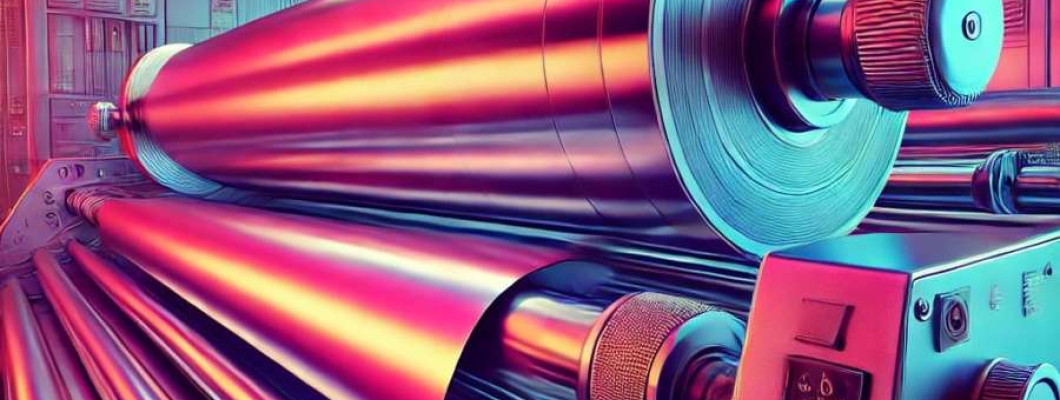
Roll laminators for single-side lamination utilize cylindrical rollers, pressure bars, and heating elements that together maintain lamination film adhesion and substrate integrity. The roller diameter typically ranges between 100 mm and 200 mm, affecting the nip pressure and heat distribution. Hypothetically, if roller diameter is 150 mm with a rotational speed of 60 rotations per minute, the linear lamination speed equals:
Speed = Circumference x RPM = π x 150 mm x 60 = 28,274 mm/min or 28.27 m/min
This speed places continual mechanical stress on bearings and roller surfaces. Over 8-hour shifts, this equates to approximately 13.6 km of lamination per day, escalating wear on key components.
2. Heat Element Longevity and Thermal Management
The heating element often reaches temperatures between 80°C and 120°C to activate adhesive surfaces of lamination films. Excessive thermal cycling causes metal fatigue, especially in heating plates made of aluminum or stainless steel alloys. Thermal management systems incorporating heat sinks or forced air cooling can extend element life by up to 30%, reducing unscheduled maintenance.
3. Control System Integration and Precision Impact
Industrial roll laminators feature embedded control units that dynamically adjust temperature, speed, and pressure parameters. Closed-loop control with feedback from temperature sensors (typically thermocouples with ±1°C accuracy) ensures consistent output. The control system’s mean time between failures (MTBF) correlates strongly with uptime longevity, with enterprise-grade PLCs achieving MTBF in the tens of thousands of hours.
4. Consumable Costs and Film Compatibility
Cost analysis must include film consumption. Typical roll films weigh between 5 kg and 30 kg with varying microns thickness from 25 to 250 µm. Thicker films increase lamination durability but reduce throughput speed due to required slower lamination to ensure adhesion. Consumable cost per linear meter can range from $0.10 to $0.50 depending on film quality and supplier, directly influencing operational expenditure.
5. Depreciation Models and Residual Asset Value
Using straight-line depreciation over a 5-year expected service life, a $25,000 laminator will depreciate at $5,000 annually. However, accelerated depreciation from mechanical wear or obsolescence due to newer control technologies can reduce this to a 3-year effective lifespan, raising annual depreciation to $8,333. Residual value is impacted by maintainability and modularity of components, with modular systems retaining up to 40% higher resale values.
| Parameter | Basic Industrial Laminator | Advanced Modular Industrial Laminator |
|---|---|---|
| Roller Diameter (mm) | 120 | 150 |
| Max Lamination Speed (m/min) | 20 | 28 |
| Heating Element Life (hours) | 1,000 | 1,500 |
| Control System MTBF (hours) | 10,000 | 30,000 |
| Annual Depreciation ($) | 8,333 | 5,000 |
| Residual Value After 5 Years (%) | 15% | 25% |
Scenario Analysis on Roll Laminator Impact in Scalable Businesses
Scenario 1 High-Volume Packaging Print Shop
Here, throughput surpasses 25 m/min daily with 16-hour shifts. The investment in advanced roll laminators with modular components reduces downtime by 20%, increasing effective output by thousands of linear meters monthly and justifying higher upfront costs.
Scenario 2 Mid-Tier Marketing Material Producer
Moderate throughput and variable film thicknesses require fast changeovers and precision temperature control. High accuracy closed-loop control systems reduce waste by 10%, resulting in lower OPEX and improved margins for bespoke print runs.
Scenario 3 Emerging Small Business With Growth Aspirations
Limited capital demands careful CAPEX management. The choice of a durable yet basic roll laminator delays replacement cycles. However, slower lamination speeds impact tight delivery schedules, indicating potential bottlenecks without planned future upgrades.
Expert FAQ on Roll Laminator Asset Efficiency and Depreciation
Q1: How does roller diameter affect roller longevity under continuous use?
A1: Larger diameters reduce rotational speeds for equivalent linear velocity, decreasing bearing load cycles and extending roller life by approximately 25%.
Q2: What is the impact of ambient humidity on lamination quality and machine wear?
A2: High humidity accelerates film absorption of moisture causing adhesion issues and promotes corrosion in unsealed mechanical parts, increasing maintenance frequency.
Q3: Can predictive maintenance software significantly extend service intervals?
A3: Yes, by monitoring vibration and temperature anomalies, scheduling proactive part replacement can improve uptime by 15–20%.
Q4: What are typical thermal element failure modes in roll laminators?
A4: Hot spots causing micro-cracking in heating plates and connector oxidation resulting in inconsistent temperature output are dominant failure modes.
Q5: Is there a trade-off between lamination speed and film thickness regarding asset depreciation?
A5: Operating at maximum speed with thicker films increases heat and pressure stress, accelerating component wear and thus increasing depreciation rates.
Strategic Verdict and Definitive Recommendation for Scalable Business Owners
After analyzing the mechanical, thermal, and operational parameters influencing asset longevity, throughput capabilities, and depreciation profiles, it is evident that selecting an industrial roll laminator with a focus on modular design, superior thermal management, and advanced control systems ensures optimal return on investment. While the upfront cost for machines such as the Roll Laminator Single Side Laminating Machine may be higher than simpler alternatives, the extended uptime, reduced unplanned maintenance, and enhanced scaling throughput capabilities decisively justify the expenditure for scalable business environments.
Industrial enterprises aiming to maintain competitive delivery schedules and quality standards will benefit from this technology’s robust build and optimized operational parameters, securing asset value over multiple fiscal cycles. The machine's specifications and component architecture align well with rigorous industrial demands, making it the definitive solution to meet high-volume single-side lamination needs while managing ownership costs effectively.