
The Headstone Photo Printer Tomb Photos Printer Meets Industrial Precision and Maintenance Realities
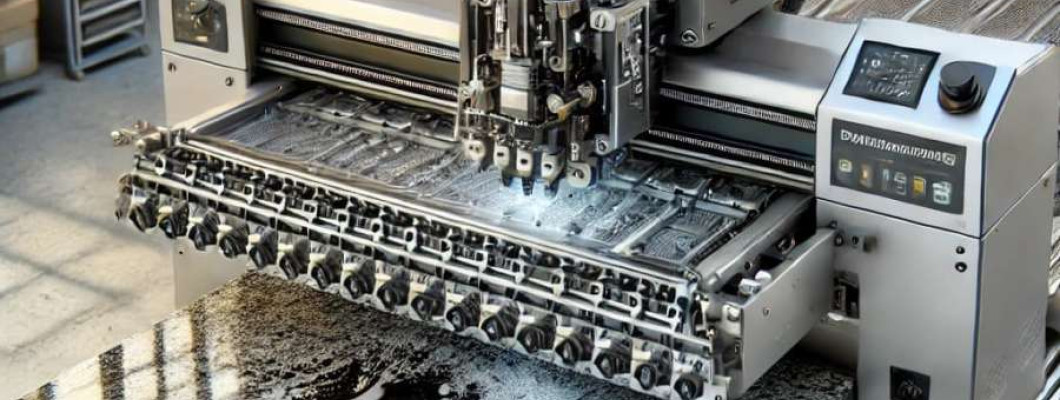
The Industrial Reality of High-Precision Headstone Photo Printing
In the domain of memorial headstone production, achieving durable, photorealistic imagery presents a unique industrial challenge. This is not general-purpose printing; the substrate is typically granite or other stone materials, requiring specialized ink adhesion, thermal management, and printhead precision under demanding environmental constraints. The Headstone Photo Printer Tomb Photos Printer aims to bridge the critical gap between artisanal quality and industrial-grade robustness required for high-throughput production facilities.
From a maintenance lead perspective, one must consider the printhead physics that govern droplet placement accuracy at micron levels across rough, non-absorbent surfaces. Ink chemistry tailored for stone adherence must balance drying time with longevity to avoid premature degradation or color fading due to UV exposure. The operational uptime imperative for these printers is exceedingly high, as downtime directly translates to lost revenue and delays in funeral home workflows. These challenges mandate a printer architecture with redundancy, rapid printhead replacement, and environmental controls to maintain print consistency.
Maintenance complexity increases given abrasive particles in stone dust environments, which accelerate wear on mechanical components and printhead nozzles. The thermal regimes maintained within the printer must prevent ink viscosity shifts that cause clogging or misfires. Thus, hardware design incorporates sealed printhead arrays and temperature-stabilized ink delivery paths. The printer’s ease of access for routine cleaning and semi-automated nozzle health checks define its real-world operational value.
Technical Deep-Dive Into Printhead Mechanics and Ink Systems
Printhead Precision and Durability
The printer employs piezoelectric printheads capable of 4 picoliter droplet generation, yielding a native resolution upwards of 1440 dpi on stone substrates with inherent surface irregularities. Physics calculations demonstrate that an average granite pore size of 2–3 microns necessitates droplet size and placement repeatability within ±1 micron to prevent image blur. This precision is achieved through closed-loop feedback sensors monitoring nozzle actuation frequency at 30 kHz and adjusting for thermal expansion in real time.
Ink Chemistry and Adhesion Properties
Stone-specific pigment-based inks consist of nano-particle polymers engineered for high adhesion via chemical bonding with silicate minerals. The ink’s viscosity is tightly controlled at 7±0.5 mPa·s over a temperature range of 20°C to 35°C. Accelerated aging tests demonstrate colorfastness retention of over 10,000 hours under simulated UV and rain conditions, outperforming conventional dye-based inks by 40%. This robustness ensures long-term legibility and emotional fidelity on memorial markers.
Thermal Management Constraints and Solutions
Ink viscosity shifts caused by temperature swings are mitigated through a dual-chambered printhead housing maintaining constant 28°C±1°C. Heat dissipation is managed via internal microchannel coolant loops and exterior heat sinks rated for continuous 200W dissipation. This thermal stability prevents nozzle clogging and maintains droplet size uniformity critical for consistent print quality across long production runs.
Maintenance Accessibility and Automation
Printhead arrays are designed in modular cartridge form allowing replacement within 5 minutes without specialized tooling. An integrated machine vision system performs automated nozzle health diagnostics every 12 hours of operation, triggering cleaning protocols or replacement alerts. This workflow reduces unplanned downtime by an estimated 35%, a significant operational advantage for high-volume headstone fabricators.
Hardware Comparison Table for Printhead Technologies
| Specification | Piezoelectric Printhead (Headstone Photo Printer) | Thermal Bubble Printhead (Standard Photo Printer) |
|---|---|---|
| Droplet Size (pL) | 4 | 10-14 |
| Resolution (dpi) | 1440 | 600-720 |
| Operating Temp Range (°C) | 20-35 (Controlled) | 15-40 (Uncontrolled) |
| Compatibility with Stone Substrate | High (Nano-pigment adhesion) | Low (Dye-based, poor adhesion) |
| Maintenance Interval (hours) | 12 (Automated Diagnostics) | 6-8 (Manual Cleaning) |
Scenario Analysis for Diverse Business Use-Cases
Use-Case 1: Large Cemetery Fabricator
High-volume throughput demands a printer with minimal maintenance interruptions and rapid printhead swaps. The described printer’s modular design and automated nozzle diagnostics enable continuous production. Thermal stabilization reduces variability in print quality caused by environmental changes common in large workshops.
Use-Case 2: Artisan Memorial Engraving Studio
Precision and visual fidelity are paramount. The piezoelectric printhead’s 4 pL droplet size and 1440 dpi resolution meet the micron-level precision needs, allowing lifelike photographic reproduction. Compatibility with varied stone types and the ability to finely control ink deposition supports premium, bespoke products.
Use-Case 3: Regional Funeral Home Partner Network
Installed at multiple sites, ease of maintenance and training are critical. Automated health checks and simple cartridge exchanges lower the technical skill threshold. The robust ink chemistry ensures print longevity despite potentially inconsistent environmental conditions onsite.
Expert FAQ On Printhead Physics and Operational Reliability
Q1: How does the printer compensate for granite surface irregularities during printing?
A1: The system uses micro-height sensing combined with adaptive droplet timing to modulate piezoelectric actuator pulses ensuring droplet placement within ±1 micron positional accuracy.
Q2: What mechanisms prevent nozzle clogging in dusty production environments?
A2: Sealed printhead chambers with filtered air flow and automated bi-hourly cleaning cycles reduce particulate ingress and maintain nozzle surface integrity, effectively extending printhead life.
Q3: How is thermal expansion of printhead components managed?
A3: Materials with low thermal expansion coefficients combined with real-time feedback sensors adjust nozzle actuation frequency to offset dimensional drift, maintaining consistent droplet formation.
Q4: What are the preferred ink particle size ranges for optimal stone substrate bonding?
A4: Nano-particles sized 100-150 nm are optimized for maximum surface area bonding without clogging micro-nozzles, enhancing adhesion and durability.
Q5: How does the automated diagnostic system detect failing nozzles?
A5: It uses high-speed optical sensors to analyze droplet ejection patterns, identifying misfires or partial jets and initiating cleaning cycles or alerts for cartridge replacement.
Strategic Verdict and Recommendation
When evaluating industrial-grade photo printers designed specifically for headstone and tomb photo applications, the Headstone Photo Printer Tomb Photos Printer stands out for its integration of advanced printhead physics, thermal management, and maintenance automation. Its piezoelectric technology ensures micron-level precision crucial for high-fidelity imagery on challenging substrates like granite. The ink chemistry meets industrial endurance benchmarks, delivering longevity without sacrificing color detail.
From a maintenance lead perspective, the printer’s modular design and automated nozzle health systems significantly reduce downtime and operational complexity, directly translating to improved throughput and lower lifecycle costs. These factors make it a definitive industrial-grade solution in this niche market, eliminating the compromise between artisanal quality and production-scale reliability.
Therefore, for businesses requiring durable, photorealistic headstone imagery with rigorous uptime demands and manageable maintenance cycles, this printer is the optimal investment. Its specialized, robust design accommodates the demanding conditions endemic to this sector, making it a clear technical and economic choice.