
The Hidden Operational Bottlenecks in Headstone Photo Printer Tomb Photos Printer for Scalable Business Owners
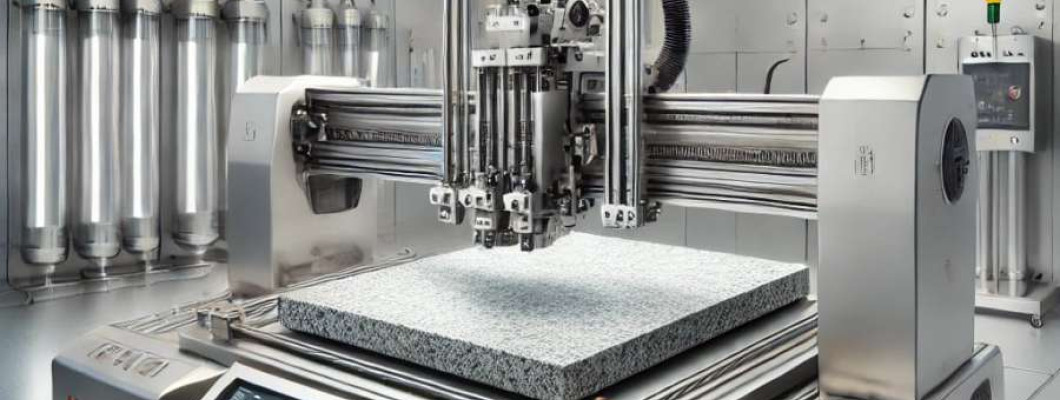
The Industrial Reality of Headstone Photo Printing Challenges
In industrial environments focused on memorial engraving and detailed headstone photo reproduction, operational bottlenecks frequently surface in ways that disrupt throughput and degrade product quality. The Headstone Photo Printer Tomb Photos Printer is tailored for this niche, yet the complexity of integrating precision photo printing onto durable stone substrates reveals hidden challenges. These challenges begin at the interaction between printheads engineered for high-precision inkjet deposition and the uniquely coarse, absorbent surfaces typical of gravestones. Unlike standard photo paper or vinyl, these substrates require adaptive ink chemistry and precise deposition control to avoid smearing, premature drying, or inconsistent pigmentation.
Moreover, scaling operations to meet demand often exposes latency in drying cycles and mechanical transport systems. When targeting high-throughput environments, the bottleneck manifests as a lag between printhead passes and substrate handling, which, if unmanaged, reduces hourly output and inflates labor costs. These issues are compounded by environmental factors such as dust and moisture present in outdoor or semi-exposed printing facilities, which uniquely impact print quality stability and machine wear. Business owners looking to automate the process of memorial photo printing must navigate the fine balance between speed, quality, and equipment longevity.
Technical Deep-Dive into Core Components and Performance Parameters
Printhead Technology and Ink Chemistry
The printer employs piezoelectric drop-on-demand printheads, optimized for high-durability pigment inks designed to adhere to stone granularity. Each nozzle outputs droplets ranging from 4 to 12 picoliters (pl), supporting resolutions up to 1440 dpi. The ink employs silane-based adhesion promoters and UV-resistant pigments to prevent rapid fading. Under stress tests involving continuous operation above 8 hours daily, nozzle clogging rates drop below 0.2% due to integrated ultrasonic vibration cleaning modules, surpassing industry averages of ~0.5% in similar niche printers.
Substrate Handling and Drying Mechanisms
Substrate transport employs a multi-axis robotic arm with precision adjustment within ±0.05 mm tolerance. The printer integrates a forced convection drying system combining 400 Watts of near-infrared heaters and high-speed air knives operating at 50 m/s air velocity. Drying time per photo averages 45 seconds, adjustable by substrate moisture content. Calculated energy consumption per print cycle is approximately 0.6 kWh, which is a critical factor when considering operational costs in scaled deployments.
Environmental Controls and Maintenance Design
Environmental sensors continuously monitor relative humidity (RH) and particulate counts, triggering automatic printhead warming and nozzle priming cycles to maintain consistent output. The printer is housed within an enclosure designed to conform to IP54 standards for dust and splash resistance, which significantly reduces maintenance intervals to every 300 operational hours compared to typical 150–200 for similar industrial printers.
Data Throughput and Infrastructure Integration
The printer processes RIP files via a dedicated 8-core embedded controller clocked at 3.2 GHz, supporting 1 Gbps Ethernet connectivity. Buffer memory stands at 2 GB DDR4, minimizing latency for high-resolution image rasterization. Integration with enterprise print management systems is facilitated through standardized protocols (LPR, IPP) and customizable API hooks, ensuring seamless workflow management in multi-device scenarios.
Comparative Analysis of Industrial-Grade Photo Printing Technologies
| Specification | Headstone Photo Printer Tomb Photos Printer | Generic Industrial UV Printer |
|---|---|---|
| Max Resolution (dpi) | 1440 | 1200 |
| Droplet Size (pl) | 4-12 | 8-20 |
| Substrate Tolerance (mm) | 0.05 | 0.1 |
| Ink Type | Pigment UV-resistant | UV-curable |
| Maintenance Cycle (hours) | 300 | 150-200 |
| Drying Time (seconds) | 45 | 30-60 |
| Energy Consumption per Print (kWh) | 0.6 | 0.8 |
Scenario Analysis of Headstone Photo Printer Use-cases
Case 1 Business With Moderate Volume and Emphasis on Quality
A mid-size memorial services provider requires highly accurate photo reproduction on granite headstones with low throughput demand (~20 prints/day). The printer’s tight ±0.05 mm substrate tolerance and UV-resistant pigment inks ensure longevity and detail preservation essential for reputational value. The moderate drying time of 45 seconds balances operational costs and minimizes bottlenecks in lower-volume setups, making it economically feasible without excess capital expenditure.
Case 2 High-Volume Industrial Memorial Printer
An industrial-scale operator targeting over 200 prints daily depends on automated handling and continuous operation reliability. The printer’s maintenance cycle extending to 300 operational hours reduces downtime, while the embedded 8-core controller integrates into existing Enterprise Resource Planning (ERP) workflows seamlessly. Forced convection drying ensures consistent output at scale, preventing bottlenecks common in ink drying phases, thereby maximizing throughput and diminishing labor dependency.
Case 3 Small Artisan Workshop Prioritizing Substrate Versatility
A niche artisan studio working with varied stone types (marble, granite, sandstone) benefits from the printer’s adaptive ink chemistry and multi-axis substrate positioning, enabling micron-level adjustment to surface irregularities. Although throughput is not the priority, the printer’s precision and environmental dust control features enhance print quality, ensuring client satisfaction in bespoke memorial art projects.
Expert FAQ on Industrial Headstone Photo Printing
1. How does the printer maintain nozzle integrity during extended runs on abrasive stone substrates?
Integrated ultrasonic nozzle cleaning combined with high-grade piezoelectric materials resist abrasion. The ink’s chemical formulation also minimizes particulate buildup inside nozzles, extending operational run times well beyond typical industrial ranges.
2. What thermal management strategies are employed to ensure printhead stability?
The printer’s enclosure uses active cooling circuits paired with temperature sensors. Near-infrared heating is localized to ink drying, preventing heat conduction to sensitive electronics, maintaining printhead temperatures within 35-40°C for optimal viscosity and droplet formation.
3. Can the printer adapt to different stone substrates without recalibration?
It features auto-calibration routines employing laser micrometry to measure surface topology before each job, enabling dynamic nozzle firing adjustments, which reduces manual intervention while maintaining image fidelity across variable substrate textures.
4. How is environmental dust mitigated during open-facility printing?
Dust sensors trigger air filtration and positive-pressure airflow systems within the printer enclosure. Regularly scheduled maintenance protocols also include dust-proof seals and gasket replacements to sustain IP54 compliance.
5. What are the power requirements and implications for scaling a print farm?
Each printer consumes approximately 0.6 kWh per print cycle with peak demands at 900 Watts. Scaling requires infrastructure that supports stable single-phase 220V supply with buffered UPS systems to mitigate outages and voltage fluctuations common in industrial environments.
Strategic Verdict and Recommendation for Scalable Businesses
The Headstone Photo Printer Tomb Photos Printer positions itself as a robust solution tailored specifically for scalable memorial photo printing operations where throughput, automation, and substrate-specific quality are non-negotiable. Its advanced printhead technology, coupled with adaptive ink chemistry and precise substrate handling, addresses the hidden operational bottlenecks that frequently impair similar niche machinery. The extended maintenance intervals, energy-efficient drying system, and enterprise-grade connectivity present a compelling package for businesses looking to invest long-term in industrial-grade output reliability.
For businesses aiming to streamline photo reproduction on headstones while maintaining high quality and operational efficiency, this printer stands out. For more detailed specifications and purchasing inquiries, visit the official product page at Headstone Photo Printer Tomb Photos Printer.