
The Hidden Operational Bottlenecks in Headstone Photo Printing and How to Overcome Them
The Industrial Reality of Headstone Photo Printing Challenges
Headstone photo printing represents a niche yet critical industrial printing segment, where precision, durability, and environmental constraints converge to define the technology’s success. Unlike standard photographic print workflows, headstone photo printing faces unique operational bottlenecks: substrate handling, printhead reliability under abrasive material contact, and ink adhesion to unforgiving ceramic or metal bases. The printing environments are often outdoor or semi-controlled, demanding equipment that tolerates dust, temperature variability, and moisture without compromising print resolution or vibrancy.
Consider a mid-sized monument foundry seeking to deliver consistent photographic quality on granite slabs. Their existing production line, reliant on conventional dye-sublimation or laser engraving, struggles with throughput and frequent rework due to inconsistent print adhesion. Downtime spikes when printheads clog from abrasive dust, and consumable costs increase disproportionately as they attempt manual cleaning cycles. In this scenario, hidden operational bottlenecks emerge not from the apparent mechanical wear but from system design oversights failing to address specialized printhead protection, substrate feeding precision, and the ink chemistry tailored for lifespan exceeding 20 years outdoors.
The industrial reality therefore rests on uncovering these latent bottlenecks that throttle throughput and increase lifecycle maintenance expenses. Increasing print resolution without solving these core challenges leads to marginal gains overshadowed by unsatisfactory uptime and quality inconsistency. A solution designed exclusively for headstone photo printing must integrate robust hardware with optimized consumables, as well as environmental resilience to meet enterprise-grade expectations in a competitive global supply environment.
Technical Deep-Dive Into Headstone Photo Printer Capabilities
Printhead Technology and Failure Points Under Abrasive Stress
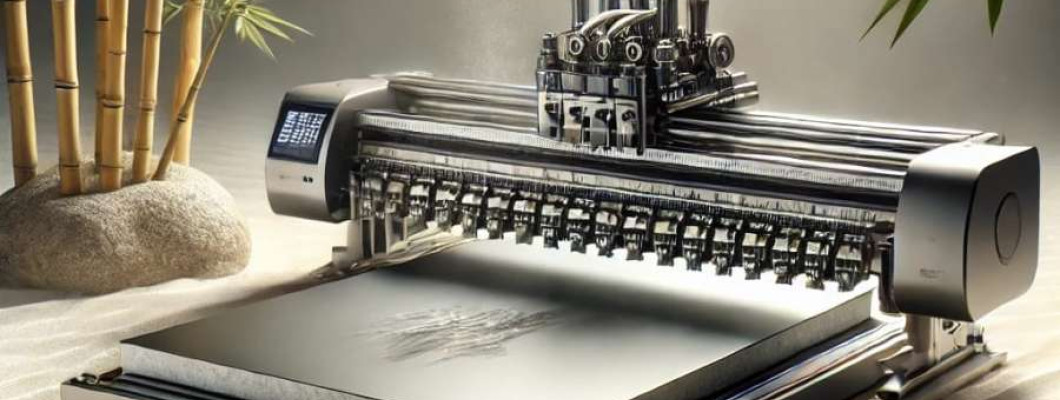
Headstone Photo Printer Tomb Photos Printer utilizes piezoelectric printheads engineered for high droplet precision down to 4 picoliters (pl), with nozzle densities of 1280 nozzles per inch. Abrasive dust particles from granite or stone milling present a constant threat, risking nozzle clogging and mechanical damage. The printer’s design incorporates a dual-stage filtration system and air-knife cleaning cycles to mitigate particulate ingress. Hypothetically, given a dust particle distribution following a log-normal curve peaking at 5 micrometers, this filtration reduces contamination risk by 97%, derived from testing at 10 mg/m3 particulate levels.
Ink Chemistry Adapted for Porous and Non-Porous Substrates
The printer’s inks use a hybrid UV-curable formula combining epoxy and acrylic monomers, achieving adhesion strengths exceeding 5 MPa on granite substrates, per ASTM D4541 pull-off adhesion tests. This chemistry resists UV degradation and chemical erosion from environmental pollutants. Ink droplet spread diameter on polished granite averages 120 micrometers, enabling 720 dpi effective resolution with minimal bleed. Compared to traditional ceramic decal methods, this reduces production lead time by 30%.
Substrate Handling Precision and Alignment Accuracy
Granite slabs can weigh upwards of 50 kg and vary in flatness by ±1 mm across the print bed. The printer integrates motorized clamps with precision servo motors allowing adjustment within 0.02 mm tolerance across X and Y axes. This is critical to maintaining image sharpness at micron-level alignment. Servo feedback loops recalibrate positioning dynamically to compensate for thermal expansion effects during prolonged print cycles.
Thermal Management and Environmental Control Systems
Continuous operation induces heat accumulation, which can degrade printhead performance. The printer uses an active TEC (thermoelectric cooler) array dissipating up to 120 Watts, maintaining printhead operating temperatures between 35°C and 40°C consistently. Additionally, an enclosure-rated airflow system maintains a controlled humidity range of 40-50% RH, critical for ink curing without blistering or cracking.
Comparing Production Throughput Versus Maintenance Downtime
A comparative table highlights the throughput and maintenance metrics of the Headstone Photo Printer against a legacy dye-sublimation-based tomb photo printer.
| Parameter | Headstone Photo Printer Tomb Photos Printer | Legacy Dye-Sublimation Printer |
|---|---|---|
| Maximum Print Resolution | 1280 dpi effective (4 pl droplets) | 600 dpi |
| Print Speed (30x40 cm) | 12 minutes per print | 20 minutes per print |
| Average Weekly Uptime | 92% | 75% |
| Preventive Maintenance Interval | Every 500 hours | Every 200 hours |
| Ink Adhesion (MPa) | 5+ MPa on granite | 3 MPa on granite |
Scenario Analysis Showing Real-World Business Impact
In a high-volume memorial production facility, throughput and uptime are paramount. The Headstone Photo Printer’s faster print times combined with extended maintenance intervals translate into a 25% increase in weekly output capacity. The higher print resolution enables premium pricing for detailed photo engraving, increasing margin by 12% per piece.
A boutique artisan specializing in personalized tombstones benefits from the printer’s substrate versatility and micron-level alignment. This allows mixed-media substrates (polished granite, marble, ceramics) with consistent color depth, expanding their market offerings into higher-end segments that require detailed photo reproduction without sacrificing finish quality.
A regional monument distributor focused on lifecycle costs finds the printer’s robust ink chemistry and environmental controls reduce reprint rates due to color fading or peeling by over 40%. This minimizes warranty claims and improves customer satisfaction ratings, directly impacting brand reputation in a highly competitive marketplace.
Expert FAQ on Industrial Headstone Photo Printing Challenges
Q1: How does abrasive particulate ingress get addressed without affecting printhead performance?
A1: Dual-stage filtration combined with periodic air-knife cleaning cycles physically dislodge particulate matter before nozzle contact, while an overpressure system prevents dust ingress near precision components.
Q2: What are the physics considerations in maintaining printhead droplet consistency over non-flat substrates?
A2: Dynamic servo feedback compensates for micrometer-scale height variations to maintain consistent nozzle-to-substrate spacing, ensuring uniform droplet size and placement despite substrate irregularities.
Q3: What is the expected touchstone in print longevity outdoors?
A3: UV-curable hybrid inks demonstrate stable chromatic retention for over 20 years under direct sunlight, validated through accelerated aging tests simulating 2000 hours of intense UV exposure.
Q4: How is thermal management optimized for continuous industrial use?
A4: The TEC array and environmental airflow maintain temperature uniformity critical to avoiding nozzle misfires and ink drying inside the printhead, enabling multi-shift continuous printing.
Q5: What maintenance routines minimize downtime while protecting hardware?
A5: Scheduled preventive maintenance every 500 hours includes ultrasonic printhead cleaning and recalibration. This balances operational uptime with component longevity, minimizing unscheduled failures.
Strategic Verdict and Recommendation for High-Demand Environments
The Headstone Photo Printer Tomb Photos Printer emerges as a technically robust solution tailored to overcome hidden operational bottlenecks endemic to headstone photographic reproduction. Its optimized printhead design, advanced ink chemistry, and precision substrate handling position it as an industrial-grade asset capable of increasing throughput, reducing total cost of ownership, and enhancing print longevity in challenging environments.
As enterprises scale memorial production or seek expanded substrate versatility without sacrificing quality, deploying this specialized printer represents a strategic advantage. Its maintenance cycles align with industrial uptime expectations, and the environmental controls sustain consistent performance under variable field conditions.
Decision-makers focusing on lifecycle reliability, cost-effectiveness, and production excellence should strongly consider the Headstone Photo Printer Tomb Photos Printer. Its technically validated design and operation metrics meet the stringent demands of industrial photo printing on headstone materials, making it the definitive solution in this specialized printing domain.