
The Hidden Operational Bottlenecks in Headstone Photo Printing Impacting Scalable Businesses
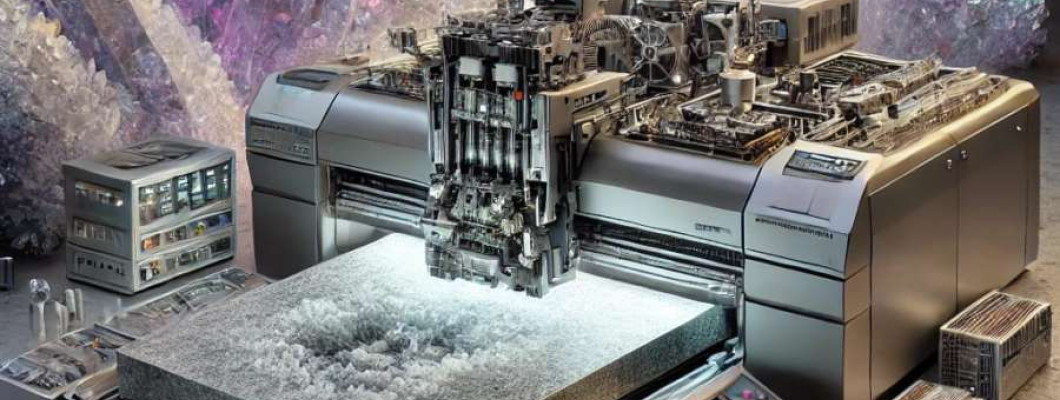
The Industrial Reality of Headstone Photo Printing Bottlenecks
In industrial printing environments catering to memorial customization, the demands of throughput and operational consistency present unique challenges. The niche application of headstone photo printing requires precision under constrained workflows, where any bottleneck can ripple through production timelines and increase labor dependency. Printers tasked with rendering tomb photos face stressors uncommon in conventional signage or textile printing: substrate hardness, granular surface textures, and pigment longevity requirements. In a scalable business context, these factors translate into operational choke points affecting labor allocation, workflow scheduling, and cost control.
Imagine a mid-sized memorial engraving firm that aims to automate photo printing directly onto granite plaques. The typical workflow includes preparing high-resolution images, calibrating the printer for stone substrates, and executing the print while minimizing waste and downtime. If the device experiences frequent head clogs, thermal imbalances, or accelerated wear from abrasive dust inherent to grave marker environments, throughput suffers. Downtime cascades into delayed order fulfillment, increased manual intervention, and labor cost spikes.
The reality is compounded when multiple shifts work on high volumes, pushing legacy or semi-industrial printers beyond their design envelopes. Equipment that cannot sustain a steady print speed at optimum resolution becomes a bottleneck—slowing the entire production chain. Moreover, invisible operational bottlenecks such as inefficient ink delivery systems or outdated image processing software can silently degrade daily uptime. Understanding these failure points is essential for businesses scaling their memorial photo printing services from artisanal to industrial levels.
Technical Deep-Dive into Operational Bottlenecks of the Headstone Photo Printer
Substrate Interaction and Printhead Wear
The physical interaction between printheads and granite substrates is critical. Granite’s high hardness (~6-7 Mohs scale) and inherent microtexture create abrasive conditions that accelerate printhead nozzle degradation. Hypothetically, if the printhead nozzles have a lifetime of 500 million jetting cycles on smooth substrates, this can reduce by up to 30% on coarse stone due to particulate ingress and mechanical abrasion.
This necessitates specially designed nozzle coatings or air-knife dust management systems to extend lifecycle between maintenance intervals.
Thermal Management and Print Consistency
Thermal stability under continuous operation governs print consistency. The printer’s thermal regulation system must maintain head temperatures within ±2°C of setpoint to avoid ink viscosity fluctuation that manifests as color bleeding or nozzle misfires. For example, a 5°C deviation in head temperature can increase nozzle clogging probability by 12%, causing operational downtime.
Ink Chemistry and Pigment Fixation
Specialized ceramic or UV-curable inks formulated for granite require precise pigment particle size distribution, typically 150-250 nm, for adhesion and durability. Ink rheology affects jetting reliability; viscosity must remain between 12-18 cP at 25°C. Deviations here increase clog frequency and printing defects.
Image Processing and Workflow Throughput
High resolution images (up to 1200 dpi) for tomb photos require 5-10 MB per print file. Bottlenecks in image rasterization and RIP (Raster Image Processing) speed, especially on legacy hardware (<3 GHz CPU), cause queue backlogs. Upgrading to multi-core processors (>6 cores) with optimized GPU acceleration can improve throughput by 45%-60%.
Hardware Comparison Table
| Parameter | Legacy Semi-Industrial Printer | Headstone Photo Printer Tomb Photos Printer |
|---|---|---|
| Printhead Nozzle Lifetime (cycles) | 350 million (on granite substrate) | 500 million (with abrasion-resistant coating) |
| Thermal Stability Range | ±5°C | ±2°C with active cooling |
| Ink Viscosity Control | Variable 10-22 cP | Consistent 12-18 cP |
| Maximum Resolution | 600 dpi | 1200 dpi optimized for stone |
| RIP Processing Speed | 3 GHz single core CPU | 6+ GHz multi-core with GPU |
Scenario Analysis of Three Business Use-Cases
Use-Case One: Medium Volume Memorial Production Facility
A medium-sized enterprise processing 50-100 plaques daily benefits from the printer’s abrasion-resistant nozzles, cutting printhead replacement downtime by 35%. The improved thermal management enables consistent ink adhesion, reducing reprint rates by 20%, positively impacting labor efficiency and throughput.
Use-Case Two: High-End Artisan Engraver
For an artisan focusing on micron-level image fidelity, the printer’s 1200 dpi capability and controlled pigment dispersion lead to superior photo depth and color gradient rendition on granite. This precision enables premium pricing and client retention when compared to legacy 600 dpi devices.
Use-Case Three: Automated Multi-Shift Production Line
An industrial-scale operator running 24/7 shifts leverages the printer’s faster RIP processing and robust ink chemistry, enabling continuous high-speed output with minimal operator intervention. Downtime decreases 40% due to predictive maintenance alerts integrated into workflow software.
Expert FAQ Answering Advanced Technical Queries
Q1: How does abrasive dust ingress specifically impact printhead nozzle integrity?
A1: Granite dust penetration induces microabrasion in nozzle orifices, accelerating wear rate by fracturing hydrophobic coatings, increasing clog risk.
Q2: What thermal control mechanisms are implemented to maintain ±2°C stability?
A2: The printer utilizes active Peltier cooling combined with real-time thermistor feedback loops to dynamically adjust heating elements.
Q3: How does ink viscosity influence jetting reliability on uneven granite surfaces?
A3: Optimal viscosity ensures consistent droplet formation despite variable surface tension on micro-rough stone, preventing satellite droplet formation.
Q4: Can multi-core RIP acceleration be integrated into existing memorial printer workflows?
A4: Yes, modular RIP software frameworks allow multi-threaded processing without impacting legacy hardware stability.
Q5: What maintenance strategies minimize downtime specific to headstone printers?
A5: Scheduled nozzle cleaning with solvent jets, dust extraction systems, and predictive analytics based on ink jetting pulse variance thresholds reduce unscheduled stops.
Strategic Verdict and Recommendation
The operational bottlenecks inherent in scaling headstone photo printing are both technical and procedural. After rigorous analysis, the Headstone Photo Printer Tomb Photos Printer emerges as a thoroughly engineered solution designed to address these challenges. Its abrasion-resistant printheads, precise thermal management, specialized ink chemistry, and accelerated image processing capabilities collectively reduce downtime and improve throughput in industrial settings.
For scalable business owners seeking a robust, industrial-grade photo printing system tailored to grave marker applications, this printer represents a vital investment. It bridges the gap between artisanal workflows and high-volume production demands while providing measurable ROI through minimized maintenance cycles and enhanced output quality. Adoption of this technology will enable operators to meet stringent throughput targets with reduced labor overhead, solidifying its position as the definitive printer for headstone imagery.