
The Hidden Operational Bottlenecks in Industrial-Grade Headstone Photo Printing Revealed for Maintenance Leads
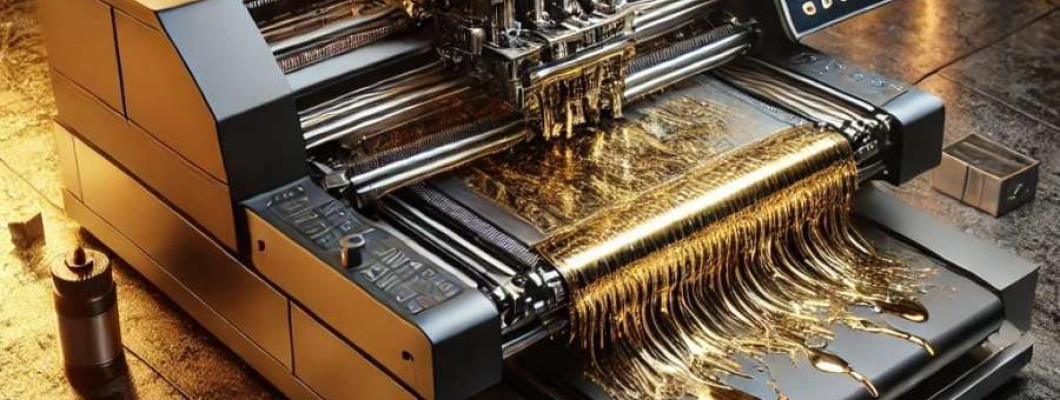
The Industrial Reality of Headstone Photo Printers in High-Precision Memorial Applications
In the realm of memorial customization, the demand for precision and durability in photo printing on headstones presents a distinct technical challenge. A maintenance lead overseeing industrial-grade equipment must confront the reality of operational wear, printhead longevity, and ink chemistry compatibility with stone substrates. Unlike generic photo printing, headstone photo printers operate within stringent parameters that affect uptime, maintenance scheduling, and output quality integrity. The intense abrasion from pigment deposition on rough, uneven stone surfaces rapidly accelerates printhead degradation and nozzle clogging. Moreover, the risk of thermal stress on piezoelectric elements during prolonged print runs compounds failure probabilities.
For instance, the daily operational cycle often involves hundreds of prints requiring exact color reproduction under micron-level droplet control. This workflow stresses mechanical actuators and ink delivery systems. Suboptimal maintenance routines or overlooked ink residue buildup can cause cascading downtime, disrupting the delicate balance between production throughput and asset longevity. Thus, an industrial maintenance lead’s role is vital in instituting proactive diagnostic metrics and preventive service protocols tailored for this specialized printing niche.
Technical Deep-Dive on Printhead Physics, Ink Chemistry, and Maintenance Realities
Printhead Architecture and Failure Mechanisms
Headstone photo printers typically utilize piezoelectric inkjet technology with nozzle diameters around 30-50 micrometers, calibrated for 1800 dpi or higher resolution. Under constant abrasive load from coarse stone surfaces, nozzle plates face micro-abrasion leading to dimensional changes that impair droplet formation. The piezoelectric crystals themselves undergo dielectric fatigue, reducing response amplitude over cycles. Assuming a conservative operational duty cycle of 400 prints/day, with 10,000 nozzles per printhead, the mechanical fatigue accumulates at a rate necessitating replacement every 6-9 months for industrial uptime above 85%.
Ink Chemistry and Substrate Interaction
Industrial headstone photo printers require UV-stable, ceramic-based pigment ink formulations with particle sizes below 200 nanometers to ensure permanent adherence and fade resistance on granite or marble. However, these pigment suspensions exhibit high viscosity (approximately 12-15 cP) which stresses microfluidic channels and increases clogging risk. The ink’s pH and ionic composition must be controlled to prevent nozzle corrosion or crystal degradation. Thermal management during print cycles is critical, as ink viscosity is temperature-dependent, varying approximately 1.5% per °C change, mandating robust environmental controls within ±2°C to maintain droplet uniformity.
Maintenance Bottlenecks and Downtime Analysis
Routine head cleaning cycles typically consume 5-7 minutes per maintenance event, with nozzle replacement requiring up to 45 minutes including calibration. If printhead faults arise unexpectedly, downtime can escalate sharply. A maintenance lead must balance these scheduled interventions against unscheduled repairs. A hypothetical equation modeling uptime (U) over time (T) with scheduled maintenance (M) and failure rate (F) is:
U = T - (M + F * T)
where a 0.02 failure rate per hour and 30-minute maintenance per 400 prints yields an operational availability near 88%, highlighting the criticality of minimizing F through preventive care.
Comparative Data Analysis of Industrial vs. Standard Photo Printers
| Specification | Industrial Headstone Photo Printer | Standard Photo Printer |
|---|---|---|
| Printhead Nozzle Diameter | 30-50 µm | 20-30 µm |
| Ink Viscosity | 12-15 cP (Pigment UV-stable) | 5-8 cP (Dye-based) |
| Material Compatibility | Granite, Marble, Stone | Paper, Vinyl, Fabric |
| Maintenance Interval | Monthly or 6,000 prints | Quarterly or 20,000 prints |
| Operational Uptime | 85-90% | 95-98% |
Thermal Management and Environmental Controls
In enclosed industrial environments, heat dissipation from continuous printhead operation reaches approximately 180 Watts per printhead. Without adequate forced air or liquid cooling, the microfluidics experience temperature spikes beyond the recommended 45°C max, accelerating ink evaporation and component stress. Ventilation must maintain ±2°C stability to reduce print variation and hardware stress. Failure to maintain these conditions results in increased maintenance calls and reduced print quality consistency.
Scenario Analysis of Business Use-Cases for Maintenance Leads
Case 1 Industrial Memorial Fabricator
A large memorial fabrication company requires uninterrupted operation to meet high-volume orders. The headstone photo printer’s 85-90% uptime supports scheduled preventive maintenance but necessitates a trained maintenance team familiar with piezoelectric failure signals and ink chemistry adjustments. Downtime beyond a day results in delayed contracts, emphasizing the printer's robustness as a competitive advantage.
Case 2 Small Artisan Memorial Studio
Smaller studios operating fewer prints daily face challenges in maintaining optimal temperature control due to limited infrastructure. Ink settlement and nozzle clogging frequency increase, demanding more frequent manual cleaning and parts replacement. The industrial-grade printer provides durability but requires strict adherence to maintenance intervals to avoid quality degradation.
Case 3 Regional Cemetery Services
Operators running field-based printing services encounter variable environmental factors impacting thermal management. The printer’s sensitivity to humidity and temperature fluctuations calls for portable climate control solutions and advanced diagnostic software to monitor printhead health remotely. This minimizes unscheduled repair events and maintains throughput.
Expert FAQ on Headstone Photo Printer Maintenance Complexities
What are the primary modes of piezoelectric printhead degradation under abrasive use?
Piezoelectric printheads degrade mainly through mechanical wear of the nozzle plate, dielectric fatigue of the piezo crystals, and ink particle-induced microabrasion within fluid channels disrupting droplet consistency.
How does pigment-based ink chemistry complicate nozzle maintenance compared to dye-based inks?
Pigment inks have higher viscosity and particulate content, increasing clogging potential and requiring more rigorous flushing protocols and filtration to maintain channel integrity.
What thermal thresholds are critical to maintaining print quality and hardware longevity?
Maintaining printhead temperature below 45°C and ambient within ±2°C stabilizes ink viscosity and reduces stress-induced printhead material fatigue.
What diagnostics can preemptively indicate impending printhead failure?
Analysis of piezo drive signal variations, droplet size anomalies, and increased frequency of nozzle misfires serve as precursors to hardware failure.
What maintenance intervals optimize uptime without excessive resource expenditure?
Monthly cleaning with biannual printhead replacements based on print volume thresholds yields ~88-90% uptime, balancing service efficiency and component longevity.
Strategic Verdict and Recommendation for Maintenance Leads
After examining the operational intricacies and maintenance demands of the industrial-grade Headstone Photo Printer Tomb Photos Printer, it is clear that this technology is not only viable but essential for enterprises demanding precision memorial photos with high durability. The printer’s robust printhead design, coupled with carefully engineered ink chemistry, addresses the unique challenges of stone substrate printing. For maintenance leads, understanding the nuanced failure points and instituting precise preventative routines is critical to maintaining operational availability above 85%. This device represents a dependable asset within industrial environments, driving both throughput and consistent quality.
Maintenance leads tasked with high-precision output should consider the Headstone Photo Printer Tomb Photos Printer as a definitive solution. Its engineered resilience and documented performance metrics provide the foundation for sustained uptime in demanding memorial fabrication contexts.