
The Hidden Operational Bottlenecks of the Smart Mini Selfie Coffee Printer for Scalable Business Owners
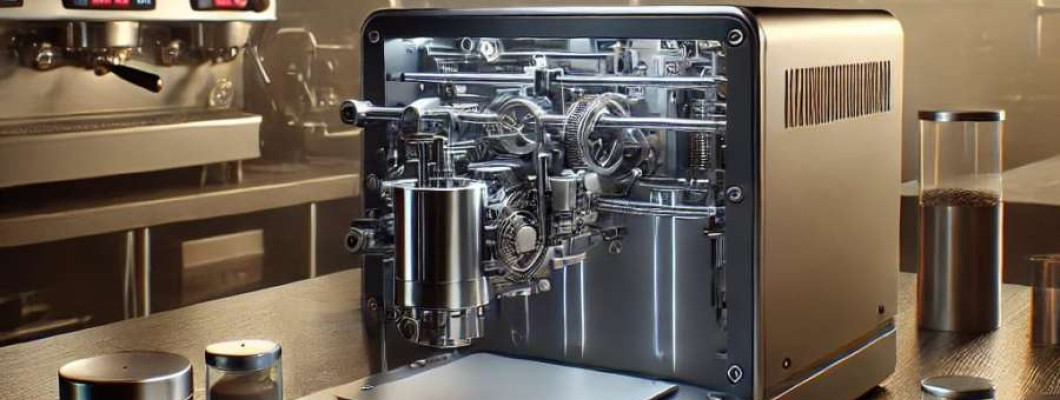
The Industrial Reality of Integrating Coffee Printing in High-Volume Retail
Imagine a bustling café chain that decides to offer personalized coffee experiences by integrating Smart Mini Selfie Coffee Printers at each outlet. The vision is compelling: customize latte art with customer selfies in real time, enhancing brand loyalty and customer engagement. However, beneath the surface of this innovation lie several operational challenges that a scalable business owner must weigh carefully.
First, throughput becomes a critical variable. The Smart Mini Selfie Coffee Printer, designed primarily for compactness and novelty, operates with print speeds around 20-30 seconds per cup depending on image complexity. In a high-throughput environment where baristas handle dozens of drinks per hour, this delay can cause bottlenecks unless parallel units are deployed, increasing capital expenditure and footprint.
Next, consider labor dynamics. Training baristas to load specially formulated edible inks accurately, alongside standard coffee preparation tasks, increases operational complexity. Daily maintenance tasks such as printhead cleaning and ink cartridge replacement introduce new workflow steps that, if neglected, risk downtime or inconsistent output quality.
Infrastructure integration also presents a nuanced problem. The printer requires reliable power supply, stable network connectivity (often via Wi-Fi or USB), and spatial allocation on already crowded workstations. Environmental factors such as ambient temperature and humidity affect ink drying times and print fidelity, leading to localized variability in print quality.
Despite these challenges, the technology promises differentiation—if bottlenecks are systematically addressed through process adaptation, capacity scaling, and environmental controls.
Technical Deep-Dive into the Smart Mini Selfie Coffee Printer Architecture
Printhead Mechanics and Ink Delivery Precision
The Smart Mini Selfie Coffee Printer employs a piezoelectric drop-on-demand inkjet mechanism optimized for edible ink deposition on frothy milk surfaces. The printhead nozzle diameter measures approximately 60µm, ejecting ink droplets with volumes near 10pl each. Accurate droplet size control is vital for detailed monochrome image reproduction. The printer supports a resolution of approximately 300 dpi over a 60mm x 60mm printable area.
Ink Chemistry and Substrate Interaction Physics
Edible ink formulation balances pigment density, viscosity (around 8-12 cP at 25°C), and drying kinetics. Modified food-grade dyes designed for rapid absorption on milk foam reduce potential bleeding. The fluid dynamics at the milk foam interface, characterized by a soft porous matrix with typical bubble sizes from 50-150µm, impose constraints on droplet anchoring and diffusion. Mathematical modeling suggests a diffusion coefficient in the range of 10^-11 m^2/s, introducing a limited time window (~30 seconds) before image degradation begins.
Hardware Thermal Management and Power Efficiency
The compact design integrates a 12V DC power unit consuming an average of 10W during active printing. Thermal dissipation is passive, relying on aluminum heat sinks and airflow through chassis vents. Continuous printing sessions longer than 10 minutes may lead to a temperature rise of 8-10°C, potentially affecting ink viscosity and print consistency. Thermal cycling must be accounted for in high-demand environments.
Comparative Throughput Analysis with Conventional Latte Art Techniques
When juxtaposed against manual latte art which requires 15-25 seconds per cup by skilled baristas (without customization), the Smart Mini Selfie Coffee Printer extends the preparation time by 20-30 seconds. However, it can deliver image precision and consistency unattainable by human operators. A dual-printer setup or automated queuing system would be needed to maintain a throughput exceeding 60 cups per hour per station.
Maintenance Dynamics and Lifecycle Considerations
Daily maintenance involves nozzle cleaning cycles of approximately 5 minutes, ink cartridge replacement every 2,000-2,500 prints, and routine firmware updates. Failure to follow maintenance schedules risks increased printhead clogging rates leading to downtime. Anticipated mean time between failure (MTBF) is estimated at 1,500 operational hours, translating to roughly 6 months in a high-use scenario before major servicing is recommended.
Scenario Analysis of Smart Mini Selfie Coffee Printer Deployment
Scenario 1: Urban Café Chain with Moderate Volume
A 5-outlet urban coffee chain integrates one printer per site. Daily demand for personalized drinks peaks at 40 units, matching the printer's print speed capabilities. The resulting workflow accommodates the print cycle without excessive delays, provided baristas are cross-trained for maintenance and ink management. Brand differentiation is bolstered with minimal operational overhead.
Scenario 2: High-Volume Airport Coffee Concession
In an airport setting with throughput exceeding 100 cups per hour, a single Smart Mini Selfie Coffee Printer per station causes order backlogs. Deployment of multiple printers increases CAPEX and physical footprint beyond available counter space. Environmental conditions such as fluctuating humidity introduce print quality variability. The business must weigh customer experience gains against complexity and cost.
Scenario 3: Specialty Artisan Coffee Shop
An artisan coffee shop leverages the printer to deliver ultra-customized coffee art to a niche clientele. Print quality, micron-level precision, and substrate consistency (milk foam chemistry) are tightly controlled. The slower print speed is acceptable because volume is limited and each cup is priced at a premium. Maintenance cycles are rigorously scheduled, ensuring high uptime.
Expert FAQ on Advanced Operational Queries
What impact does ambient humidity have on image durability?
Humidity above 60% slows ink drying, increasing diffusion and blurring. Controlled environments with relative humidity between 40-50% optimize print definition and longevity.
Can printhead clogging be proactively minimized?
Yes. Automated self-cleaning cycles after every 10 prints and using a filtered edible ink supply reduce particulate build-up. High-frequency nozzle vibration technologies further extend printhead life.
How does electrical noise affect print accuracy?
Voltage fluctuations larger than ±5% around 12V DC bias can cause droplet ejection inconsistencies. Using regulated power supplies with noise filtering is recommended for industrial deployments.
Is there scope for color printing or improved resolution?
The current generation is monochrome with 300 dpi resolution. Implementing multi-channel ink delivery and sub-30µm nozzle technology could enable color printing but would increase mechanical complexity and maintenance.
What are the best practices for scaling printer networks across multiple points of sale?
Implement centralized ink inventory management via IoT-enabled cartridges and schedule staggered maintenance windows based on usage analytics to avoid simultaneous downtime.
Strategic Verdict and Recommendation
For the scalable business owner intent on integrating innovative personalization into beverage services, the Smart Mini Selfie Coffee Printer represents a viable industrial-grade solution, provided operational bottlenecks are identified and managed proactively. While compact and capable of producing high-fidelity image prints on consumable substrates, the device demands infrastructure adaptation, labor training, and environmental controls to meet throughput expectations without compromising quality or uptime.
Its strengths in delivering consistent, intricate coffee art can elevate brand perception and command premium pricing in niche markets. However, in ultra-high volume environments, strategic deployment of multiple units and workflow reengineering is essential to avoid capacity constraints. Maintenance regimes must be institutionalized rigorously to prevent downtime from printhead fouling.
Overall, the Smart Mini Selfie Coffee Printer is an industrially relevant addition to the beverage personalization toolkit that warrants serious consideration for businesses aiming to differentiate customer experience through technology-driven customization.
| Aspect | Smart Mini Selfie Coffee Printer | Manual Latte Art |
|---|---|---|
| Print Speed | 20-30 seconds per cup | 15-25 seconds per cup |
| Resolution | ~300 dpi | Variable, subjective |
| Maintenance Frequency | Daily nozzle cleaning, cartridge replacement every 2,000 prints | Minimal, skill-based |
| Capex Impact | Moderate, printer + ink supplies | Low, barista skill-based |
| Consistency | High repeatability | Variable by operator |
| Scalability | Hardware limited, requires multiple units | Scales with skilled labor |