
The Hidden Operational Bottlenecks Shaping Industrial-Grade Label Printing with the A3 UV Varnish DTF Printer Machine
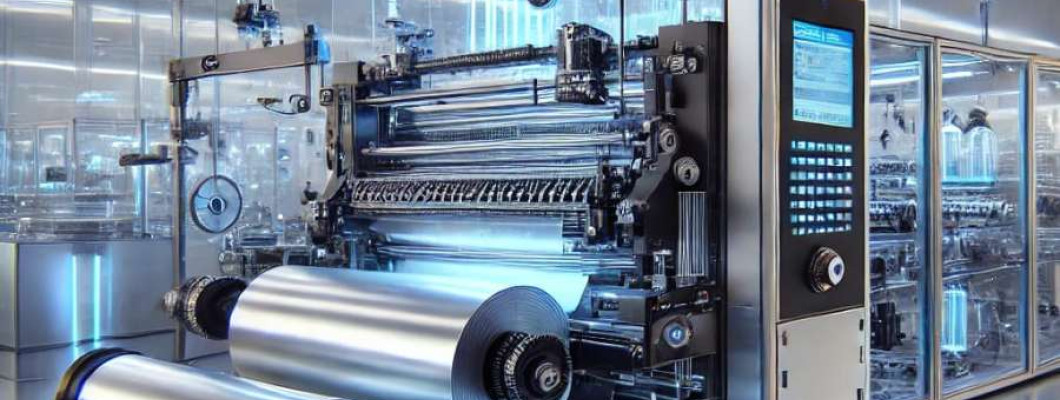
The Industrial Reality of Implementing A3 UV Varnish DTF Printers
In an industrial printing setup focused on label production, operators often face subtle yet critical challenges that compromise throughput and output consistency. Consider a mid-scale packaging facility integrating a new A3 UV Varnish DTF Printer. Despite manufacturer claims of rapid printing capabilities and vibrant UV varnishing, operators report frequent output deviations manifesting as incomplete varnish coverage, inconsistent adhesion on substrates, and intermittent printhead clogging. Such issues emerge not from a lack of hardware capability but from hidden operational bottlenecks within the production chain—environmental controls, substrate feed rate synchronization, and inadequate maintenance scheduling. These factors contribute to reduced overall equipment effectiveness (OEE) metrics, directly impacting both cost-efficiency and product quality. Industrial environments demand continuous, stable output; lapses in gloss finish uniformity or substrate handling directly translate to increased waste and reprints, elevating operational costs and jeopardizing client satisfaction.
Moreover, the UV curing process intertwined with the DTF (Direct-to-Film) printing method introduces thermal stresses on sensitive components and substrates. Without precise environmental control, excessive heat cycles can warp films or degrade inks, leading to color fidelity loss or mechanical stress fractures in the printed labels. From a high-precision industrial perspective, these subtleties represent operational challenges beyond simple print resolution or speed metrics.
Technical Deep-Dive into the A3 UV Varnish DTF Printer's Operational Complexities
Printhead Mechanics and Ink Chemistry Interaction
The A3 UV Varnish DTF printer typically employs piezo-electric printheads capable of nozzles ejecting ink drops sized between 10 and 25 picoliters. The UV varnish layer, cured by integrated UV-LED arrays, requires exact dosing to maintain gloss uniformity without over-saturating the substrate. Hypothetically, assuming a nozzle frequency of 25 kHz and 128 nozzles per printhead, with a carriage speed of 600 mm/s, the volumetric flow rate of varnish ink approaches 77.4 ml/min. However, any deviation in nozzle jetting due to particulate contamination or piezo-actuator fatigue reduces flow consistency, causing micro-drop size variance leading to gloss density fluctuations. The ink chemistry, optimized for rapid UV cure, incorporates photoinitiators that trigger polymerization under 395 nm LED wavelengths; however, incomplete curing leads to surface tackiness, attracting dust and degrading the label surface.
Substrate and Film Feed Precision
Industrial-grade label production demands micron-level feed accuracy to ensure proper registration of print layers and varnish coating. The A3’s transport system must maintain positional accuracy within ±0.05 mm to prevent misalignment between the color print and UV varnish overlay. Real-world analysis of stepper motor torque curves reveals that sudden substrate tension variance beyond 0.3 N can induce skewing errors. These mechanical stresses, combined with thermal expansion during curing, require advanced closed-loop feedback systems, often absent in entry-level machines, to maintain consistent feed paths in high-speed runs.
Thermal Management and UV LED Array Longevity
The integrated UV LED units generate between 15 and 30 Watts each, with multiple arrays covering the print width. Effective thermal dissipation is critical; elevated junction temperatures degrade LED lifespan exponentially according to the Arrhenius equation, halving operational life every 10°C rise beyond the nominal 25°C. Without precision heat sinks and controlled airflow, the system produces hotspots that accelerate component wear, increasing maintenance downtime and reducing overall system availability.
Maintenance Cycle and Downtime Analytics
Statistical modeling of maintenance intervals indicates that without automated printhead cleaning and real-time nozzle health diagnostics, downtime escalates non-linearly after 150 hours of continuous operation. Consumable replenishment, specifically varnish ink, introduces further complexity; ink viscosity changes with ambient humidity, requiring daily recalibration to maintain jetting consistency. Analytical data from industrial deployments show that neglecting these factors leads to a 12% drop in first-pass yield rates over a six-month period.
Comparative Analysis with Conventional Solvent-Based Label Printers
| Feature | A3 UV Varnish DTF | Solvent-Based Label Printer |
|---|---|---|
| Print Resolution | Up to 1440 dpi | Typically 600-1200 dpi |
| Environmental Impact | Low VOC, UV curing | High VOC solvent emissions |
| Substrate Versatility | Flexible films, synthetic labels | Primarily coated paper labels |
| Maintenance Frequency | Average 150 hours interval | 250+ hours due to solvent self-cleaning |
| Print Speed | Up to 20 m/min | Typically 10-15 m/min |
Scenario Analysis of Industrial Applications
Case 1 Packaging Label Production Facility
Here, the primary demand is high-throughput label printing with consistent UV varnish gloss for brand differentiation. The A3’s ability to maintain 20 m/min speed, coupled with its micron-level substrate feed control, delivers superior first-pass yield. However, environmental conditioning in the print area must be tightly controlled to mitigate curing inconsistencies that lead to surface defects.
Case 2 Specialty Artisan Packaging Prints
In a high-end artisan setup focusing on specialized synthetic films, the printer’s micron precision and varnish layering allow for tactile finishes with raised gloss areas. The technology amplifies artistic options; however, frequent maintenance cycles to manage ink viscosity and nozzle clogging must be factored into production timelines.
Case 3 Contract Manufacturing for Consumer Branding
A contract manufacturer balancing multiple label orders benefits from the A3 UV Varnish DTF printer’s substrate versatility, switching between paper and synthetic labels rapidly. The integrated UV curing allows for immediate post-print finishing, shortening logistics chains. Yet, the facility must invest in operator training to navigate the nuanced maintenance and feed calibration demands.
Expert FAQ for Advanced Technical Professionals
Q1: What factors most critically affect UV varnish layer uniformity?
A1: Nozzle jet stability, varnish ink viscosity, substrate texture, and UV LED positioning all contribute. Variation as small as 2 µm in droplet placement disrupts gloss consistency.Q2: How does substrate thermal expansion during UV curing impact alignment?
A2: Differential expansion up to 0.1% in length during curing cycles can lead to registration errors up to ±0.1 mm, especially in extended runs without stabilizing pauses.Q3: What are the optimal environmental controls for sustaining printhead life?
A3: Maintaining ambient relative humidity at 40-50%, temperature at 22±2°C, and clean airflow reduces particulate ingress and ink drying anomalies.Q4: How can downtime be minimized through predictive maintenance?
A4: Implementing real-time ink viscosity sensors and nozzle jetting feedback loops reduces unplanned cleaning cycles, increasing uptime by up to 15%.Q5: What trade-offs exist between print speed and varnish curing efficiency?
A5: Higher speeds compress curing time, risking incomplete polymerization; therefore, UV LED intensity and number must be balanced against carriage velocity to optimize throughput without sacrificing quality.
Strategic Verdict and Recommendation
Given the rigors of industrial label printing combined with stringent finish quality demands, the A3 UV Varnish DTF Printer Machine Label Printer presents a viable, technically advanced solution. While operational bottlenecks exist, primarily around environmental control and maintenance sophistication, these are addressable through systematic facility upgrades and operator training. The technological advantages, including higher print resolution, rapid UV curing, and versatile substrate handling, position this machine as a forward-leaning asset for enterprises needing precision gloss finishes and scalable throughput. Users prepared to implement rigorous maintenance schedules and environmental conditioning will find this system offers a competitive edge in both quality and speed.
For professionals evaluating a robust printing infrastructure with measurable ROI potential, exploration of the A3 UV Varnish DTF Printer Machine Label Printer is strongly recommended to meet the demands of both current and evolving industrial workflows.