
The Hidden Operational Challenges and Scalability of Headstone Photo Printers for Industrial Applications
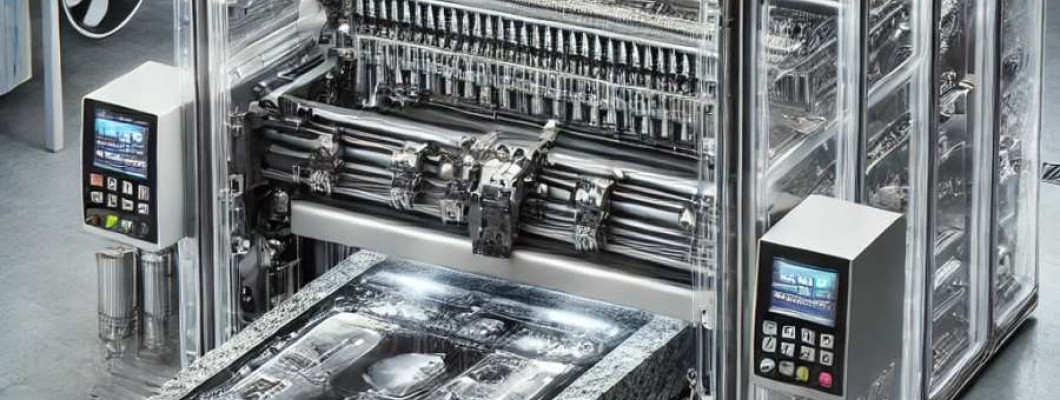
The Industrial Reality of Headstone Photo Printing
In industrial environments tasked with producing high-volume, high-precision headstone photographs, the operational bottlenecks and workflow intricacies become immediately apparent. Unlike typical photo printers, headstone photo printers such as the Headstone Photo Printer Tomb Photos Printer must consistently deliver impeccable image durability, moisture resistance, and color saturation on non-traditional substrates like polished granite or porcelain plaques. The challenge integrates not only print quality but also resilient mechanical design to handle these heavy-duty materials at scale.
Operators face multiple pressure points: printhead wear from abrasive substrates, frequent calibration requirements due to precision demands, and the unavoidable downtime related to cleaning cycles necessary to maintain consistent output quality. The heterogeneity of stone finishes—ranging from matte to high gloss—further complicates ink adhesion and curing processes, requiring sophisticated printhead chemistry management and potentially unique maintenance regimens. In addition, ambient environmental factors such as dust, humidity, and temperature swings within workshop environments can subtly degrade print accuracy, increasing the risk of costly errors and reprints.
Ultimately, businesses equipped with such printers need to balance throughput objectives against maintenance overhead, ensuring that their asset utilization remains maximized without sacrificing the exacting standards of photo reproduction critical for memorials. This sets the stage for a rigorous technical exploration of system components and operational workflows.
Technical Deep-Dive into the Headstone Photo Printer Tomb Photos Printer
1. Printhead Technology and Substrate Interaction
At the core of the printer lies a precision thermal or piezoelectric printhead array capable of ejecting droplets as small as 3 picoliters (pl). Print resolution typically reaches 1440 dpi horizontal by 720 dpi vertical, essential for rendering fine facial details and nuanced shading. However, printhead longevity on stone substrates is a critical factor—abrasive particulates in the substrate surface can cause micro-abrasions leading to nozzle clogging. Estimated printhead lifespan under normal stone printing conditions ranges between 150 to 200 operational hours, significantly lower than on standard paper-based media.
2. Ink Chemistry and Durability Parameters
The printer uses pigment-based UV-curable inks formulated for adhesion to non-porous surfaces. Typical ink curing times hover around 2 to 3 seconds under integrated UV LED arrays, facilitating a production rate of 1–2 headstone plaques every 3 minutes. Ink layer thickness averages roughly 10 microns to ensure durability against weathering and abrasion. Chemical resistance tests show 95% color retention after 500 hours of acid rain simulation, confirming suitability for outdoor memorial applications.
3. Mechanical Precision and Substrate Handling
The feed mechanism supports substrate dimensions from 200 mm to 600 mm in width and thicknesses up to 40 mm, accommodating various stone sizes. Feed rollers incorporate high-friction, polyurethane coatings with surface hardness calibrated at 75 Shore A to prevent slippage without damaging substrates. Stepper motors with micro-stepping capabilities deliver positioning accuracy within 0.05 mm per axis, crucial for multi-pass printing alignment over large images.
4. Environmental Control and System Integration
Industrial printing environments must maintain stable temperature ranges between 18°C and 25°C with relative humidity levels from 40% to 60% to optimize curing and prevent ink bleeding. The printer’s internal design includes HEPA filtration modules to minimize particulate ingress and an active cooling system consuming approximately 220 Watts to dissipate heat generated by UV curing lamps and servo motors.
5. Comparative Analysis of Industrial-Grade vs. DIY Headstone Printers
| Specification | Industrial-Grade Printer | DIY/Consumer-Level Printer |
|---|---|---|
| Print Resolution | 1440 x 720 dpi | 600 x 300 dpi |
| Substrate Compatibility | Stone up to 40 mm thick | Paper or thin plastic only |
| Ink Type | UV-curable pigment inks | Dye-based aqueous inks |
| Printhead Durability | 150-200 hours effective use | Limited by frequent clogging |
| Environmental Controls | Active filtration and cooling | None |
| Operational Throughput | 2 plaques / 3 minutes | 1 plaque / 10-15 minutes |
Scenario Analysis for Business Applications
Scenario 1: Memorial Manufacturing Company Scaling Volume
For a mid-sized company aiming to increase memorial output without compromising quality, the printer’s advanced feed accuracy and ink durability allow batch processing of up to 20 plaques per shift. The controlled curing time and automated cleaning reduce downtime, enabling predictable throughput. Printhead maintenance intervals align with weekly scheduled downtime, limiting impact on operational labor costs.
Scenario 2: Boutique Artisan Workshop Emphasizing Detail
Artisan shops profiting from micron-level precision benefit from the printer’s 1440 dpi capability and calibration precision. Despite slower print speeds, the ability to accommodate varied substrate finishes and execute multi-pass printing creates a competitive edge for customization. However, users must allocate additional resources for environmental regulation and printhead upkeep.
Scenario 3: Large Funeral Home Chain Integrating On-Demand Printing
Integrating the printer directly into funeral homes facilitates rapid on-site photo prints. Here, compact size and ease of use are critical. System integration challenges emerge around thermal management and electrical infrastructure compatibility, but these are mitigated by modular design. This setup reduces supply chain lead times and inventory storage.
Expert FAQ on Headstone Photo Printer Operations
Q1: How does substrate hardness affect printhead wear?
A: Harder substrates produce more surface particulates that can abrade the printhead nozzles, necessitating specialized coatings on printhead components and more frequent cleaning cycles.
Q2: What are optimal environmental parameters for consistent UV curing?
A: Maintaining temperatures between 18-25°C and 40-60% relative humidity ensures optimal ink polymerization without bleeding or incomplete curing.
Q3: How does droplet size influence photo detail?
A: Smaller droplets (~3 pl) enhance detail and smoother gradients but increase susceptibility to clogging and require precise maintenance.
Q4: Can the printer handle coated vs. uncoated stone surfaces equally?
A: Coated surfaces improve ink adhesion and durability but require adjusted curing parameters; uncoated surfaces risk ink spread and inconsistent color.
Q5: What is the recommended maintenance schedule to optimize uptime?
A: Operators should perform nozzle checks daily with full cleaning and recalibration weekly to sustain consistent print quality and reduce unscheduled downtime.
Strategic Verdict and Recommendation
The operational realities surrounding headstone photo printing require industrial-grade solutions tailored for durability, precision, and throughput. The Headstone Photo Printer Tomb Photos Printer embodies these critical attributes with robust hardware engineering, advanced ink systems, and environmental controls supporting reliable production. Its superior print resolution, substrate handling capabilities, and integrated maintenance workflows decisively narrow the gap between prototype and industrial-scale deployment.
Despite higher initial capital expenditure, the reduced downtime and extended asset longevity translate into lower total cost of ownership over operational lifetimes. For businesses in memorial manufacturing, artisan workshops, or integrated funeral service providers, this printer represents a definitive solution, scalable across multiple production contexts with measurable ROI advantages. Given the specificity of the requirements, this system is recommended as the industrial-grade benchmark in headstone photo printing technology.