
The Industrial Grade Realities and Operational Challenges of an A3 Spot UV Printing Machine UV Coating Printer
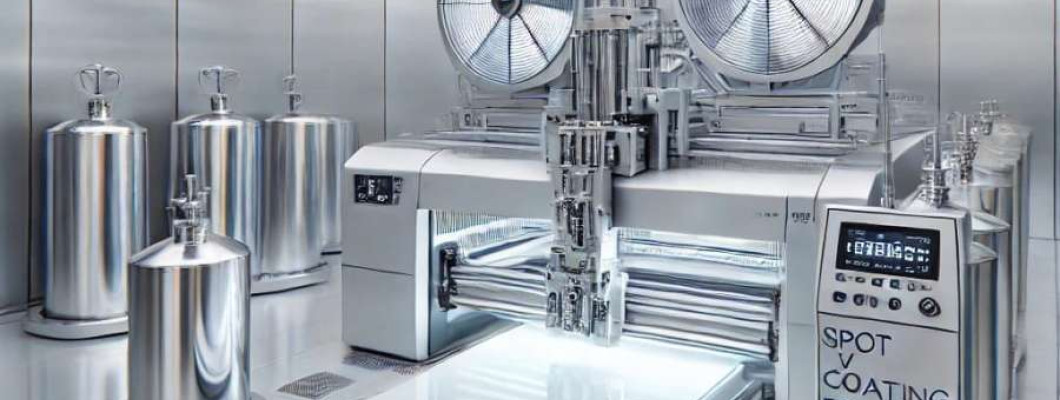
The Industrial Reality of High-Precision UV Spot Coating
In industrial manufacturing environments where surface finishing quality and throughput are paramount, the deployment of an A3 Spot UV Printing Machine UV Coating Printer introduces a distinct set of technical challenges. Consider a mid-sized print finishing facility specializing in promotional product packaging. The integration of spot UV coating technology must address precision targeting of UV varnish areas down to micron tolerances on substrates ranging from cardstock to coated plastics. Maintaining consistent gloss levels and curing uniformity is critical during high-volume runs exceeding 5,000 sheets per day.
The process requires a stable UV light source ensuring consistent irradiance profile, coupled with precise inkjet or roller applicators calibrated for volumetric accuracy in the sub-10 microliter range per print patch. Variabilities emerge from substrate surface roughness, ambient temperature fluctuations affecting varnish viscosity, and machine vibration impacting printhead alignment. Industrial deployment thus demands robust mechanical engineering with micrometer-scale repeatability, controlled UV curing cycles to avoid substrate warping, and automated quality feedback loops to detect coating uniformity defects in real-time.
Operationally, bottlenecks center around varnish replenishment logistics, downtime from printhead maintenance, and calibration drift over extended runs. The high gloss finish produced by UV spot coating also necessitates stringent environmental controls to reduce airborne particulates settling on cured surfaces. The ability to seamlessly interface the machine within existing manufacturing execution systems (MES) is vital to synchronize print job queues, varnish batch records, and preventive maintenance schedules.
Technical Deep-Dive into Critical Hardware and Process Parameters
UV Curing Lamp Specifications and Heat Management
Spot UV coating relies on high-intensity UV lamps, typically mercury vapor or LED arrays emitting predominantly in the 365-405 nm range. The lamp radiant power density is approximately 2000 mW/cm² at the print substrate interface. Precise thermal regulation mechanisms, including water-cooled heat sinks and active air circulation, maintain lamp operating temperature within 25-35 °C to prevent spectral drift and premature varnish polymerization.
Thermal conduction models predict substrate temperature rise (ΔT) as a function of exposure time (t) and lamp intensity (I) by the relation ΔT = (I × t)/(ρ × c × d), where ρ is substrate density, c is specific heat capacity, and d is substrate thickness. For a 300 gsm cardstock (~0.35 mm thick), ΔT over a 2-second cure at 2000 mW/cm² is estimated near 12 °C, necessitating substrate cooling intervals or conveyor speed adjustments to avoid warping.
Precision Ink Application and Printhead Technology
The UV varnish application employs piezoelectric drop-on-demand printheads with droplet volumes ranging 5-10 pl and drop placement accuracy of ±10 μm. The viscosity of UV coatings (~12-18 cP) requires precise temperature-controlled reservoirs maintained at 25 °C ± 1 °C to prevent nozzle clogging.
Two print modes exist: rasterized inkjet for variable pattern coverage and roller-assisted spot application for consistent block gloss. Comparative analysis between these methods reveals trade-offs in throughput and resolution. Inkjet offers 1200 dpi resolution, suitable for fine graphical accents, while roller application ensures uniform thickness (~5 μm) on large surface zones with 25% higher productivity.
Mechanical Repeatability and Registration Accuracy
Industrial print accuracy is maintained via linear encoders with sub-micron resolution and servo-driven X-Y transport stages. Mechanical feedback loops correct for stage backlash and thermal expansion effects, sustaining registration deviations below 20 μm over 500 mm travel distances. Such precision is critical when aligning spot UV elements onto multi-color print bases where overlay tolerance is within 50 μm to prevent visual artifacts.
Comparative Performance Data Table
| Parameter | Inkjet Spot UV Mode | Roller-Assisted Spot UV Mode |
|---|---|---|
| Droplet Volume (pl) | 5-10 | Not Applicable |
| Resolution (dpi) | 1200 | 300 |
| Coating Thickness (μm) | 1-5 variable | 5 consistent |
| Throughput (sheets/hr) | 600-800 | 800-1000 |
| Registration Accuracy (μm) | ±10 | ±30 |
| Maintenance Frequency (hrs) | Every 50 | Every 100 |
Environmental and Safety Compliance Considerations
UV curing involves ozone generation and requires ventilation systems rated for 5 air changes per hour in enclosed spaces to maintain occupational safety. The varnish formulations comply with RoHS and REACH directives, but require controlled storage below 30 °C and overpressure nitrogen blanketing to prevent premature polymerization. Safety interlocks on the machine shut off UV emission if access doors are opened, preventing operator eye damage risks.
Maintenance and Lifecycle Cost Variables
Printhead lifetime averages 10,000 operational hours with scheduled cleaning cycles every 50 hours. UV lamp modules require replacement after 5,000 hours, with each lamp costing approximately $1,200 USD. Consumables like varnish cartridges and substrate feed rollers add $0.05 per sheet to operational expenses. Planned maintenance downtime of 4 hours monthly impacts throughput and must be incorporated into production scheduling.
Scenario Analysis of Business Applications
Use Case 1 Packaging Finishing for High-Volume Promotional Products
A packaging company specializing in rapid-turnaround promotional prints benefits from the roller-assisted spot UV mode due to higher throughput (up to 1000 sheets/hr) and consistent gloss thickness. The 25 μm coating thickness provides durable scratch resistance on cardboard packaging, critical for retail shelf displays. The integration with MES allows real-time varnish inventory alerts and predictive maintenance scheduling, mitigating downtime risk.
Use Case 2 Luxury Print Branding for High-End Artisanal Products
An artisan print shop uses the inkjet spot UV mode for micron-level precision and variable pattern application. The 1200 dpi resolution enables fine graphic accents and spot varnish effects enhancing brand aesthetics. Despite a lower throughput (~700 sheets/hr), the printer’s fine droplet control ensures minimal ink wastage and substrate distortion, meeting stringent client demands for visual perfection.
Use Case 3 Multi-Substrate Versatility for Prototyping and Small Batch Runs
The machine operates across substrates from 200 gsm coated paper to thin plastic films (~150 microns). Automated preset switching between inkjet and roller modes facilitates substrate-specific zone coating, essential for rapid prototyping workflows. This flexibility reduces tooling costs and accelerates time-to-market for diverse product lines.
Expert FAQ on High-Precision UV Spot Coating
How does substrate thermal expansion affect spot UV registration?
Thermal expansion causes dimensional shifts in substrates during UV curing, potentially misaligning prints. For cardstock (coefficient ~30 ppm/°C), a 10 °C rise over 200 mm length causes expansion ~60 μm. Compensation via servo feedback and temperature-controlled curing mitigates this effect.
What is the typical droplet velocity in piezoelectric inkjet printheads?
Droplet ejection velocity ranges 5-10 m/s to balance substrate wetting and minimize satellite droplets. Velocity uniformity is critical for high resolution spot placement.
How are varnish viscosity and temperature interrelated in this machine?
Viscosity decreases approximately 10% per 1 °C temperature rise near 25 °C. The system maintains reservoir temperature within ±1 °C to prevent nozzle clogging and ensure consistent droplet formation.
What sensors monitor varnish layer uniformity?
In-line optical gloss sensors (measuring specular reflectance) and ultrasonic thickness gauges provide real-time varnish thickness feedback enabling closed-loop process control.
How is operator safety ensured during UV curing?
Interlocked safety doors disable UV lamps when opened. Machine enclosure materials block UV penetration, and ozone extraction systems maintain air quality within OSHA limits.
Strategic Verdict and Recommendation
The A3 Spot UV Printing Machine UV Coating Printer represents a mature, industrial-grade technology platform suitable for businesses prioritizing precision surface finishing with integrated process control. Its dual-mode application capabilities and engineering focus on mechanical repeatability, thermal management, and maintenance accessibility address critical operational bottlenecks that differentiate it from entry-level machines. Through comprehensive hardware modularity and environmental compliance features, it aligns with modern production demands for throughput, quality, and safety.
Given the detailed performance metrics and scenario analyses, this machine is recommended as a definitive solution for scalable manufacturing environments ranging from high-volume packaging to artisan print finishing. Integration with existing MES and maintenance protocols further enhances asset longevity and ROI optimization.
Explore the specifications and technical insights of the A3 Spot UV Printing Machine UV Coating Printer to evaluate its fit for your industrial-grade print finishing requirements.