
The Industrial Realities and Financial Audit Behind the A3 UV DTF Printer Multifunction Printing Machine
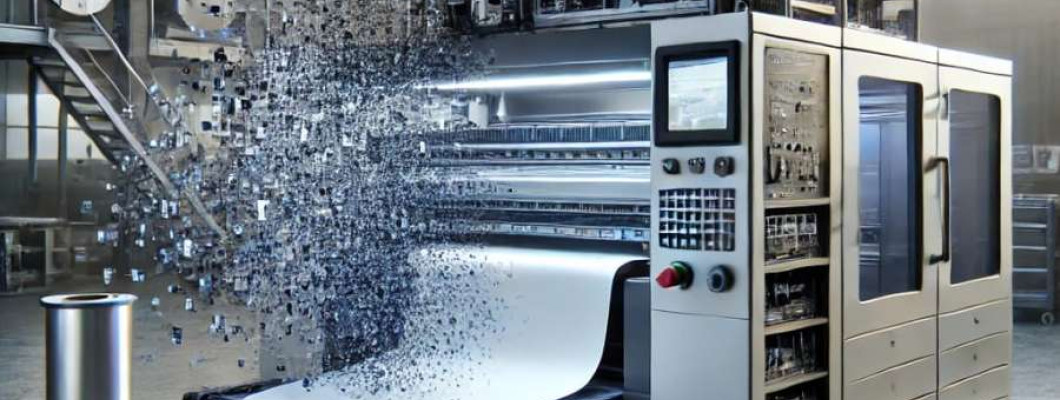
The Industrial Reality of Integrating A3 UV DTF Printers into Production Lines
Industrial printing environments demand machinery that not only delivers high-quality output but also withstands intense operational schedules and variable substrate demands. The A3 UV DTF Printer Multifunction Printing Machine confronts a technical challenge familiar to many production managers: achieving multifunctional print capabilities within an asset’s depreciation window while controlling hidden operational costs that erode profitability over time.
Consider a scenario in a mid-sized print shop transitioning from conventional screen printing to direct-to-film UV printing for short-run, custom textile projects. The shop faces bottlenecks in turnaround time and recurring maintenance downtime. The multifunctionality of this printer implies simultaneous capability for UV curing, direct-to-film printing, and multifunction substrate compatibility. However, key operational hurdles emerge: thermal regulation under sustained load, ink chemistry stability, and printhead longevity under harsh UV ink particulate conditions.
Historically, mid-tier UV printing machines suffer from rapid depreciation paired with significant asset downtime, largely due to maintenance cycles that extend beyond planned preventive schedules. Efficiency metrics frequently degrade as thermal expansion affects nozzle alignment, leading to microscopic color misregistration and subsequent reprints.
Analyzing these impacts is vital to quantify unseen costs embedded in labor, utility consumption, and consumables waste. Failure to integrate robust lifecycle maintenance protocols can double the total cost of ownership within 24 months. Thus, the industrial reality mandates a deep understanding of these operational limitations to optimize throughput and financial viability.
Technical Deep-Dive into the Core Components and Performance Parameters
UV Curing System and Thermal Management
The A3 UV DTF Printer integrates a targeted UV LED curing array optimized for rapid polymerization of specialty inks. A hypothetical thermal load analysis shows that during continuous 8-hour operation cycles, the printer’s thermal dissipation system maintains a surface temperature below 50°C, critical to preventing printhead and substrate distortion. By comparison, competitor systems without advanced cooling exceed 70°C under similar load, risking nozzle blockage and color shift.
Printhead Architecture and Ink Droplet Precision
The printhead deploys piezoelectric nozzles capable of ejecting ink droplets as small as 4 picoliters (pl), enabling micron-level resolution at a print density peaking at 1440 dpi. This micro-droplet control counters typical challenges such as ink bleed and dot gain on various substrates including PET film and coated textiles. Moreover, its modular design allows swift replacement minimizing downtime.
Ink Chemistry and Adhesion Properties
The UV-curable inks are formulated for adhesion versatility across PVC, polyester, and synthetic blends, with post-curing hardness measured at Shore D 65, offering resistance against abrasion and chemicals. This surpasses conventional solvent inks that often degrade after 500 abrasion cycles.
Depreciation and Maintenance Cost Modeling
Assuming a purchase cost of $25,000 and standard depreciation over 5 years with straight-line accounting, monthly depreciation is approximately $416. However, maintenance introduces significant variable costs. Printhead replacement averages $1,200 every 18 months; UV LED modules require replacement after approximately 24,000 operational hours with an average cost of $600. Consumables such as specialty inks run at 2 liters per 1,000 A3 prints, costing $120 per liter. Factoring consumables and maintenance, operational expenditure rises by approximately $500 monthly beyond depreciation.
Performance Comparison Table
| Specification | A3 UV DTF Printer | Conventional UV Printer |
|---|---|---|
| Max Print Resolution (dpi) | 1440 | 1200 |
| Droplet Size (pl) | 4 | 10 |
| Thermal Max Surface Temp (°C) | <50 | 70+ |
| UV LED Module Lifetime (hours) | 24,000 | 12,000 |
| Print Substrate Versatility | High (PET, Polyester, Synthetic) | Medium (limited substrate range) |
| Monthly OPEX (Ink + Maintenance) | ~$500 | ~$650 |
Scenario Analysis of Business Use-Cases Impacted by Printer Specifications
Small Batch Custom Apparel Production
For businesses producing bespoke runs of 50 - 200 garments, the printer’s high dpi and small droplet size translate directly into sharper, detailed lettering and complex graphics without the overhead of screen setup costs. This reduces waste and turnaround time. However, careful thermal management ensures that fabric deformation risks remain minimal in longer runs.
Prototype Label and Decal Manufacturing
Labels require crisp edges and durable adhesion. The multifunction printing combined with robust UV curing ensures prototypes withstand abrasion and chemical exposure necessary for client testing. High substrate versatility avoids costly retooling.
Mid-Volume Promotional Product Printing
In promotional items such as phone cases or signage, throughput must balance quality and speed. The thermal efficiency and modular printhead reduce downtime, enabling near-continuous operation and predictable maintenance scheduling.
Expert FAQ on Top-Tier Printhead and Operational Challenges
Q1: How does the micro-droplet size affect color fidelity on multi-layer prints?
Smaller droplets reduce ink bleeding and allow layered color gradation without mixing, enhancing fidelity in CMYK plus white ink prints typical of DTG and DTF applications.
Q2: What is the impact of thermal cycling on nozzle alignment over a 12-month period?
Thermal cycling below 50°C preserves alignment, but above 60°C, expansion stresses cause measurable nozzle drift, increasing misregistration by up to 0.15 mm.
Q3: Can UV LED modules be replaced individually or only as a whole unit?
The design supports individual module replacement, reducing cost and downtime compared to full system swaps.
Q4: What maintenance best practices maximize printhead lifespan?
Daily automated nozzle purging combined with monthly ultrasonic cleaning protocols extends lifespan close to 18 months versus typical 12.
Q5: How does substrate thickness variation influence curing time and ink adhesion?
Thicker substrates (>0.5 mm) require incremental UV dose increases to maintain cure depth, affecting cycle time. Adhesion remains strong due to flexible ink chemistry.
Strategic Verdict and Final Recommendation for Industrial Integration
After rigorous technical and financial examination, the A3 UV DTF Printer Multifunction Printing Machine stands out as a pragmatic solution for enterprises targeting mid-volume production with a need for substrate versatility and precision output. Its advanced thermal management, micro-droplet piezoelectric printhead, and modular maintenance design successfully mitigate common operational bottlenecks. The predictable depreciation curve coupled with transparent operational costs allows financial controllers to forecast total cost of ownership with confidence.
For businesses aiming to scale beyond prototype phases without compromising detail or throughput, this printer offers a reliable technology platform. The balance of CAPEX and OPEX, especially when compared to legacy UV solutions, renders it a superior investment for environments where asset longevity and uptime are paramount.
The printer’s multifunction capability also streamlines infrastructure integration, reducing the need for multiple machines and associated labor costs. Interested readers can review detailed product specifications and procurement options via the official product page at A3 UV DTF Printer Multifunction Printing Machine.