
The Industrial Reality Behind A3 Roll DTF Printer Reveals Hidden Operational Bottlenecks for Maintenance Leads
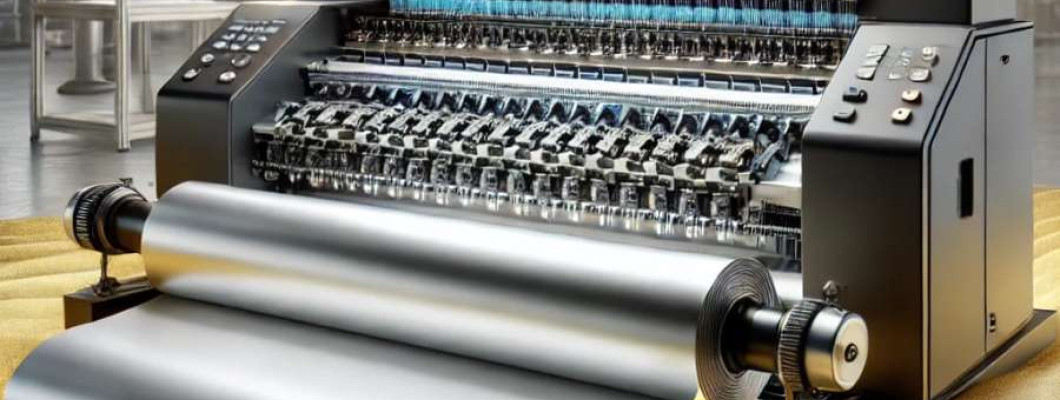
The Industrial Reality of Operating an A3 Roll DTF Printer
Operating an A3 Roll DTF Printer in a high-throughput print shop presents multifaceted challenges that often remain unseen until they cause significant disruptions. Contrary to the straightforward perception of roll-fed direct-to-film printing, the daily reality involves technical intricacies such as precise printhead operation under continuous stress, ink chemistry management, and maintenance cycles that directly affect uptime and print quality. One common bottleneck lies in the printhead's thermal and mechanical durability, especially when printing at industrial speeds with high ink deposition rates. These printheads, typically piezoelectric or thermal inkjet variants, face accelerated wear when running continuous jobs, risking nozzle clogging and misfires.
Maintenance lead personnel must navigate complex interactions between ink viscosity changes due to temperature fluctuations, film tension variance in the roll feed, and environmental particulate contamination. Such factors can cause subtle degradation in print fidelity, causing color shifts detectable only through micron-level inspections or densitometry analysis. Another operational hurdle is the cleaning cycles and replacement protocols for consumables like wiper blades and capping stations that, if improperly managed, exponentially increase downtime and labor overhead.
Additionally, the DTF printing process demands exact calibration of curing parameters—heat and pressure must be balanced to ensure optimum powder adhesion and film transfer without compromising substrate integrity. This balance is delicate and varies with substrate types, from cotton textiles to blends, further complicating the maintenance regimen. These operational subtleties underscore the need for maintenance leads to develop rigorous preventative schedules and diagnostics beyond standard factory recommendations.
Technical Deep-Dive Into Printhead and Ink System Vulnerabilities
Printhead Wear Analysis Under Continuous Operation
The A3 Roll DTF Printer typically employs a piezoelectric drop-on-demand printhead with nozzles sized at approximately 10–12 picoliters (pl). Under continuous operation at 600 dpi horizontal resolution and speeds reaching 1.2 meters per minute, nozzle firing frequency approaches 8 kHz per nozzle channel. Assuming a 128-nozzle array across CMYK plus white channels, the cumulative mechanical actuation cycles can exceed several billion after 1,000 operational hours. The mechanical fatigue of the piezo elements and the propensity for particulate clogging require a maintenance replacement interval typically between 1,500 to 2,000 hours to prevent print quality degradation.
Ink Rheology and Thermal Stability
DTF inks must maintain stable viscosity in the 12-14 centipoise (cP) range at 30–35°C to ensure reliable droplet formation and film adhesion. However, in real-world scenarios, ambient temperature fluctuations of ±5°C can induce viscosity shifts upwards of 1.5 cP, impairing droplet satellite formation and causing micro-droplet misplacement. A thermal control unit with ±1°C regulation accuracy is necessary to mitigate such deviation. Additionally, ink pigment particle size distribution (~100–300 nm) can lead to sedimentation over 8–12 hours of idle time, requiring automated or manual stirring mechanisms to maintain consistency.
Film Tension and Feed Accuracy Comparison
The roll-fed nature of the A3 printer demands precise tension control to maintain registration accuracy within ±0.2 mm to avoid banding artifacts. Two common approaches are:
| Feature | Stepper Motor Tension Control | Servo Motor Tension Control |
|---|---|---|
| Precision | ±0.5 mm accuracy | ±0.1–0.2 mm accuracy |
| Complexity | Lower, less expensive | Higher, requires feedback sensors |
| Maintenance | Motor brushes and belts require quarterly inspection | Servo motors generally longer-lasting with periodic calibration |
| Cost | Lower upfront cost | Significantly higher initial investment (~30% more) |
Consumables Lifecycle and Downtime Impact
Critical wear components like wiper blades, capping stations, and pump seals show median replacement cycles of 600, 1,000, and 1,200 operational hours respectively. Failure to replace within these timeframes can result in nozzle blockages, increased ink drying time, or ink leakage, causing unplanned downtime often exceeding 3 hours per incident. Trends in maintenance logs indicate that unplanned downtime can reduce overall equipment effectiveness (OEE) from a baseline of 85% to below 70% cumulatively over 6 months.
Environmental Contaminant Influence and Cleanroom Considerations
Microparticle contamination above 2 microns suspended in ambient air can settle on film surfaces and printheads, leading to nozzle obstruction and film adhesion failures. In spaces without adequate HEPA filtration and humidity control (maintained at 45–55%), maintenance frequency for printhead cleaning increases by 30-40%, doubling labor costs directly linked to machine uptime.
Scenario Analysis Highlighting Key Use-Case Impacts
Scenario 1: Small Batch Textile Printing Shop
For a shop specializing in orders below 100 units, the primary bottleneck is frequent printhead cleaning and recalibration due to intermittent print runs causing ink settling. Maintenance leads must implement daily nozzle checks, increasing labor by approximately 1 hour per day. While the A3 Roll DTF Printer’s roll system supports rapid job changes, the non-continuous cycle intensifies consumable wear proportional to idle times.
Scenario 2: Mid-level Production Facility with Automated Workflow
In a production environment running 8-10 hour continuous shifts, integrating servo motor-based roll tension control reduces registration errors, improving first-pass yield by an estimated 15%. However, maintenance complexity increases with advanced feedback systems, requiring higher technical skill levels and scheduled recalibrations every 3 weeks to sustain print quality.
Scenario 3: Large-Scale Industrial Print House with Multiple Shifts
At scale, preventative maintenance protocols can optimize uptime to exceed 90%, with scheduled consumable replacements every 1,000 hours and printhead swaps roughly annually. Implementation of environmental controls and vacuum-filtered air reduces unexpected downtime related to particulate contamination by nearly 50%, critical for maintaining throughput at daily averages exceeding 500 linear meters of printed film.
Expert FAQ Explores Advanced Maintenance Challenges
What are the critical signs that indicate impending printhead failure in A3 Roll DTF Printers?
Nozzle misfires manifest as micro-white lines (dropouts) or blurred edges on text elements. An acoustic impedance test in some models can preemptively detect piezo element degradation by comparing firing frequencies against baseline thresholds.
How does ink pigment sedimentation affect print quality and maintenance frequency?
Uneven pigment distribution causes inconsistent opacity and color density, forcing operators to shorten ink replacement intervals and increase nozzle cleaning cycles, directly impacting maintenance scheduling.
What are best practices for maintaining film roll tension during extended print runs?
Utilizing servo-controlled feedback mechanisms with tension sensors calibrated to ±0.2 N maintains steady feed rates, preventing banding and alignment errors. Periodic system recalibration every 200 hours is recommended.
How does ambient humidity influence powder adhesion in the DTF process?
Humidity outside 45-55% RH either reduces or excessively increases powder adhesion, leading to transfer issues during heat press phases. Controlled environments with HVAC integration improve consistency and reduce rework.
What maintenance strategies mitigate downtime caused by capping station wear?
Regular inspection and cleaning of capping station seals every 500 hours, coupled with replacement intervals at 1,000 hours, prevent ink drying on nozzles, essential for instant start-stop cycles in production.
Strategic Verdict and Recommendation Emphasizing Maintenance Realities
The A3 Roll DTF Printer stands as a robust industrial-grade solution suitable for businesses requiring flexible, mid-scale-to-high throughput textile printing capabilities. A maintenance lead's understanding of the intricate relationships among printhead physics, ink chemistry, and environmental factors is paramount in fully leveraging this device’s potential. While it presents operational bottlenecks—particularly in consumable wear, printhead longevity, and environmental susceptibility—these challenges are manageable with disciplined maintenance regimes and investments in precise tension control and environmental conditioning.
Given its performance profile and modular design facilitating accessible component swaps, the A3 Roll DTF Printer is recommended for print facilities seeking a balance between precision and uptime. Its capacity for micron-level print fidelity when properly maintained confirms its place as a competitive enterprise-grade technology in the DTF printing segment.