
The Industrial Reality of Lifecycle Maintenance Costs in the A4 Roll DTF Printer for Maintenance Leads
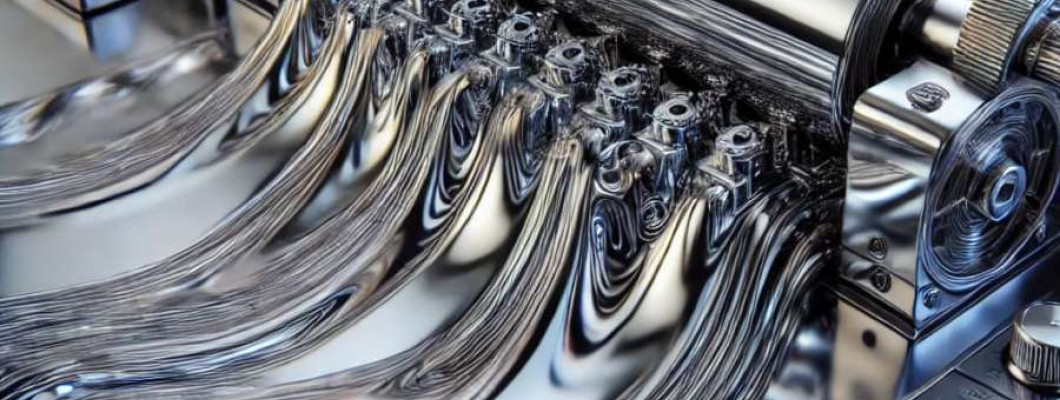
The Industrial Reality of Maintaining A4 Roll DTF Printers in High-Precision Environments
In industrial printing operations where precision and uptime are paramount, the lifecycle maintenance costs of specialized equipment such as the A4 Roll DTF Printer create a critical operational challenge. Maintenance leads are often tasked with balancing the relentless demands of sustained print quality against constrained maintenance windows and escalating costs associated with parts replacement and consumables. The printer’s printheads, ink delivery systems, and roll-feed mechanisms endure complex mechanical and chemical stresses that accelerate wear and necessitate rigorous monitoring protocols.
Consider a decentralized print shop handling mid-volume textile decoration. The A4 Roll DTF printer’s printheads operate at micron-level precision, ejecting droplets typically in the range of 2 to 5 picoliters (pl) to maintain image sharpness at resolutions exceeding 1440 dpi. This exactness means that even minor clogging or nozzle degradation directly translates to print defects, thereby triggering maintenance cycles. However, the maintenance protocols extend beyond printhead care; the roll feed mechanism, motor drivers, and temperature control subsystems each have distinct service intervals that cumulatively influence operational continuity.
The chemical composition of DTF inks compounds the maintenance complexity. Pigment stability and solvent volatility increase deposit formation risks within ink channels, making regular cleaning with compatible solvents critical. The costs associated with these consumables—cleaners, replacement filters, and printing substrates—must be factored into the total cost of ownership (TCO). Maintenance leads must implement data-driven schedules and adhere to OEM-provided service bulletins to optimize asset longevity without compromising throughput.
Technical Deep-Dive into Maintenance Cost Drivers
Printhead Mechanics and Failure Points
The core of the A4 Roll DTF Printer’s precision is its piezoelectric printheads, typically equipped with thousands of nozzles. Each nozzle ejects droplets with volume variance constrained within ±0.5 pl to sustain sharp image gradients. Failures often manifest as nozzle blockages caused by ink sedimentation or mechanical abrasion from particulate contaminants within the ink supply. Hypothetically, if no maintenance cleaning occurs for 500 hours of printing, nozzle dropout rates may increase by 20%, reducing final product quality and requiring costly printhead replacement (~$1,200 per unit).
Ink Chemistry and Cleaning Protocols
DTF inks incorporate pigment particles sized around 150 nm suspended in a solvent matrix prone to evaporation and drying within microfluidic channels. Daily cleaning cycles employing solvent flushing reduce the risk of pigment agglomeration. If a maintenance lead schedules solvent flushes every 200 print hours instead of the recommended 100, the probability of channel clog formation doubles, accelerating printhead wear exponentially. The chemical interaction necessitates using OEM-approved solvents to prevent printhead membrane degradation.
Roll Feed and Drive System Wear
The motorized roll feed mechanism maintains constant tension on substrates varying from 0.1 to 0.3 mm thickness at speeds up to 500 mm/min. Bearings and belt drives within this system are rated for 5,000 operational hours before replacement under ideal lubrication conditions. Failure to adhere to lubrication schedules results in 30% higher motor current draw, increasing heat dissipation and eventual servo driver failures. Preventative maintenance cycles reduce unexpected downtime and maintain motor efficiency.
Thermal Management System Efficiency
Keeping the drying or curing temperature stable between 60°C and 90°C is critical for ink adhesion. The printer’s thermal system consumes an average power draw of 120 Watts, with control unit feedback mechanisms responding at 10-second intervals. Faulty temperature sensors or degraded heating elements cause temperature drift, resulting in adhesion defects. Scheduled sensor calibration and element replacement every 1,000 hours, verified via resistance measurements, ensure consistent thermal profiles.
Economic Impact of Maintenance Strategies
Table 1 compares two maintenance strategies over a 12-month operational period printing 1,000 square meters monthly:
| Parameter | Proactive Maintenance | Reactive Maintenance |
|---|---|---|
| Printhead Replacement Frequency | Once (every 12 months) | Twice (every 6 months) |
| Average Downtime | 10 hours/month | 30 hours/month |
| Consumable Costs | $3,000/year | $4,500/year |
| Unexpected Repair Costs | $500/year | $2,000/year |
| Total Maintenance Cost | $3,500/year | $6,500/year |
Proactive maintenance, guided by precise printhead monitoring and scheduled solvent flushes, reduces costs by nearly 46% and limits production downtime, critical in industrial environments.
Scenario Analysis
Scenario 1 Industrial Textile Decorator
A medium-scale textile decorator requires steady output of detailed logos on polyester substrate. Scheduled cleaning after 100 print hours ensures the printheads maintain color fidelity and sharp edges. Over 6 months, adherence to cleaning minimizes costly interruptions from printhead failures, preserving contract fulfillment schedules.
Scenario 2 Small Batch Customization Business
A business specializing in on-demand branding uses the printer inconsistently but requires high-quality prints. Maintenance leads implement monthly solvent flushes and printhead diagnostics to counter inactivity-related sedimentation, thereby reducing sudden maintenance spikes.
Scenario 3 High-Volume Production Facility
In a high-throughput environment printing 2,000 square meters per month, the maintenance team integrates sensor-based thermal calibration and vibration analysis for roll feed motors. This prevents component wear from escalating, ensuring continuous 24/7 operation with minimal downtime.
Advanced Expert FAQ
Q1: How does ink viscosity fluctuation affect printhead lifespan?
Ink viscosity variations above ±3 cP increase nozzle shear stress, accelerating printhead membrane fatigue and clog formation. Regular viscosity measurements with a viscometer can preemptively guide ink replacement or dilution strategies.
Q2: What failure modes are caused by thermal sensor drift?
Thermal sensor drift results in either overheating or under-curing. Overheating leads to substrate deformation, whereas under-curing causes ink adhesion failure, both necessitating reprint and potentially printhead damage due to ink backflow.
Q3: How to optimize solvent flushing to maximize maintenance intervals?
Employing solvents with optimal surface tension matching the ink solvent matrix reduces residue buildup. Flushing duration should be calibrated with flow rates ensuring minimal solvent use but maximal channel clearing, typically 2-3 minutes per cycle.
Q4: Are aftermarket printheads viable for cost reduction?
Aftermarket printheads generally have lower manufacturing tolerances and shorter lifecycles, often voiding OEM warranties and increasing risk of nozzle misalignment and print artifacts, which ultimately raise operational costs.
Q5: What are the signs that roll feed tension needs adjustment?
Increased motor noise, substrate wrinkling, and inconsistent feed speed are indicative. Regular torque and tension sensor readings can detect deviations before hardware strain causes irreversible damage.
Strategic Verdict and Recommendation
Evaluating the lifecycle maintenance costs of the A4 Roll DTF Printer demonstrates its suitability as an industrial-grade solution for maintenance leads tasked with maximizing uptime and print quality. Strategic, data-driven maintenance reduces total cost of ownership significantly, addressing critical wear points in printheads, ink delivery, and mechanical subsystems. Given its robust engineering and detailed maintenance frameworks, the A4 Roll DTF Printer stands out as the preferred choice for industrial environments demanding precision and reliability. Maintenance leads adopting this platform can confidently plan service intervals, optimize consumable use, and sustain 24/7 production cycles without compromising output standards. This printer hence deserves strong consideration in industrial textile and custom printing facilities looking for dependable, maintainable equipment with predictable lifecycle costs.