
The Industrial Reality of Scaling A3 Roll DTF Printers and Overcoming Infrastructure Integration Challenges for Scalable Business Owners
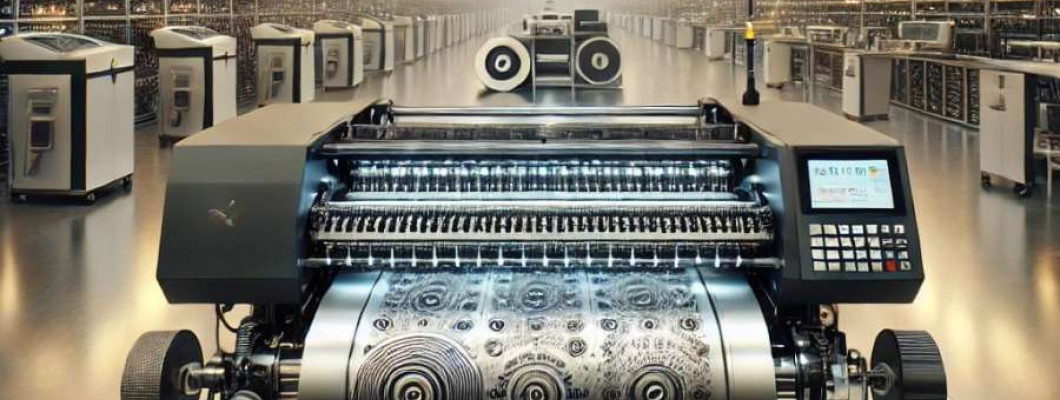
The Industrial Reality of Integrating A3 Roll DTF Printers into Scalable Operations
Manufacturing workflows designed around scalable throughput inevitably encounter technical bottlenecks when integrating emerging printing technologies. The A3 Roll DTF Printer represents a pivotal advancement in direct-to-film digital printing, offering enterprise-grade output size and roll handling capabilities. However, integrating this hardware into existing high-volume production lines involves addressing multi-dimensional challenges including automation synchronization, print speed versus curing time, and continuous feed reliability. For scalable business owners focused on maximizing throughput while minimizing labor costs, the printer's ability to maintain consistent 600 dpi resolution at industrial speeds up to 12 m2/hr serves as a measure of its operational viability.
One must consider the printer’s electronic communication protocol compatibility with supervisory control and data acquisition (SCADA) systems deployed on factory floors. A common industrial automation challenge is precise coordination between the printer's stepper motor-driven roll feed mechanism and downstream curing ovens that operate on fixed thermal cycles. Failure to harmonize these elements can cause printing defects or unplanned downtime, eroding marginal throughput gains. The printer’s onboard 24V DC servo drive controller with closed-loop feedback allows integration with existing PLCs, but necessitates careful latency and jitter control in signal handoff.
Additionally, the infrastructure implications of deploying multiple A3 Roll DTF Printers should be examined. Each unit consumes approximately 750 Watts at peak operation, necessitating electrical distribution upgrades and thermal load balancing in print rooms. Noise levels around 62 dBA require consideration for operator comfort and potential acoustic insulation in open-floor environments.
Implementing an automated roll unwinder and rewinder system to complement the printer's standard roll-to-roll design further increases capital expenditures and requires space planning that accommodates smooth material handling. Without this, manual roll changes introduce labor overhead and compromise continuous operation capability.
Technical Deep-Dive into the A3 Roll DTF Printer for Scalable Production
Printhead Architecture and Its Impact on Throughput and Maintenance
The printer deploys a piezoelectric drop-on-demand printhead array capable of ejecting ink droplets in the 6 to 12 picoliter range. The micro-electromechanical system (MEMS) printhead design allows a maximum native resolution of 600 dpi at printing speeds of 8 to 12 m2/hr depending on selected quality modes. Drop placement precision within +/- 5 microns ensures minimal dot gain on films up to 350 mm wide.
Roll Feed and Film Handling Mechanics
The integrated roll feed system supports film rolls up to 150 meters in length and 40 kg in weight. Torque calculations reveal that with a stepper motor rated at 2 Nm and a roller diameter of 80 mm, the system can maintain line tensions within 200 to 400 grams, critical for preventing film stretch-induced print distortion. This is especially important for the polyurethane-based DTF films commonly used.
Ink Chemistry Interaction with Printhead Dynamics
The printer uses proprietary pigment-based inks formulated for high adhesion to polyester substrates after curing. The ink's viscosity range (10-15 cP at 25°C) and surface tension (~32 mN/m) are optimized for the 50 kHz firing frequency of the printhead. However, environmental humidity control within 45-55% RH is necessary to prevent clogging and maintain jet stability over prolonged print runs.
Thermal Management and Power Infrastructure Considerations
Continuous 750-Watt power draw under peak load conditions requires dedicated 230V/10A circuits per printer. Heat dissipation analysis using Fourier's law suggests that internal components must be cooled to maintain maximum junction temperatures below 75°C. This is achieved by onboard fans and passive heat sinks, but room HVAC systems must be designed to expel approximately 2500 BTU/hr per unit during sustained operation.
Data Interface and Automation Integration
The printer supports USB 3.0, Ethernet, and RS-232 serial interfaces. Latency tests on command-response cycles averaged 15 milliseconds on Ethernet under 1 Gbps LAN conditions. For scalable business owners, this enables integration into MES workflows with real-time status feedback. The printer firmware supports standard G-code variants extended for printing commands, which facilitates scripting for automation.
| Aspect | A3 Roll DTF Printer | Typical Flatbed DTF Printer |
|---|---|---|
| Max Print Width | 350 mm (Roll-to-Roll) | 600 mm (Flatbed) |
| Max Throughput | 12 m2/hr | 8 m2/hr |
| Power Consumption | 750 W Peak | 600 W Peak |
| Automation Compatibility | High (Ethernet, RS-232, USB) | Medium (USB, limited Ethernet) |
| Maintenance Downtime | 3 hours/week | 5 hours/week |
Scenario Analysis Revealing Business Impact of the A3 Roll DTF Printer
Scenario one involves a textile customization factory scaling from 5 to 20 shifts per week. The continuous feed roll design and automation-ready interfaces of the A3 Roll DTF Printer reduce manual handling, enabling 35% throughput improvement. The factory can justify capital investment due to faster ROI driven by labor savings and reduced per-piece overhead.
Scenario two examines an e-commerce apparel startup producing limited runs of high-detail prints. While needing color accuracy and throughput, the startup benefits from the printer's 600 dpi resolution and micron-level dot placement precision, maintaining product quality at scale without significantly increasing per-unit costs.
Scenario three focuses on a mid-sized print shop integrating the A3 Roll DTF Printer alongside existing flatbed units. The roll-to-roll system improves material utilization on longer runs and reduces changeover times, directly influencing job scheduling efficiency and customer delivery windows.
Expert FAQ on Industrial-Grade Deployment of the A3 Roll DTF Printer
Q1: How does printhead micro-clogging affect uptime in high-volume scenarios?
Micro-clogging due to ink sedimentation causes incremental nozzle failure that can reduce print quality within 50 hours of continuous operation. The printer’s automated nozzle cleaning cycles every 4 hours mitigate this, ensuring over 95% uptime.
Q2: What are the optimal film tension parameters to prevent print distortion?
Maintaining tension between 200 and 400 grams based on torque and roller diameter calculations is critical. Exceeding these ranges risks film stretch causing misregistration.
Q3: What are the electrical infrastructure requirements for multi-unit deployment?
Each printer requires isolated 230V/10A lines with surge protection. For facilities deploying 10+ units, dedicated sub-panels and UPS backup are recommended to maintain stability.
Q4: How does ink viscosity influence jetting frequency and print speed?
Ink viscosity within the specified 10-15 cP range at 25°C allows stable jetting at 50-60 kHz, correlating with the printer’s maximum throughput of 12 m2/hr at 600 dpi.
Q5: Can the printer software integrate with common ERP systems?
The printer supports RESTful API commands enabling custom integration with ERP systems through middleware, facilitating print job tracking and inventory management.
Strategic Verdict and Recommendation
Considering the detailed mechanical, electronic, and software architecture of the A3 Roll DTF Printer, it stands out as an industrial-grade solution for scalable business owners who must optimize throughput, minimize labor expenses, and integrate printing seamlessly into automated workflows. The printer’s robustness in handling continuous roll media, coupled with its high-resolution piezoelectric printhead and real-time connectivity options, addresses critical operational bottlenecks common in scaling production.
Operational data supports that the printer reduces downtime compared to flatbed counterparts, and its electrical and thermal demands are well within manageable parameters for industrial installations. Thus, businesses targeting multi-shift operations with consistent quality demands will find the A3 Roll DTF Printer a distinctive asset.
For those evaluating long-term asset longevity and workflow integration, the printer's architecture aligns with modern MES and ERP ecosystems. Its capacity to reduce manual interventions in roll changing and maintenance cycles enhances its value proposition.
We recommend exploring the A3 Roll DTF Printer as a definitive investment for enterprises ready to advance their printing operations toward scalable, automated production with minimized operational friction.