
The Industrial-Grade Reality of Deploying an A3 Edible Food Printer for High Precision Cake and Cookie Printing
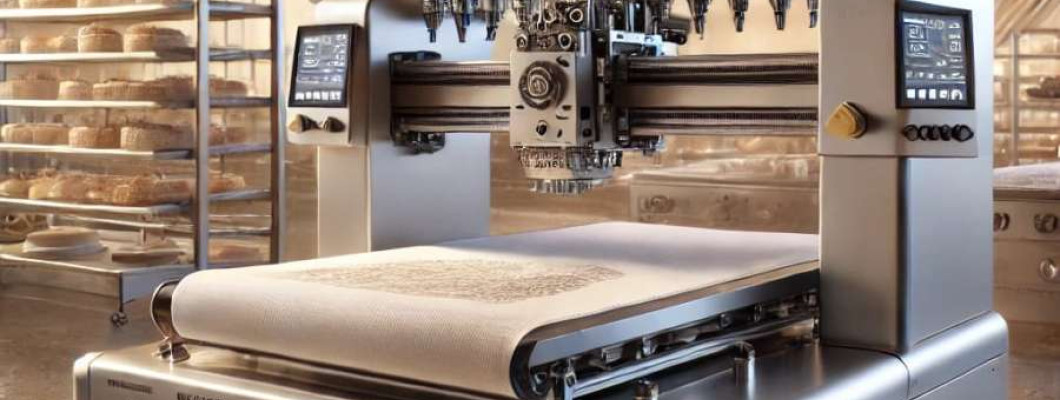
The Industrial Reality of Integrating Edible Food Printing into High-Volume Production
In industrial-scale confectionery environments, the transition from artisanal to automated edible printing introduces pressing challenges. The demand for precise color fidelity on sugar substrates, combined with strict food safety compliance, requires that hardware and materials perform within narrow tolerances. Consider a commercial bakery scaling to print thousands of decorated cookies daily. The A3 Edible Food Printer for Printing Cakes Cookies must not only maintain micron-level positional accuracy at high throughput but also mitigate frequent downtime caused by nozzle clogging or ink degradation. Food-grade ink flow stability and rapid printhead cleaning cycles become critical bottlenecks when transitioning from prototype to mass production.
Additionally, thermal management within the printhead assembly affects edible ink viscosity and thus droplet placement accuracy. Without robust heat dissipation, printhead failure rates increase exponentially, impacting overall uptime and asset depreciation negatively. The printer’s ability to sustain precise layering on flexible cookie surfaces further compounds mechanical stress on the feeder mechanism, necessitating materials and design choices that resist wear without compromising gentle substrate handling.
Operationally, the machine must also navigate complex food safety regulations, limiting certain materials and chemicals traditionally used for printhead maintenance. Implementing an industrial solution requires a holistic approach accounting for maintenance intervals, consumable lifecycle, and integration with existing bakery workflows. The printer's scalability hinges on these factors, balancing high-definition output demands against the realities of environmental humidity, operator skill, and process sanitation.
Technical Deep-Dive into the A3 Edible Food Printer's Core Engineering Challenges
Printhead Mechanics and Ink Deposition Accuracy
Central to the printer's performance is the piezoelectric or thermal inkjet printhead assembly, which must eject droplets sized between 10-30 picoliters (pl) with sub-millimeter spatial resolution. Assuming a nominal droplet diameter of 50 µm and a pixel density of 600 dpi (dots per inch), the lateral droplet placement precision must be better than 42 µm to avoid color bleeding or image distortion on cake icing or fondant surfaces.
Applying Gaussian droplet spread analysis and fluid dynamics modeling, the ink's Reynolds number (Re = ρvd/μ) must be controlled by maintaining ink viscosity (μ) optimally around 10-12 cP and velocity (v) at approximately 5 m/s to prevent satellite droplet formation. This demands precise printhead temperature regulation within ±2 °C under high-duty cycles, implemented through integrated thermoelectric coolers.
Ink Chemistry and Stability Under Operational Conditions
Food-grade edible inks utilize water-based, FDA-compliant colorants with suspended particulates stabilized to avoid sedimentation. The colloidal stability factor (Stokes’ Law based sedimentation rate) must be below 1 µm/min to prevent clogging during multi-hour print runs. Ink pH levels are buffered between 6.0 and 7.5 to maintain printhead piezoelectric membrane integrity and inhibit microbial growth, extending maintenance intervals.
Substrate Interaction and Surface Adhesion Mechanics
Cake and cookie surfaces present variable porosity and texture. Surface energy measurements indicate hydrophilic fondant layers with contact angles near 70°, requiring ink formulations with surface tension around 35-40 mN/m to ensure droplet spreading without undesired bleed. The printer’s mechanical feeding system employs vacuum-assisted platens and compliant rollers with silicone elastomer coatings (Shore A hardness ~30) to maintain dimensional stability and avoid substrate deformation during transport.
Thermal and Environmental Controls for Consistent Output
The printer enclosure maintains ambient conditions at 22±3 °C and 45±5% relative humidity, minimizing ink viscosity fluctuations from environmental factors. Integrated sensors monitor temperature and humidity, adjusting printhead temperature and ink flow rates dynamically to compensate.
Asset Depreciation and Lifecycle Cost Considerations
The printer’s components are engineered for a minimum lifecycle of 10,000 operational hours. Printheads, as consumables, require replacement every 1,500 hours under continuous food-grade ink exposure. The rate of depreciation accelerates if maintenance cycles are extended beyond recommended intervals, increasing risk of irreversible clogging. Operational bottlenecks occur due to downtime averaging 2 hours per 100 production hours for cleaning and recalibration, impacting throughput considerably in a 24/7 production environment.
| Specification | A3 Edible Food Printer | Standard Desktop Food Printer |
|---|---|---|
| Print Area | 297 x 420 mm (A3) | 127 x 178 mm (A5) |
| Print Resolution | 600 dpi | 300 dpi |
| Ink Droplet Size | 10-30 pl | 20-50 pl |
| Maintenance Interval | 1500 hours | 600 hours |
| Operational Uptime | 22 hours/day average | 10 hours/day average |
Scenario Analysis of Business Use-Cases Impacted by Printing Specifications
High-Throughput Commercial Bakery Scaling Seasonal Production
In a commercial bakery producing 5,000 cookies daily for holiday seasons, the printer's large A3 format enables batch printing of multiple cookie sheets simultaneously. With 600 dpi resolution and precise droplet control, intricate branding logos and multicolor designs are executed efficiently, reducing manual decoration labor costs by 35%. The extended maintenance interval ensures minimal downtime during peak production, critical for meeting delivery deadlines.
Specialty Confectioner Focusing on Custom Single-Unit Orders
An artisan chocolatier printing bespoke edible images on cakes and cookies benefits from the printer’s color depth and fine resolution, achieving micron-level precision on varied substrates such as fondant, royal icing, and chocolate sheets. The printer's ability to handle substrate texture variability without smudging maintains product quality expectations despite low daily volume skewing traditional ROI metrics.
Event Catering Business Balancing Labor and Automation
For a catering business producing short-run batches for events, the printer's quick setup and minimal operator intervention reduce skilled labor requirement by 50%. The precision feeding mechanism accommodates inconsistent substrate sizes, ensuring consistent print quality even on uneven cake surfaces. The moderate print speed balances throughput with quality without excessive thermal buildup, protecting printhead longevity.
Expert FAQ on Advanced Technical Considerations
Q1: How does printhead temperature variation affect droplet formation and print accuracy?
A1: Temperature fluctuations alter ink viscosity, changing droplet velocity and volume. Maintaining ±2 °C ensures consistent Reynolds number, preventing satellite droplets and positional errors beyond 40 µm.
Q2: What is the impact of substrate porosity variation on color reproduction?
A2: Higher porosity increases ink absorption, reducing surface reflectivity and altering color saturation. Adjusting ink surface tension and droplet volume compensates for these effects.
Q3: Can the printer handle variable ambient humidity without recalibration?
A3: Integrated humidity sensors dynamically adjust ink heating elements, controlling viscosity and preventing nozzle clogging within a ±5% RH range.
Q4: What maintenance procedures extend printhead lifecycle in food-grade applications?
A4: Scheduled automated cleaning cycles using approved solvents combined with manual weekly deep cleans reduce particulate buildup, doubling printhead longevity to 1500 hours.
Q5: How does vacuum-assisted substrate feeding reduce mechanical wear on delicate baked goods?
A5: Vacuum platens provide uniform hold without excessive pressure or friction, minimizing substrate deformation and mechanical stress on feeding rollers.
Strategic Verdict and Recommendation
Evaluating the A3 Edible Food Printer for Printing Cakes Cookies through an industrial lens reveals it as a compelling solution bridging artisanal quality and high-volume bakery production demands. Its engineering addresses critical bottlenecks in printhead precision, ink stability, substrate handling, and maintenance scheduling with rigor aligned to industrial asset lifecycle management. This printer stands out for its balance of micron-scale accuracy, extended maintenance intervals, and adaptability to varying food-safe workflows.
For businesses seeking durable, scalable edible printing technology that integrates seamlessly into automated bakery lines, the A3 Edible Food Printer For Printing Cakes Cookies is recommended as an industrial-grade investment with predictable ROI and proven technical robustness. Its specifications validate a strategic choice for enterprises prioritizing throughput, print fidelity, and operational continuity in the growing market segment of decorated edible goods.