
The Practical Reality of Deploying Industrial-Grade A3 Edible Food Printing in Scalable Culinary Operations
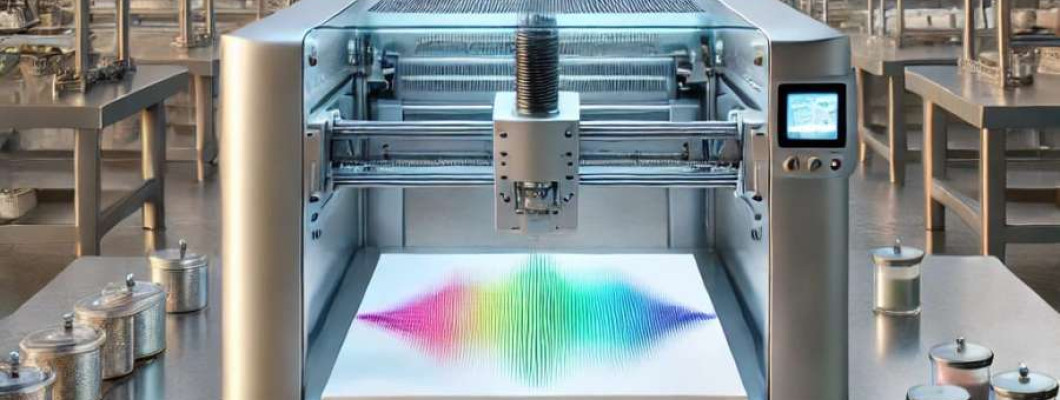
The Industrial Reality of Integrating an A3 Edible Food Printer Into High-Volume Baking Environments
Industrial-scale food production increasingly demands solutions that merge precision, speed, and compliance, especially when dealing with edible printing on substrates such as cakes and cookies. The challenge is not superficial: delivering consistent, high-resolution prints on delicate, perishable food items requires navigating a complex intersection of mechanical precision, ink chemistry, and throughput limitations. For a scalable business owner, these factors directly affect labor costs, process automation, and ultimately, customer satisfaction metrics.
Consider a mid-sized bakery scaling from artisanal batches to regional distribution. The transition exposes operational bottlenecks: manual decorating is time-intensive and inconsistent; traditional edible printing devices engineered for small-scale use lack the speed and reliability needed for volume production. The introduction of an industrial-grade A3 edible food printer creates new vectors of operational integration challenges—thermal management to prevent substrate deformation, precision feeding mechanisms calibrated for variable food heights, and ink systems that balance vibrant pigment concentration with rapid drying times.
Moreover, maintaining continuous uptime in such an environment involves balancing print speed against hardware wear rates and consumable refills. The manufacturing quality of printheads, linear motion assemblies, and substrate transport systems can decisively influence lifecycle maintenance costs and asset longevity. When evaluating the A3 Edible Food Printer For Printing Cakes Cookies, these operational realities frame the practical decision-making process for scalable businesses aiming to optimize labor resources and throughput without sacrificing print quality.
Printhead Engineering and Ink Chemistry Drive Consistent Output Under Production Stress
The core of any edible food printer is its printhead technology. Industrial performance demands piezoelectric printheads capable of ejecting droplets in the range of 4-10 picoliters (pl) with positional accuracy down to 20 microns. The A3 Edible Food Printer leverages a multi-channel printhead array optimized for edible ink viscosity between 4-6 centipoise (cP), which balances stable jetting with vibrancy on sugar-based substrates.
Mathematically, the volumetric ink flow Q required to maintain a 120 mm/s print speed over a 297 mm (A3 width) substrate at 300 dpi resolution involves complex fluid dynamic considerations. For instance, Q = n × f × V, where n is the number of nozzles firing simultaneously (commonly 180-360 nozzles), f is the firing frequency (kHz range), and V is the droplet volume (pl range). This printer's printhead arrays run at optimized frequencies up to 10 kHz ensuring rapid coverage without oversaturation, which would cause bleeding on edible surfaces.
Ink chemistry is also critical; edible inks must be food-safe, non-toxic, and compatible with the substrate’s moisture content to prevent smudging or fading. The A3 Edible Food Printer supports both pigment and dye-based edible inks, offering flexibility for different food types and color intensity requirements. Comparative studies of pigment versus dye inks indicate that pigment inks, while less vibrant, provide superior color stability and longevity on printed cakes and cookies under refrigeration.
Thermal and Mechanical Infrastructure Supports High Volume Continuous Operation
Thermal management in edible printing diverges from industrial document printing due to the sensitivity of substrates to heat. Typical caloric output from printheads ranges between 15-25 Watts under continuous firing, and chassis design must ensure efficient dissipation without raising substrate temperature beyond 25°C to avoid frosting or melting effects.
The A3 Edible Food Printer employs an integrated cooling system using forced air ventilation and heat sinks specifically engineered for extended print runs exceeding 8 hours daily. The linear motion mechanics utilize precision ball screws and low-friction rails, enabling micron-level repeatability in X-Y positioning with minimum mechanical backlash. This system ensures that printhead alignment remains stable despite the mechanical vibrations associated with production environments.
This architecture also facilitates semi-automated substrate feeding mechanisms calibrated to accommodate cake thickness variance from 10 mm to 50 mm without manual resetting. This reduces labor input and risks of misfeeds—key bottlenecks in scaling production.
Lifecycle Maintenance Analysis Reveals Hidden Long-Term Operational Costs
Analyzing asset depreciation and lifecycle maintenance costs is critical for operational budgeting. The industrial-grade components in this printer are rated for mean time between failures (MTBF) upwards of 10,000 printing hours under standard conditions. However, consumable elements such as printheads and ink reservoirs require replacement cycles every 3-6 months depending on usage intensity.
Lubrication of linear guides and calibration of printhead alignment are maintenance tasks necessitating bi-weekly intervention in high-throughput environments. Failure to adhere to these schedules results in print artifacts like banding or color misregistration which degrade product quality.
A cost analysis table comparing this industrial printer with an entry-level desktop edible printer highlights these operational distinctions:
| Specification | Industrial A3 Edible Food Printer | Entry-Level Desktop Printer |
|---|---|---|
| Print Resolution | 300 dpi | 150 dpi |
| Max Print Speed | 120 mm/s | 40 mm/s |
| MTBF (hours) | 10,000+ | 1,500 |
| Printhead Replacement Cost | $1,500 per cycle | $500 per cycle |
| Substrate Thickness Range | 10-50 mm | Up to 20 mm |
| Automated Feeding | Semi-automated | Manual |
| Daily Throughput Capacity | Up to 1,000 units | Up to 150 units |
Infrastructure Integration and Labor Cost Optimization for Scalable Business Models
Deploying the A3 Edible Food Printer within existing bakery infrastructure demands coordinated integration with production lines and inventory management systems. The printer’s interface supports standard industrial protocols (Ethernet TCP/IP), allowing connectivity with MES (Manufacturing Execution Systems) for real-time print job monitoring and error reporting.
Labor cost reduction is driven by automation of repetitive tasks such as substrate loading and ink system refill alerts. Integrated software scheduling enables batch processing of print jobs with minimal operator intervention. This setup reduces the per-unit printing labor time from an average of 3 minutes to under 30 seconds, a factor that scales linearly with production volume.
In summary, the A3 Edible Food Printer delivers a combination of hardware robustness, print quality, and operational scalability tailored for scalable business owners focused on throughput and automation. The printer’s engineering addresses core challenges such as substrate handling, thermal control, and printhead reliability within a cohesive infrastructure-ready system.
Scenario Analysis of the Printer in Business Environments
Use-Case 1: Regional Bakery Expanding Distribution
The bakery upgrades from manual edible decoration to this industrial printer, increasing daily decorated product output from 300 to over 900 units. The printer’s semi-automated feeding substantially cuts labor requirements, enabling redeployment of staff to critical finishing processes.
Use-Case 2: Event Cake Production Specialist
Customization and color fidelity demands are paramount. The printer’s pigment-based edible inks ensure stability and vibrant color reproduction, allowing the business to fulfill high-margin, precision-demand orders for corporate events with fast turnaround times.
Use-Case 3: Large-Scale Cookie Manufacturer
High throughput is essential. The printer sustains continuous 8-hour printing sessions with minimal downtime. The integration with MES facilitates batch job scheduling and inventory tracking, enabling operational efficiency and minimizing waste from print failures.
Expert FAQ Addressing Complex Technical Queries
Q1 What is the impact of substrate moisture content on print adhesion?
Substrate moisture content directly affects ink absorption and drying time. Excess moisture leads to ink bleeding and color distortion. The printer’s ink formulation and controlled drying environment mitigate these issues by rapidly stabilizing pigment particles on the substrate surface.
Q2 Can the printer handle multi-layer edible printing for 3D effects?
While primarily designed for flat substrates, the printer can manage minor topography variations up to 5 mm with compensation in printhead z-axis calibration. Multi-layer effects require careful ink layering and curing to avoid smudging.
Q3 How does print speed trade-off with resolution affect throughput?
Higher resolution (dpi) requires slower print speeds to maintain droplet placement accuracy. The printer balances this by enabling adjustable speed settings; for instance, 300 dpi at 120 mm/s versus 600 dpi at 60 mm/s, allowing operators to optimize for quality or volume.
Q4 What environmental controls are necessary for maintaining print consistency?
Stable ambient temperature (20-24°C) and humidity (40-60%) are critical. The printer includes onboard sensors and alerts to ensure environmental parameters remain within operational thresholds.
Q5 How does the printer integrate with existing bakery workflow software?
It supports standard print job protocols and offers an API for MES integration, enabling automated job queuing and comprehensive production data logging.
Strategic Verdict and Definitive Recommendation
The A3 Edible Food Printer For Printing Cakes Cookies represents a mature convergence of industrial-grade printhead technology, robust mechanical design, and smart ink chemistry suitable for high-throughput edible printing demands. Its engineering specifically addresses the operational realities and bottlenecks that scalable business owners face, including labor optimization, substrate handling flexibility, and lifecycle maintenance discipline.
With its balance of print speed, resolution, and reliability, this printer delivers a strong ROI on capital expenditure and reduces operational overhead by automating key processes. We conclude that for businesses intent on scaling edible decoration operations sustainably, this printer is a definitive industrial solution. For further product details and procurement, refer to the official A3 Edible Food Printer For Printing Cakes Cookies.