
The Pragmatic Costs and Integration Challenges of the A3 Roll DTF Printer T-shirt Printing Machine
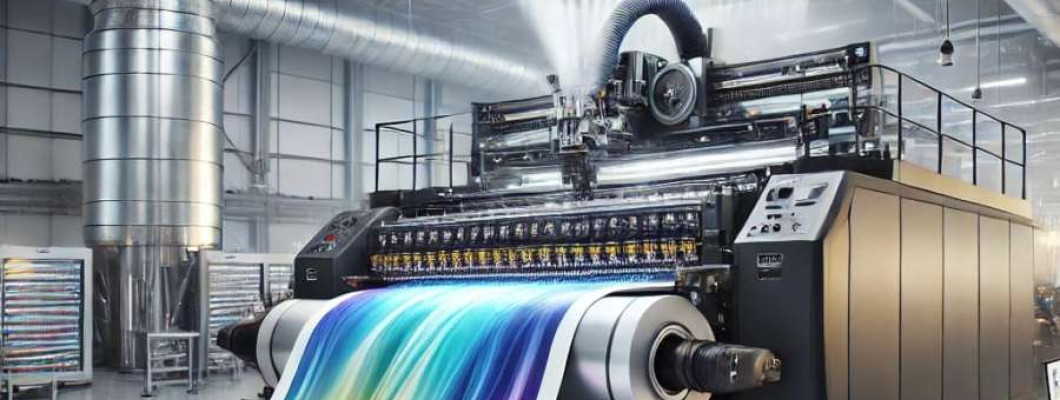
The Industrial Reality of Integrating A3 Roll DTF Printers
In the industrial printing sector, the transition from manual textile decoration to automated direct-to-film (DTF) printing technologies presents significant operational challenges. The A3 Roll DTF Printer T-shirt Printing Machine embodies a niche yet growing segment in apparel manufacturing, especially for small to medium batch runs. However, the operational landscape underscores hidden bottlenecks often overlooked during initial procurement. For instance, despite its small footprint compared to traditional DTG systems, this printer demands rigorous maintenance routines to sustain printhead integrity and prevent nozzle clogging, an issue exacerbated by pigment ink chemistry and temperature variability.
Moreover, the integration of an A3 Roll DTF system into existing manufacturing workflows is often underestimated. The machine’s continuous roll feed design necessitates precise synchronization with curing ovens and film application processes to avoid bottlenecks in throughput. The human factor engineering challenges—such as operator interface ergonomics and error rates during roll loading—further complicate seamless adoption. These aspects contribute to unquantified downtime, impacting cycle times and ultimately affecting return on investment (ROI) projections.
Environmental and regulatory compliance also bear heavily on deployment decisions. The curing process typically requires elevated temperatures around 150–160°C sustained for several minutes, demanding robust thermal management solutions and well-ventilated setups to mitigate volatile organic compound (VOC) emissions. Without dedicated exhaust or filtration systems, compliance with occupational safety standards becomes onerous, particularly in densely populated industrial parks or regions with stringent emissions regulations.
Technical Deep Dive into the A3 Roll DTF Printer
Printhead Technology and Failure Modes
The heart of the A3 Roll DTF printer is its precision thermal inkjet printhead, commonly featuring piezoelectric nozzles operating at sub-10 picoliter droplet sizes. Given the roll-fed continuous operation, nozzle clogging arises primarily from pigment sedimentation and ink viscosity changes linked to ambient humidity and temperature. Hypothetically, assuming an average nozzle count of 180 nozzles per color channel and a 4-color CMYK setup, a 5% partial clog reduces effective nozzles by nine per channel, directly diminishing resolution from 720 dpi effective to approximately 678 dpi, degrading print sharpness.
Ink Chemistry and Rheology Impact
DTF pigments require optimized rheological properties for stable droplet formation. The balance between surface tension (~35 mN/m) and viscosity (8–12 cP at 25°C) is crucial. Excessive ink drying within micro-channels can cause pressure build-ups, leading to microfractures in the piezo elements over long-term cycling, necessitating maintenance intervals every 500–700 operational hours. Comparative to solvent or dye-based inks, DTF pigment inks provide superior washfastness but impose higher mechanical stress on printheads due to particulate matter.
Thermal Management and Curing Dynamics
Curing is conducted with heat presses or continuous ovens. The A3 Roll DTF printer workflow mandates synchronization to maintain curing temperatures of 150–160°C for 60–90 seconds. Excess thermal gradients beyond ±5°C can lead to pigment migration, causing color bleeding or reduced adhesion. Thermal energy consumption averages 1.2 kW per curing station, which combined with the printer’s own 500W draw, places steady-state power consumption near 1.7 kW—critical for facilities with limited electrical allocation.
Comparative Framework of Workflow Integration
| Technical Aspect | A3 Roll DTF Printer Setup | Traditional DTG Setup |
|---|---|---|
| Print Area | 320 mm width continuous roll feed | Up to 400 mm flat platen |
| Throughput | 15–20 shirts/hour (continuous) | 8–12 shirts/hour (batch) |
| Maintenance Cycle | Every 500–700 hours | Every 300–500 hours |
| Power Consumption | Approx. 1.7 kW | Approx. 1.2 kW |
| Environmental Control | Requires VOC filtration | Minimal |
Raw Data Analysis of Uptime and Yield
Field reports from comparable industrial deployments indicate an average equipment effectiveness (OEE) of 75%, with downtime largely attributed to manual roll replacements and printhead cleaning cycles (~15 minutes per replacement). Yield rates remain above 98% when operating within manufacturer-specified parameters; however, deviation in ambient conditions by as little as ±3°C from the recommended 22°C ± 2°C impacts drying consistency, raising defect rates by 1.5% on average.
Scenario Analysis for Business Application
Small Apparel Brand Seeking Moderate Volume
A boutique T-shirt manufacturer with 50–75 shirts daily finds the A3 Roll DTF printer suited for flexible print runs and rapid design changes. The machine’s roll feed supports batch variations while minimizing setup downtime. However, the operator must adapt to thermal curing constraints and environmental safety mandates, necessitating investment in ventilation and operator training.
Mid-Sized Print Shop Expanding from Screen Printing
Transitioning from labor-intensive screen printing, a mid-sized shop targets throughput increments. The A3 Roll DTF printer’s throughput doubles previous output rates, but integration requires reconfiguration of the curing line and updated maintenance workflows to avoid bottlenecks. The cost and frequency of consumables must be carefully calculated against increased production velocity.
Industrial Scale Custom Merchandise Supplier
Deploying multiple A3 Roll DTF units in parallel, a large supplier reduces turnaround time for short-run custom prints. The modular nature of the devices supports load balancing, but demands robust asset management and scheduled maintenance to ensure uptime. Electrical infrastructure upgrades are often necessary to support cumulative power loads.
Expert FAQ on the A3 Roll DTF Printer
What printhead lifespan can operators realistically expect?
Typically, printheads in industrial A3 Roll DTF printers last between 1500 and 2500 hours, heavily influenced by ink purity and maintenance. Regular cleaning cycles extend lifespan by mitigating pigment sediment damage.
How does roll-fed DTF printing impact fabric tensioning?
Maintaining consistent tension is critical to avoid distortions during film transfer. Advanced tension sensors integrated into the system help maintain +/-0.5 N tension to prevent misregistration or print artifacts.
What environmental controls are mandatory for safe operation?
Emissions from curing require effective VOC filtration and exhaust. The ideal setup includes activated carbon filters and localized extraction to maintain air quality within regulatory limits.
How is color accuracy maintained across batches?
Color calibration involves ICC profiling with spectrophotometers and consistent ink mixing. Regular software updates ensure printheads maintain color stability within Delta E < 2 tolerance.
What are the primary failure modes under high-throughput continuous runs?
Key failure modes include nozzle clogging due to pigment sediment, thermal stress fractures in piezo elements, and mechanical fatigue in feed rollers. Predictive maintenance helps preempt these issues.
Strategic Verdict and Recommendation
For industrial operations seeking a technically sound solution to scale short to mid-volume T-shirt printing, the A3 Roll DTF Printer T-shirt Printing Machine offers a compelling mix of throughput, print quality, and workflow adaptability. While operational complexity around thermal management, environmental compliance, and routine maintenance demand upfront investment, its modularity and print fidelity position it as a future-proof asset in competitive production environments. Enterprises should approach adoption with a calibrated understanding of infrastructure needs and human factor integration but can anticipate a strong ROI driven by reduced labor and enhanced batch flexibility. This printer is not a mere boutique option but a robust piece of industrial equipment engineered for sustained, high-precision textile production.