
The Real Costs Behind Deploying A3 Edible Food Printers In Industrial Kitchens
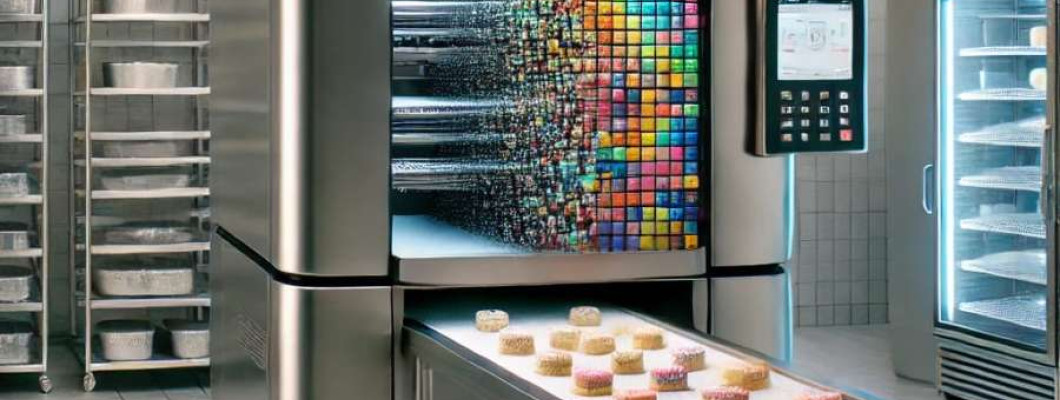
The Industrial Reality of Incorporating A3 Edible Food Printers
In high-volume commercial kitchens focused on decorating cakes and cookies with edible imagery, the introduction of an A3 edible food printer represents a strategic shift from manual artistry to semi-automated precision. However, the industrial reality presents complexities beyond the surface allure of printed edible designs. Facility managers quickly confront the challenges of maintaining color consistency under variable environmental conditions, managing ink supply logistics, and minimizing downtime due to printhead wear or jammed edible media sheets. Unlike standard office printers, edible food printers require food-grade consumables, introducing rigorous hygiene protocols and regulatory oversight that often disrupt established workflows.
Consider a mid-size bakery scaling from small batch orders to daily runs exceeding 500 printed items. The printer must sustain continuous operation with minimal intervention. The challenge lies not only in print speed but in ensuring thermal stability to avoid ink viscosity shifts that impact droplet formation. Without precise environmental controls or predictive maintenance alerts, printers can suffer premature head clogging—causing costly downtime and wasted edible materials. Furthermore, cross-contamination risks necessitate frequent cleaning cycles that prolong maintenance windows, impacting throughput.
Ultimately, the transition highlights a visible gap between DIY or artisanal edible printouts and industrial-grade, high-reliability output. Successful integration demands rigorous front-end infrastructure assessment, from cleanroom-compliant spaces to dedicated refrigeration units for perishable edible inks. This industrial reality underscores the need for exhaustive total cost modeling, beyond sticker price, to include lifecycle consumables, compliance overhead, and operator training.
Technical Deep-Dive Into A3 Edible Food Printer Functionality and Constraints
Printhead Physics and Edible Ink Chemistry
A3 edible printers typically employ piezoelectric drop-on-demand printheads optimized for precise droplet size control, often between 10-20 picoliters (pl). Maintaining droplet uniformity hinges on stable ink viscosity, dependent on temperature and humidity. Edible inks, composed mainly of food-grade colorants suspended in glycerol-water matrices, exhibit nonlinear viscosity changes as environmental conditions fluctuate. For example, a 5°C deviation can alter viscosity by up to 15%, impacting jetting frequency and causing satellite droplet formation, thus degrading print resolution and color fidelity.
Print Resolution and Throughput Metrics
Standard A3 edible printers offer resolutions up to 1200 dpi, sufficient for detailed cake decorations. However, increasing print speed beyond 20 pages per hour introduces motion artifacts due to insufficient droplet placement accuracy during rapid head reciprocation. The tradeoff between throughput and quality is quantifiable: doubling speed from 20 to 40 pages/hour can increase spot misregistration by approximately 0.1 mm, perceptible at micron-level detail.
Consumables and Lifecycle Cost Modeling
Edible ink cartridges and frosting sheets are consumables with finite lifespans. Ink shelf life averages 3 months refrigerated, while frosting sheets degrade within 1 week of opening. Assuming daily runs of 200 cakes, monthly ink usage approximates 4 liters, with cost per liter around $150. Frequent printhead cleaning cycles consume additional ink reserves, up to 10% monthly overhead. Lifecycle printhead replacement averages every 18 months under continuous operation, costing $1200 per unit.
Environmental and Safety Compliance Considerations
Food-grade printing demands compliance with FDA and local food safety standards, requiring hygienic machine design with removable and sanitizable components. Additionally, ink drying methods utilizing low-heat IR lamps maintain substrate integrity without thermal degradation but demand 500 Watts per drying unit, adding to facility power consumption and cooling load.
Infrastructure Integration Challenges
Integrating the printer into existing bakery production lines involves spatial planning for print and post-processing areas, refrigerated storage for inks, and ensuring stable power supplies with surge protection. Cold chain management for inks requires dedicated refrigeration units maintaining 4°C ±1°C. Network integration for print job management must comply with strict IT security policies, often necessitating isolated VLANs and secure firmware update protocols.
| Specification | A3 Edible Food Printer | Standard Office Inkjet Printer |
|---|---|---|
| Print Resolution | Up to 1200 dpi (edible safe) | Up to 2400 dpi |
| Print Speed | 20-40 pages/hour | Up to 60 pages/minute |
| Consumable Cost per Liter | $150 (edible ink) | $25 (standard ink) |
| Printhead Lifespan | Approx. 18 months (continuous use) | 24-36 months |
| Environmental Control | Strict temp/humidity controlled (4°C ink storage) | Ambient conditions acceptable |
Scenario Analysis for Different Business Use-Cases
Mid-Size Bakery Scaling Production
A bakery increasing daily output to 500 cakes faces bottlenecks in consumable replenishment and print speed. The printer’s max throughput around 30 cakes/hour requires shift-based operation or multiple units. Refrigerated storage for inks and consumables becomes critical to prevent spoilage. Data from printer logs can inform predictive maintenance scheduling to avoid unscheduled downtime.
Event Catering with High Customization
For an event caterer specializing in bespoke edible images, color fidelity and micron-level precision are paramount. The printer’s 1200 dpi capability enables fine art reproduction on cookies, but slower print times limit volume. This use case demands prioritizing quality over speed, with dedicated print operators managing pre- and post-print workflows carefully.
Industrial-Scale Food Manufacturing Plant
In an industrial setting producing thousands of edible decorations daily, printer integration into an automated assembly line is essential. The challenge is balancing throughput with maintenance downtime. Implementing clustered printer arrays can alleviate single-point failures, but maintenance complexity and increased CAPEX arise. Environmental controls for ink and ambient factory conditions are non-negotiable to maintain consistent output quality.
Expert FAQ on A3 Edible Food Printing Technology
Q1 What are the primary causes of printhead failure in edible food printers?
Printhead failure often stems from ink drying and clogging within the nozzles due to fluctuating humidity and irregular cleaning cycles. Edible inks’ higher viscosity compared to conventional inks also accelerates mechanical wear on piezoelectric elements.
Q2 How does ambient temperature affect the edible ink’s droplet formation?
A change of ±5°C can alter surface tension and viscosity by up to 15%, leading to inconsistent droplet sizes and compromised print resolution, necessitating strict environmental controls.
Q3 What cleaning protocols optimize printer uptime without excessive ink wastage?
Scheduled micro-cleanings every 8 hours with optimized suction cycles reduce clog risk while limiting ink consumption, balancing uptime and consumable cost.
Q4 How do edible printers comply with food safety regulations?
Designs incorporate use of FDA-approved materials, sealed ink delivery systems, and sanitation-accessible components. Validation protocols require periodic microbial contamination testing of printed substrates.
Q5 Is network integration feasible without risking printer firmware integrity?
Yes, printers support secure VLAN implementations and encrypted firmware updates. Segmented network environments prevent unauthorized access, maintaining operational security.
Strategic Verdict and Recommendation
Deploying the A3 Edible Food Printer For Printing Cakes Cookies offers an industrial-grade solution bridging the gap between artisanal edible printing and scalable food production. While operational challenges such as stringent environmental controls, consumable lifecycle costs, and maintenance cycles exist, the printer’s hardware specifications align well with rigorous production environments requiring micron-level precision and regulatory compliance. Its ability to maintain consistent print output at 1200 dpi over extended runs, coupled with robust printhead engineering, affirms its suitability for mid to large-scale food facilities. Enterprises prioritizing throughput should consider infrastructure upgrades including refrigeration and predictive maintenance systems to optimize ROI and uptime. The printer’s design thoughtfully addresses safety compliance, ensuring hygienic operation crucial for food-grade applications. This technology is thus recommended as a definitive industrial-grade printing asset for businesses committed to elevating edible decoration quality at scale without compromising operational reliability.