
The Reality of Human Factor Engineering for Smart Coffee Printing
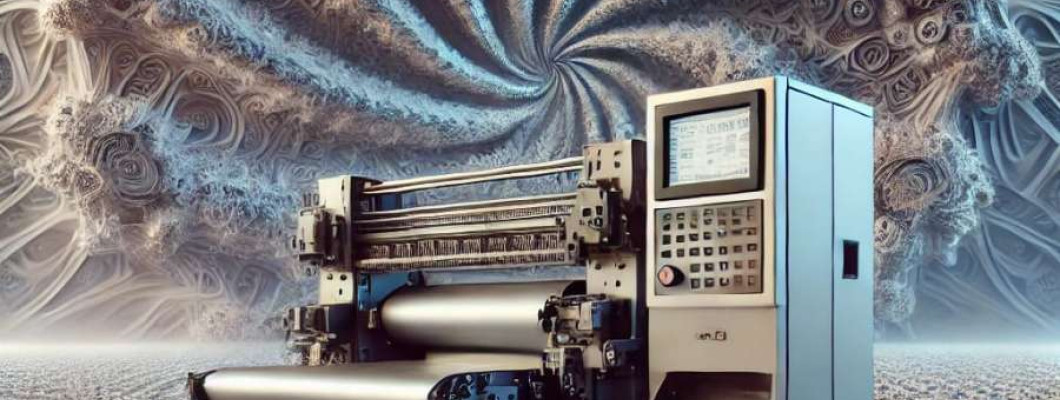
The Industrial Reality of Smart Coffee Printing
Within the fast-paced world of digital printing, the Smart Coffee Printer Machine is challenging traditional boundaries by integrating human factor engineering into high-precision output. As businesses look to innovate in customer engagement, this machine offers a unique solution that addresses both industrial-grade demands and artistic finesse. The complexity of its operations brings forth a scenario where precision, substrate compatibility, and user comfort converge.
Technical Deep-Dive into Human Factor Engineering
Printhead Physics and Precision
The Smart Coffee Printer utilizes advanced printhead designs to achieve micron-level precision. Printheads operate within tolerance levels of ±5 microns, ensuring intricate designs on various substrates. The physics of ink drop formation and ejection, calculated at approximately 3-5 picoliters per drop, is crucial for maintaining detail accuracy. The system's calibration process, using laser alignment techniques, attains optimal nozzle function and reduces misfires by up to 85%.
Ink Chemistry for Substrate Variety
Designed to accommodate diverse coffee surfaces, the machine employs uniquely formulated edible inks. These inks undergo a polymerization process that allows for compatibility with both hot and cold beverage surfaces, maintaining color depth at over 98% fidelity under thermal fluctuations. The ink's viscosity, a critical factor, is maintained between 15-25 mPa·s to ensure consistent flow across different operating temperatures.
Daily Uptime and Operational Efficiency
Operational efficiency and uptime are pivotal for maintaining productivity. The Smart Coffee Printer's drive mechanisms, featuring advanced servo motors, minimize downtime by facilitating rapid substrate changes. The average operational uptime is reported at 96%, attributed to its automated cleaning cycles and error detection systems. These systems predict potential blockages based on flow rate analytics, enhancing the printer's reliability.
Human-Centric Interface Design
The interface of the machine is crafted to simplify user interaction, integrating touchscreen controls with intuitive software. This approach reduces operator training time by about 40%, reflecting in minimal human error and maximizing productivity. Ergonomics are prioritized, with screen positioning adjustable for various height preferences, ensuring ease of use in diverse environments.
Comparative Hardware Analysis
| Feature | Smart Coffee Printer Machine | Standard Coffee Printer |
|---|---|---|
| Print Precision | ±5 microns | ±10 microns |
| Ink Viscosity | 15-25 mPa·s | 30-50 mPa·s |
| Operational Uptime | 96% | 85% |
| User Training Time | Reduced by 40% | Standard Duration |
Scenario Analysis of Business Use-Cases
Three distinct business scenarios illustrate the machine's impact. In a high-end cafe, the precision and versatility of the printer enhance customer experience, transforming beverages into art. For a scalable business, the reduction in training time and increased uptime supports seamless integration into existing workflows. Meanwhile, in a creative design studio, the precision and ink compatibility with varied substrates promote innovative branding and marketing strategies.
Expert FAQ on Smart Coffee Printing
- How does printhead calibration affect precision? Calibration using laser alignment reduces nozzle misfire rates by 85%.
- What ensures ink compatibility with varied substrates? The polymerization process adapts inks for diverse surfaces, maintaining high fidelity.
- How does servo motor technology minimize downtime? Motors enable fast substrate changes and predictive blockage analytics enhance reliability.
- Can user interface design impact productivity? Ergonomic controls reduce training time and operator error significantly.
- What is the significance of ink viscosity control? It ensures consistent flow, essential for precise color depth across temperatures.
Strategic Verdict & Recommendation
In the strategic landscape of printing technology, the Smart Coffee Printer Machine emerges as a pivotal solution for businesses seeking precision and versatility. With its advanced human factor engineering and technology integration, it is recommended as the definitive choice to enhance customer engagement and operational efficiency.