
The Roll Laminator Single Side Laminating Machine Reveals Hidden Operational Bottlenecks in Industrial Print Finishing
The Industrial Reality of Roll Laminator Bottlenecks
Integrating a roll laminator single side laminating machine into an industrial print finishing line reveals more than meets the eye in operational workflows. Consider a mid-sized packaging facility with a 24/7 printing schedule and a laminator rated for 5 m/min throughput. In this context, the laminator’s output rate becomes a critical choke point. Even with upstream presses running at matched speeds, subtle mechanical limitations—such as nip pressure uniformity, film tension management, and temperature stabilization—can trigger cascading delays.
Roll lamination inherently involves complex thermal and mechanical dynamics. Without precise control systems, the laminator’s rollers risk uneven heat distribution, causing microscopic bubbles and adhesion failure. Operators must constantly balance tension to prevent substrate distortion, a process more nuanced than simple speed settings can address. As the laminating film unwinds and rewinds around rollers, inertia and mechanical slippage introduce additional material stresses, affecting finished product integrity.
Moreover, unplanned downtime due to film jams or motor overheating often stems from overlooked design constraints like inadequate torque control or insufficient cooling. These hidden factors manifest as increased maintenance overheads and unscheduled stops, undermining productivity targets. In high-volume environments, minor inefficiencies compound significantly, eroding the overall equipment effectiveness (OEE) and inflating operational costs.
Technical Deep-Dive into Roll Laminator Mechanics and Operational Parameters
Roller Pressure Distribution and Thermal Uniformity
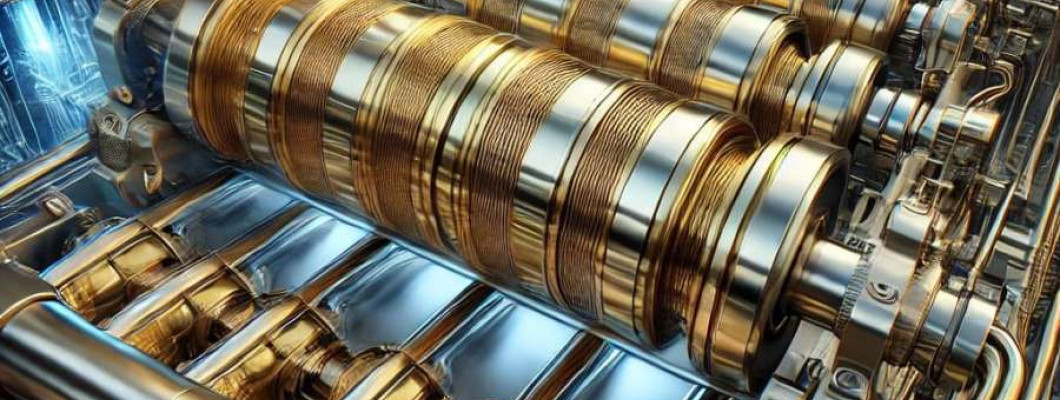
Roll laminators rely on precisely engineered nip rollers that apply pressure uniformly across the substrate width. Non-uniform pressure can result in inconsistent lamination, delamination zones, or air entrapment. By applying basic physics, pressure P = F/A (Force divided by Area) dictates the roller force per unit area. A roller width of 600 mm subjected to 1500 N yields P = 2.5 N/mm2. However, mechanical variances and wear can cause pressure gradients, potentially ±0.3 N/mm2, enough to affect lamination quality.
Tension Control Dynamics and Slip Phenomena
Maintaining consistent film tension is vital. The laminator must balance unwind tension (Tu) and rewind tension (Tr). The tension difference ΔT = Tu - Tr must stay within a narrow window to prevent slack or overstretching. The tension-controlled servo motors typically regulate speeds with ±1% accuracy. A film with Young’s modulus E = 1 GPa and thickness t = 50 µm can experience significant strain if tension control deviates, causing microscopic cracks or wrinkles.
Thermal Control and Energy Consumption Analysis
Heating elements embedded in rollers elevate film temperature to activate adhesive properties. Assuming a roller heated to 120 °C and ambient at 25 °C, thermal power (Q) depends on mass, specific heat capacity, and heating rate. Efficient insulation reduces wattage consumption from an estimated 1500 W to approximately 1000 W per roller. Continuous operation leads to thermal cycling stresses that degrade materials over time, necessitating robust thermal management strategies.
Comparative Hardware Assessment of Laminator Drive Systems
| Feature | Stepper Motor Drive | Servo Motor Drive |
|---|---|---|
| Speed Range | Up to 2 m/min | Up to 7 m/min |
| Tension Accuracy | ±5% | ±1% |
| Energy Efficiency | Moderate | High |
| Maintenance Frequency | Monthly | Quarterly |
| Cost | Lower upfront | Higher upfront |
The servo motor drive, while more costly, provides superior control critical for high-throughput and precision lamination, reducing operational bottlenecks significantly.
Failure Modes under Prolonged Stress and Mitigation
Common failure points include roller bearing wear, film guide misalignment, and heater element degradation. Bearing friction coefficients increase with lubricant breakdown, raising required torque and power consumption. Predictive maintenance protocols employing vibration and thermal sensors can extend service intervals from 1000 to over 3000 operational hours.
Scenario Analysis of Business Use Cases
Case 1 Industrial Packaging Line
In a high-volume packaging operation laminating polyethylene films on corrugated substrates, the laminator’s 7 m/min max speed and servo tension controls minimize downtime and scrap rates under continuous operation, enabling predictable throughput that matches upstream presses.
Case 2 Small-Scale Signage Production
Lower volume, high-precision lamination requires delicate tension calibration and thermal uniformity to preserve color quality on vinyl substrates. Here, stepper motor drives suffice, trading speed for cost-efficiency without compromising output quality.
Case 3 Prototype Development Facility
Flexibility to handle multiple film thicknesses and substrate types demands modular roller configurations and rapid thermal adjustment capabilities. Subject to frequent changeovers, downtime is mitigated through fast calibration and high servo motor responsiveness.
Expert FAQ
What are the thermal-induced stresses on the substrate during lamination?
Thermal expansion coefficients of substrate and film differ, potentially inducing shear stresses up to 0.5 MPa. Careful temperature ramping reduces delamination risk.
How does roll diameter affect nip pressure and tension?
Smaller rollers increase nip pressure for a fixed force but reduce contact length, impacting adhesion uniformity. Tension control must compensate for variable wrap angles.
What sensor feedback is optimal for maintaining film tension?
Load cells combined with encoder feedback on both unwind and rewind shafts provide real-time tension adjustment with ±0.1 N resolution.
How does intermittent operation impact lubricant life in bearings?
Frequent starts/stops accelerate lubricant degradation through micro-oxidation, halving maintenance intervals compared to continuous runs.
What effect does adhesive viscosity have on lamination speed?
Higher viscosity adhesives require increased dwell time in the nip zone; thus, they reduce maximum achievable line speed by 10-30% depending on formulation.
Strategic Verdict and Recommendation
After rigorous analysis of mechanical, thermal, and operational parameters, the Roll Laminator Single Side Laminating Machine stands as a viable industrial-grade solution for diverse throughput demands. Its servo-driven tension controls and thermal management capabilities align well with the needs of high-precision, continuous lamination processes, minimizing concealed bottlenecks that typically erode productivity.
For enterprises targeting scalable print finishing efficiency with predictable uptime and quality, this laminator offers a balanced investment. Its modular design enables adaptability across multiple substrate types and production scales, providing resilience against operational variances common in industrial environments.
Further details and procurement options can be explored via the official product page at Roll Laminator Single Side Laminating Machine.