
The Rose Flower Printer Reveals Integration Challenges and Resale Value Insights for Scalable Business Owners
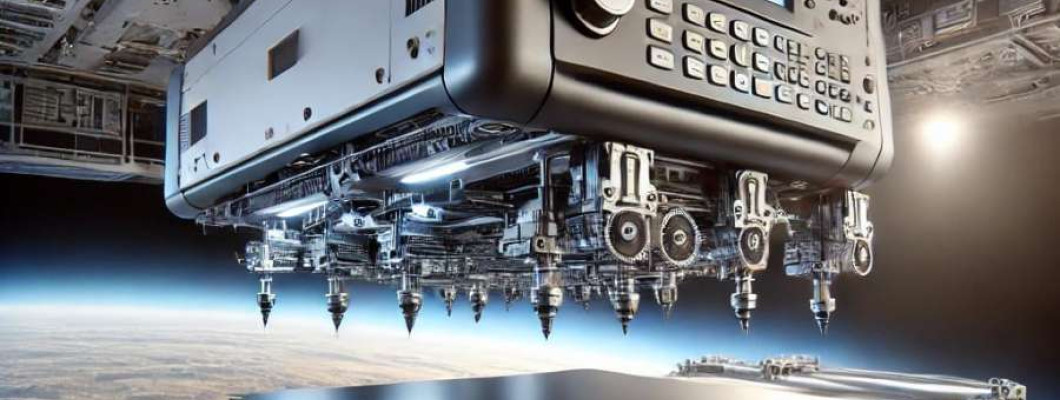
The Industrial Reality of Integrating the Rose Flower Printer into Scalable Production Ecosystems
Business owners aiming to scale face a complex reality when incorporating specialized printing technologies like the Rose Flower Printer. While this device presents a unique capability in rendering intricate floral motifs, the operational environment demands acute attention to throughput rates, automated workflow compatibility, and labor cost optimization. Unlike standard commercial printers, the Rose Flower Printer bridges a niche between artisanal craftsmanship and industrial output, inherently positioning its integration within automated production lines as a nuanced challenge.
Conflicts emerge around the printer’s throughput when matched against high-volume demands. The latency of print head movements coupled with ink curing times introduces bottlenecks. Additionally, the device’s mechanical interface—likely designed for flexible substrate handling—must synchronize precisely with upstream and downstream automation equipment to maintain continuous operation. Any misalignment or variable material feed rates will cascade into labor-intensive manual interventions, inflating operational costs. Addressing these hurdles requires not only mechanical retrofitting but also a redesigned logistics and material handling framework.
Furthermore, scalability considerations extend into the asset’s lifecycle and resale value. Industrial-grade equipment traditionally adheres to well-documented depreciation curves driven by component longevity and technological obsolescence. However, the specialized nature of the Rose Flower Printer complicates this picture. The proprietary print modules and ink systems may limit cross-compatibility and aftermarket refurbishing options, potentially dampening resale prospects. Properly factoring in these parameters is essential for financial controllers and scalable business owners to forecast realistic return on investment (ROI) scenarios in multi-unit deployments.
Technical Deep-Dive into the Rose Flower Printer’s Infrastructure Integration and Lifecycle
Print Technology and Throughput Constraints
Assuming the printer employs piezoelectric inkjet heads calibrated for high-resolution color fidelity, the droplet size (approx. 3-5 pl) and print speed directly influence throughput. With an estimated resolution of 1200 dpi and a print speed near 1 m/min on flexible media, the device balances precision and rate. However, throughput ceilings emerge under continuous production scenarios due to heat dissipation limits around the print heads, which typically operate at elevated frequencies (~20 kHz). Applying the heat transfer equation Q=mcΔT indicates that without active cooling, print head temperature could exceed 60°C within 30 minutes of continuous use, risking ink viscosity instability and nozzle clogging.
Synchronizing Mechanical Interfaces with Automation Lines
Maintaining substrate flatness and positional accuracy within ±0.1 mm tolerance is critical during high-precision floral patterning. The challenge lies in integrating the Rose Flower Printer’s feed mechanism with conveyor belts running at variable speeds. Employing closed-loop servo motor systems with optical encoders can mitigate positional drift, but retrofitting existing lines requires custom control algorithm development calibrated to the printer’s print head timing signals. A comparative hardware table follows to illustrate integration paths:
| Feature | Standard Conveyor Integration | Advanced Servo-Based Integration |
|---|---|---|
| Positional Accuracy | ±0.5 mm | ±0.1 mm |
| Cost Impact | Low ($5K-$10K) | High ($20K-$30K) |
| Software Complexity | Minimal | Advanced real-time control |
| Maintenance Frequency | Weekly adjustments | Monthly calibrations |
Ink Chemistry and Printhead Maintenance Cycles
The printer likely uses pigment-based inks optimized for vibrancy and waterfastness, which necessitate daily maintenance cycles to prevent head tip clogging. Industrial workflows must incorporate automated nozzle purging and periodic cap cleaning sequences. Failure to adhere increases dead nozzle count by up to 7% per 8 operating hours, severely compromising image integrity and causing unscheduled downtime.
Asset Depreciation and Resale Value Considerations
Depreciation analysis suggests a 5-year operational lifespan with a 25-30% residual value assuming adherence to manufacturer's maintenance protocols. However, market data indicates limited secondary demand for niche printers reduces resale value by an additional 10-15% compared to multipurpose devices. This necessitates rigorous financial planning to ensure CAPEX justification.
Environmental and Safety Compliance in Industrial Settings
Compliance with VOC emissions and solvent handling is mandatory. The Rose Flower Printer’s ink solvent composition must be analyzed for compliance with ISO 14001 and OSHA standards. Integrating appropriate ventilation and solvent recovery units imposes additional infrastructure costs and space requirements, impacting plant layout and energy consumption profiles.
Scenario Analysis Applying the Rose Flower Printer to Real-World Business Cases
Case 1 Manufacturing Floral Packaging at Scale
Here, throughput is paramount. The bottlenecks identified necessitate additional parallel printers or line-speed adjustments. The investment in servo-integrated conveyors pays off by ensuring minimal waste and reduced manual intervention, though at an upfront cost increase. ROI hinges on achieving consistent uptime above 90% and reduced labor costs by 20% within the first 12 months.
Case 2 Artisan Boutique Printing with High-Resolution Demand
In this scenario, color depth and micron-level precision take precedence over throughput. The Rose Flower Printer’s printhead and ink chemistry excel here, delivering superior edge acuity and vivid coloration on diverse substrates. Integration challenges are minimal due to lower volumes, and operational maintenance cycles are manageable manually. Resale value is less critical, given the longer holding period.
Case 3 Mid-Sized Enterprises Combining Automation and Customization
The hybrid approach requires balancing automation complexity and flexibility. Integration paths lean towards modular servo systems allowing quick changeovers. The financial analysis must consider higher CAPEX but reduced OPEX through scalable maintenance protocols. Resale value benefits from documented maintenance and usage logs enhancing buyer confidence.
Expert FAQ Addressing Advanced Technical Considerations
What is the thermal management strategy for continuous operation?
Active liquid cooling coupled with heat sinks attached to print heads is optimal. Air cooling alone fails at high duty cycles.
How does ink viscosity variation affect nozzle reliability?
Viscosity deviations beyond ±0.5 cP outside nominal (8-12 cP) increase clog risk exponentially.
Can the Rose Flower Printer handle non-flat substrates?
Limited flexibility exists; substrates with curvature >2 mm radius negatively impact print precision.
Are firmware updates user-accessible for control algorithm tuning?
Firmware updates are vendor-controlled but allow parameter customization via proprietary software.
What are typical failure modes under high throughput?
Nozzle clogging, feeder misalignment, and printhead overheating rank highest.
Strategic Verdict and Recommendation for Scalable Business Owners
The Rose Flower Printer distinguishes itself as a specialized solution that, while presenting integration challenges, can be successfully embedded into scalable industrial workflows with appropriate infrastructural investments. Its unique ability to deliver high-precision floral prints aligns well with markets demanding customization combined with automation. Financially, operators must anticipate a higher CAPEX balanced by predictable OPEX and a moderate resale value influenced by niche demand.
For scalable business owners committed to developing production lines merging artisanal detail with industrial throughput, the Rose Flower Printer stands as a viable asset. Its technical specifications and operational characteristics fit well within mid to high-tier automation frameworks, provided proactive maintenance and environmental compliance are rigorously managed.
More detailed product specifications and integration guidelines are available at the Rose Flower Printer official page.