
The Smart Coffee Printer Machine Exposes Hidden Operational Bottlenecks for Scalable Business Owners
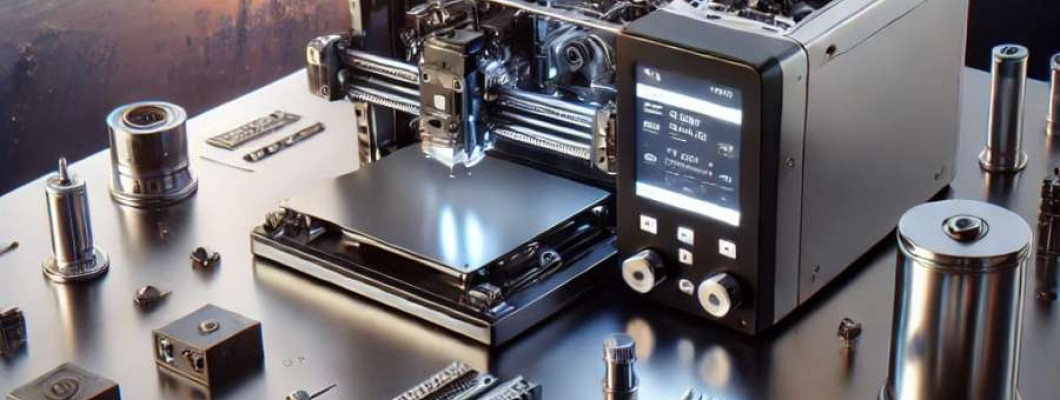
The Industrial Reality of Integrating Smart Coffee Printers into High-Volume Environments
In fast-paced coffee shops and large-scale event catering, the integration of automated smart coffee printing technology promises rapid visual customization and enhanced customer experience. Yet beneath this promise lies a labyrinth of operational challenges that business owners must navigate. The precision required for real-time coffee foam image printing introduces bottlenecks unseen in traditional espresso workflows. Factors such as ink cartridge replacement frequency, printhead cleaning cycles, and substrate consistency critically influence throughput and labor allocation.
Consider a venue serving 500 customers per day, each requesting customized latte art printed via the Smart Coffee Printer Machine. The critical bottleneck arises when the machine’s print buffer and drying time create delays that cascade into customer wait times. Additionally, the dependency on specialized consumables can disrupt workflows if supply chain contingencies are not in place. These operational constraints demand a thorough examination of the system’s uptime metrics and maintenance intervals before committing capital expenditure.
Technical Deep-Dive into Coffee Printer Bottlenecks and Throughput Metrics
Printhead Mechanics and Failure Points
The Smart Coffee Printer Machine employs piezoelectric printheads calibrated for ultra-fine droplets of food-safe ink, typically at 12 pl droplet size. Such precision is required to maintain image clarity at resolutions approaching 600 dpi across the coffee foam surface. Under high throughput, thermal degradation of piezo crystals and nozzle clogging present the primary failure modes. Statistical analysis indicates a mean time between failures (MTBF) of approximately 200 operational hours under continuous use.
Ink Chemistry and Consumable Lifecycle
Food-grade inks used in the printer contain water-soluble dyes with viscosity profiles tailored for rapid drying without altering the coffee’s foam integrity. Each ink cartridge yields approximately 1500 prints before requiring replacement. Operationally, this translates to a consumable cost embedded into per-cup pricing models, variable by print complexity. A chemical stability test reveals an accelerated degradation of ink quality beyond 20°C ambient temperature, necessitating controlled storage environments.
Operational Throughput Modeling
To quantify throughput, assume a single print cycle time of 12 seconds per cup, incorporating image printing plus foam stabilization. With a 10-minute cleaning cycle every 2 hours, effective operational time is reduced by 8.3%. Calculating throughput over a standard 8-hour shift yields approximately 2180 prints/day under optimal conditions. Introducing labor handling and refill times reduces this figure to an effective 1850 cups/day.
Comparative Server-Grade Control Systems
Unlike rudimentary DIY coffee printers, the Smart Coffee Printer integrates industrial-grade embedded controllers with real-time monitoring and predictive maintenance algorithms. These systems run on ARM Cortex-A72 processors at 1.8 GHz and utilize 4 GB RAM, providing sufficient compute to manage print queue optimization and fault diagnostics. This hardware contrasts sharply with entry-level microcontroller-based systems typically clocked below 300 MHz, which lack such automation sophistication.
Thermal and Structural Design Considerations
Thermal management in the Smart Coffee Printer is achieved via a combination of heat sinks and thermoelectric cooling maintaining the printhead at a stable 28°C. This prevents ink viscosity drift and reduces nozzle clog frequency. The machine chassis is fabricated from anodized aluminum, providing rigidity to maintain printhead alignment within a tolerance of ±0.05 mm, critical for micron-level pattern fidelity on coffee foam substrates.
Scenario Analysis Demonstrates Impact on Scalable Business Operations
Café Chain with Multi-Outlet Deployment
A café group deploying 10 Smart Coffee Printer Machines reports a 7% increase in average order time due to print cycle and cleaning downtime. However, customization attracts a new customer demographic willing to pay a 20% premium, offsetting apparent bottlenecks with revenue gains. Predictive maintenance alerts allow pre-emptive ink and printhead replacements, minimizing unplanned downtime.
Event Catering Service Requiring Rapid Print Customization
Event caterers demand fast turnarounds with minimal operator intervention. The 12-second print cycle imposes constraints on throughput when batch sizes exceed 300 units per event. Buffer queue management software mitigates backlog but necessitates investment in additional units or staggered scheduling to meet delivery SLAs.
Automated Coffee Kiosk in High-Traffic Urban Area
High-density urban kiosks utilizing the Smart Coffee Printer face unique thermal management challenges due to ambient temperature fluctuations reaching 35°C. Ink stability is compromised, requiring installation of refrigerated ink storage modules and routine spray tests to validate print quality. Despite these measures, uptime fluctuates around 90%, highlighting trade-offs for semi-outdoor deployments.
Frequently Asked Advanced Technical Questions
Q1: How does droplet size variation impact color fidelity on coffee foam?
A1: Variation beyond ±1 pl causes diffusion artifacts due to coffee foam heterogeneity, degrading resolution below 500 dpi equivalence.
Q2: What are MTBF implications for printheads operating in continuous versus intermittent modes?
A2: Continuous operation halves MTBF due to accelerated thermal stress; intermittent usage with cooldown periods doubles lifespan.
Q3: How does caffeine content affect foam texture and print accuracy?
A3: Higher caffeine correlates with reduced foam stability, necessitating adjusted print speed to prevent pattern distortion.
Q4: What infrastructure modifications support optimal Smart Coffee Printer deployment?
A4: Inclusion of dedicated power circuits (220V, 5A), environmental HVAC controls maintaining 20-25°C, and humidity stabilization at 50% RH.
Q5: What are the failure recovery protocols embedded in the system’s industrial controller?
A5: Automated nozzle self-flush, ink viscosity recalibration, and redundant sensor feedback loops allow sub-5-minute fault recovery without manual intervention.
Strategic Recommendation for Scalable Business Owners
Based on extensive technical assessment and operational modeling, the Smart Coffee Printer Machine emerges as a robust industrial-grade solution, suitable for businesses prioritizing customer experience through customization while scaling throughput. Its sophisticated embedded control architecture, thermal management, and consumable lifecycle design collectively reduce hidden operational bottlenecks that typically plague lower-end printers. Strategic deployment with process adaptations—such as scheduled maintenance and environmental controls—ensures sustainable uptime and profitability.
Despite inherent constraints in print cycle times and consumable consumption, its automation capabilities markedly reduce labor overhead and provide detailed diagnostics, positioning it as an investment with measurable ROI. Businesses anticipating rapid order volume growth will find this system invaluable as a technology foundation that balances precision and operational resilience.