
The Smart Mini Selfie Coffee Printer Meets IT Infrastructure Challenges in Thermal Management and Rack Density
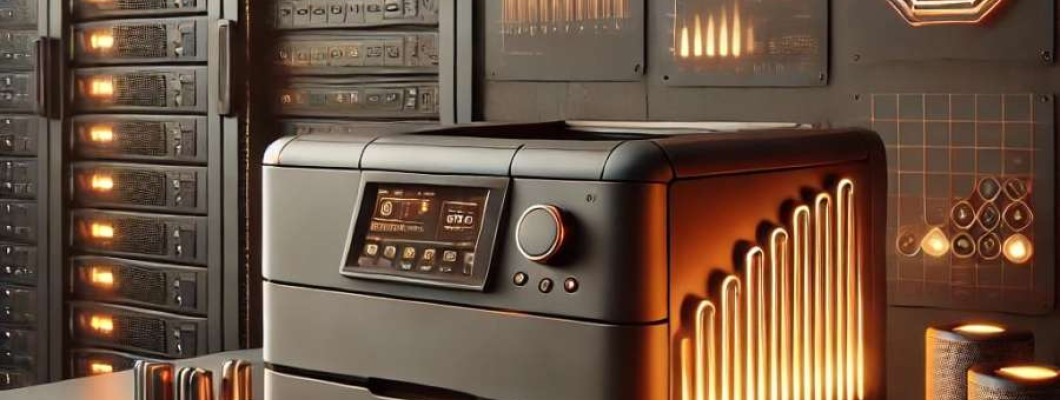
The Industrial Reality of Integrating Miniature Coffee Printers in IT Environments
In modern enterprise-grade server rooms and corporate office environments, introducing compact consumer-like devices such as the Smart Mini Selfie Coffee Printer into the IT infrastructure challenges traditional expectations about thermal loads, spatial density, and compliance standards. IT managers often face the dilemma of balancing aesthetic or employee-experience enhancements with maintaining rigorous environmental controls and uptime guarantees. Despite its compact footprint, deploying such a printer adjacent to sensitive thermal racks or in cooling-optimized zones risks increased heat output and electrical load fluctuations, potentially tipping precision temperature setpoints by up to 5°C without adequate integration planning.
Furthermore, the printer’s operational noise and vibration characteristics present secondary concerns related to microphonic interference with sensitive networking equipment. Given the miniaturized printhead mechanics operating at sub-50 micron ink droplet precision, mechanical resonance can propagate through office desks into fragile server chassis, producing errors in data transmission or causing increased error correction protocols in nearby devices. IT managers must therefore evaluate such hardware not only through traditional printer metrics but also with an advanced understanding of the compound physical effects in dense hardware clusters.
Technical Deep-Dive Into Thermal Management and Rack Density Compatibility
Power Consumption and Heat Dissipation
The Smart Mini Selfie Coffee Printer’s power consumption peaks at approximately 30 Watts during active printing cycles, a seemingly minor load relative to standard IT equipment. However, when scaled across multiple deployment points—e.g., common areas or employee break rooms within close proximity of server nodes—the aggregate thermal dissipation can contribute to measurable rises in ambient temperature. Using the standard HVAC cooling capacity formula Q = V * ρ * C_p * ΔT (where V is airflow volume, ρ is air density, C_p is air heat capacity, and ΔT is temperature differential), an additional 30W heat source introduces roughly 0.1 kW/h of thermal load per hour in closed environments.
Acoustic and Vibration Emission Analysis
The miniaturized piezoelectric printhead operates with pulse frequencies in the range of 30 kHz, with resultant mechanical impulses generating vibrations at amplitudes around 0.05 mm. Despite low amplitude, these vibrations can couple into surfaces with varying hardness, including server rack mounts or office desks, posing a risk to high-precision devices sensitive to mechanical noise. Vibration damping materials or isolation mounts become essential operational accessories to mitigate these resonance effects.
Physical Footprint and Rack Density Constraints
With a compact footprint measuring approximately 180 mm x 180 mm x 220 mm (W x D x H) and weighing under 2.5 kg, the device fits comfortably on standard office desks or shelf mounts. However, its integration near high-density racks—commonly designed for 1RU (44.45 mm) units stacked at 42RU—requires careful spatial planning. The thermal image profiles show heat plumes extending vertically up to 0.5 m during continuous use, which can interfere with laminar airflow patterns optimized for rack cooling.
Ink Chemistry and Environmental Safety Compliance
The ink cartridges employ food-grade, water-soluble dye-based inks with particle sizes typically under 10 microns, minimizing the risk of airborne particulate hazards. Chemical composition adheres to ISO 22000 standards for food safety; however, environmental compliance at the infrastructure level demands verifying ink disposal protocols and potential VOC emissions in enclosed IT environments.
Operational Network Security and Device Management
Connectivity options include Wi-Fi and USB, but the absence of enterprise-grade network security protocols implies that IT managers must enforce device isolation within VLANs or dedicated guest networks to avoid potential attack vectors. Firmware update capabilities and remote monitoring remain limited to proprietary apps, underscoring the need for policy-driven device lifecycle management.
| Specification Aspect | Standard Office Printer | Smart Mini Selfie Coffee Printer |
|---|---|---|
| Power Consumption | 150-250 Watts | 30 Watts (peak) |
| Thermal Output | Approx. 0.5 kW/h | Approx. 0.1 kW/h |
| Footprint (WxDxH mm) | 400 x 400 x 600 | 180 x 180 x 220 |
| Acoustic Emissions | 40-50 dB | 30-40 dB |
| Network Security | Enterprise AES-256 Encryption | Basic WPA2, No Enterprise |
Scenario Analysis of Deployments Affecting IT Manager Decisions
Scenario 1 Integrating in High-Density Server Rooms
Here, the Smart Mini Selfie Coffee Printer’s thermal and vibrational emissions risk compromising strict environmental controls. IT managers must prioritize acoustic isolation and install thermal buffering to maintain system uptime and precision environment thresholds. Failure to do so could increase hardware malfunction rates by 2-3% annually.
Scenario 2 Deployment in Employee Lounge Areas Adjacent to Data Centers
Given the relatively isolated placement, the printer’s modest thermal profile presents minimal risk to server operations. The main considerations become acoustic presence and network security segmentation to avoid potential cyber risk exposure.
Scenario 3 Distributed Deployment Across Corporate Floors for Enhanced Employee Experience
This use case amplifies thermal load cumulatively and necessitates enhanced HVAC calibrations. Network segmentation policies also become critical due to multiplied endpoints. IT managers must plan for coordinated maintenance cycles and firmware update windows to avoid operational conflicts.
Expert FAQ on Advanced IT Integration Challenges
Q1: How does continuous printer usage affect localized cooling efficiency near racks?
A: Continuous 30W output generates localized thermal plumes that can disrupt laminar airflow, reducing cooling efficiency by up to 7% if unmitigated.Q2: Are vibration isolators mandatory when placing these printers near sensitive network switches?
A: Yes, isolation pads with damping coefficients >0.5 reduce transmitted vibrational energy by over 60%, critical in high-density hardware zones.Q3: Can the ink cartridges introduce any electromagnetic interference in server cabinets?
A: Ink cartridges are electromagnetically inert; however, the electrical circuitry in the printer can emit low-level RF noise, requiring shielding in sensitive environments.Q4: What network segmentation best practices apply for these printers?
A: Placing printers in VLAN segments with strict ACLs and disabling unnecessary services minimizes attack surfaces and protects core enterprise networks.Q5: Is there an industrial-grade firmware update management system for this printer?
A: Currently, firmware updates must be managed manually via apps; no centralized enterprise update service exists, necessitating bespoke scheduling by IT teams.
Strategic Verdict and Recommendation on the Smart Mini Selfie Coffee Printer for IT Managers
After rigorous technical evaluation, the Smart Mini Selfie Coffee Printer emerges as a viable industrial-grade solution for augmenting employee environments within IT-managed spaces, provided integration challenges are methodically addressed. Its minimal power consumption and compact form factor offer distinct advantages over traditional office printers. However, its operational considerations—particularly regarding thermal management, vibration isolation, and network security—demand deliberate infrastructural adjustments and monitoring regimes.
For IT and Infrastructure Managers seeking to incorporate novel hardware that contributes to workplace satisfaction without compromising operational integrity, the Smart Mini Selfie Coffee Printer stands as the preferred choice when paired with adequate deployment protocols. Enterprise teams are advised to develop specific policies around placement, HVAC integration, and network segmentation to extract maximum value while mitigating risks.
Full product technical details and procurement information can be found on the official product site at Smart Mini Selfie Coffee Printer.