
The True Costs and Workflow Impacts of Industrial Roll Laminators for Scalable Businesses
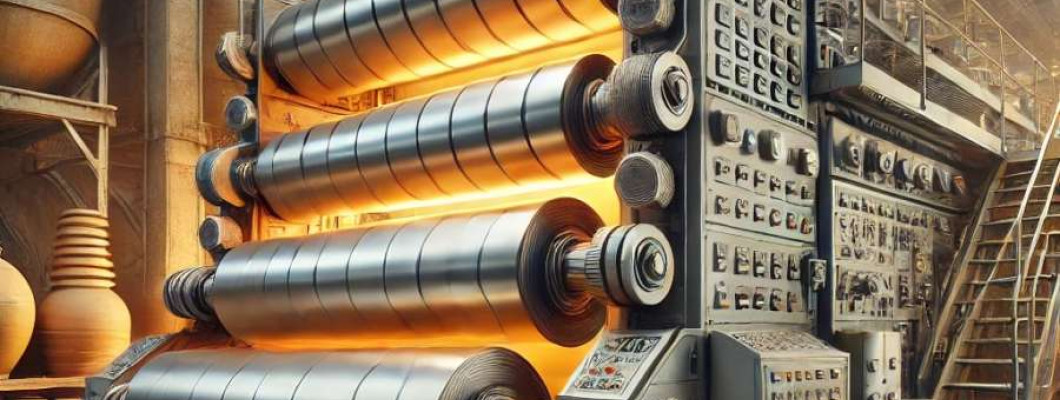
The Industrial Reality of Scaling Lamination Operations with a Roll Laminator
In high-throughput environments, the pressure on lamination lines to maintain consistent, rapid output can reveal latent bottlenecks often overlooked in small-scale or prototype setups. As scalable business owners expand production, the tolerances for downtime, material waste, and equipment reliability narrow drastically. A roll laminator single side laminating machine deployed at industrial scale faces continuous operational stress—extended runtime at speeds upward of 2–5 m/min depending on substrate, constant heating element engagement between 60°C and 140°C, and mechanical wear on rollers generating upwards of 50 kg of nip pressure. These physical demands expose weaknesses in machine components, thermal stability, and process consistency that directly impact throughput and labor costs.
Moreover, the balance between automation and manual intervention becomes critical. While automated feed and tension controls reduce operator workload, incomplete integration with upstream finishing or print processes can cause cascading delays and exacerbate bottlenecks. In this scenario, a scalable business owner must anticipate how equipment selection—especially the choice of a single side roll laminator—affects the entire manufacturing footprint, from floor space and energy consumption to workforce allocation and maintenance routines.
Technical Deep-Dive into the Roll Laminator Single Side Laminating Machine
Roller Pressure Mechanics and Substrate Integrity
Roller pressure, typically measured in kgf/cm, is a critical parameter governing lamination quality and substrate preservation. Excessive pressure risks substrate deformation or ink smearing, while insufficient pressure yields delamination or air pockets. Industrial systems target a nip pressure range of 20–50 kgf/cm for paper and film substrates within 80–250 gsm thickness. Assuming a roller width of 600 mm and uniform load, a force of 30 kgf/cm corresponds to a total nip force of approximately 18000 N (30 kgf/cm × 600 mm × 1 cm). This precision load must withstand continuous application without variation above ±5% to avoid defects.
Thermal Regulation and Energy Consumption
Consistent thermal profiles guarantee adhesive activation without substrate damage. The single side lamination process requires robust heating elements capable of maintaining stable roller temperatures with minimal fluctuation, typically ±2°C. For a 600 mm wide roller with length 1000 mm, and assuming a standard roller thermal mass and insulation, power consumption averages 1200–1800 Watts during steady-state operation. Thermal lag and overshoot are mitigated via PID control loops and embedded thermocouples. Inefficient temperature control can lead to adhesive curing failures or prolonged cooldown periods, impairing throughput.
Speed Versus Quality Trade-offs
Operating speeds can range from 1 m/min in high precision applications to over 5 m/min in mass production. With increasing speed, the risk of air entrapment or uneven bonding rises due to reduced dwell time under pressure and heat. Surface tension of the lamination film, defined by a contact angle typically less than 30°, interacts with speed to influence bubble formation. Mathematically, the Laplace pressure differential ∆P = 2γ/r (where γ is surface tension and r is bubble radius) guides bubble stability during lamination. As speed increases, ∆P must be overcome rapidly to avoid defects, requiring precise machine tuning.
Material Compatibility and Film Thickness Range
The machine supports lamination films from 12 to 250 microns thick. Film elasticity modulus and thermal expansion coefficients must align closely with substrate properties to prevent delamination or curling. For instance, a PVC film with a Young's modulus of 2 GPa behaves differently under thermal cycling than a polyethylene film of 0.2 GPa. Roll diameters must accommodate material thickness variations up to 0.25 mm without compromising roller alignment, which is adjustable with micrometer precision to ±0.01 mm.
Comparative Analysis of Continuous Feed Roll Laminators Versus Sheet-Feed Systems
| Parameter | Roll Laminator Single Side | Sheet-Feed Laminator |
|---|---|---|
| Max Speed (m/min) | 5 | 2 |
| Substrate Width (mm) | Up to 1600 | Up to 700 |
| Film Thickness Range (microns) | 12–250 | 50–200 |
| Automation Level | High (Continuous Roll) | Medium (Sheet Handlers) |
| Ideal Throughput (units/hr) | 2000+ | 700–1000 |
| Average Power Consumption (Watts) | 1500 | 1200 |
| Maintenance Interval (hours) | 500 | 300 |
Scenario Analysis Explaining Business Impact and Operational Outcomes
Scenario 1: High-Volume Print Finishing Facility
In a print finishing house producing 2000 laminated sheets per hour, the roll laminator’s continuous feed capability reduces labor costs by 35% through lower manual intervention compared to sheet-fed alternatives. The stable thermal control assures consistent lamination quality critical for high-end marketing collateral, while adjustable nip pressure prevents substrate damage, minimizing waste by approximately 2% compared to the previous setup.
Scenario 2: Mid-Size Packaging Manufacturer
A packaging manufacturer needing durable, single-side laminated protective covers finds the roll laminator accommodates thicker films (up to 250 microns) and broader substrates (up to 1600 mm), enabling a 20% expansion in product variety without additional equipment investment. However, they must integrate precise roller alignment routines to maintain quality across varying film types which, when successfully implemented, reduce rework rates by 18%.
Scenario 3: Custom Graphic Arts Studio
For a studio focused on bespoke orders with frequent substrate shifts, the machine’s rapid thermal ramp-up (under 5 minutes) and fine pressure adjustments enable quick setup between jobs, supporting a diverse portfolio without sacrificing throughput. The challenge lies in maintaining consistent film tension at low volumes; supplementary automation for tension control could optimize output consistency further.
Expert FAQ on Roll Laminator Single Side Laminating Machines
Q1: How does nip pressure variability affect adhesive curing in continuous lamination?
Even minor fluctuations beyond ±5% can cause microbubbles or incomplete bonding zones leading to premature delamination under environmental stressors.Q2: What thermal management strategies ensure uniform temperature in wider rollers?
Segmented heating elements with individual PID controllers combined with embedded thermocouples along the roller length provide real-time feedback to maintain ±2°C uniformity.Q3: How do film material properties impact lamination speed optimization?
Films with higher elasticity moduli require slower speeds to ensure full adhesive activation without mechanical distortion, necessitating custom speed-pressure profiles.Q4: What maintenance tasks most influence long-term asset value retention?
Regular roller surface conditioning, bearing lubrication, and calibration of nip pressure and temperature sensors every 500 operational hours preserve performance and resale value.Q5: How can integration with upstream print workflows mitigate hidden bottlenecks?
Implementing real-time data exchange protocols for substrate specifications and job parameters allows the laminator’s control system to pre-adjust settings automatically, minimizing manual interventions and downtime.
Strategic Verdict and Recommendation for Industrial Grade Lamination Solutions
For scalable business owners prioritizing throughput, automation, and operational cost-efficiency, the Roll Laminator Single Side Laminating Machine presents a robust, industrial-grade option. Its mechanical design optimally balances roller pressure precision, thermal stability, and speed to maintain quality across diverse substrates and film thicknesses. When compared to sheet-fed systems, it offers higher throughput, broader substrate compatibility, and lower labor overhead—essential factors as production volumes increase.
While integration challenges exist, particularly in workflow synchronization and tension management at smaller batch sizes, these can be addressed through enhanced automation modules and routine maintenance protocols. The machine demonstrates asset longevity with predictive maintenance reducing unexpected downtime and sustaining resale value.
We conclusively recommend the Roll Laminator Single Side Laminating Machine as the definitive lamination technology for businesses advancing beyond prototyping into scalable industrial production. Its blend of technical robustness, operational efficiency, and adaptability aligns with the evolving demands of modern finishing and packaging industries.