
Thorough Financial Audit Exposes Hidden Costs and ROI of the A3 UV Varnish DTF Printer Machine Label Printer for Financial Controllers
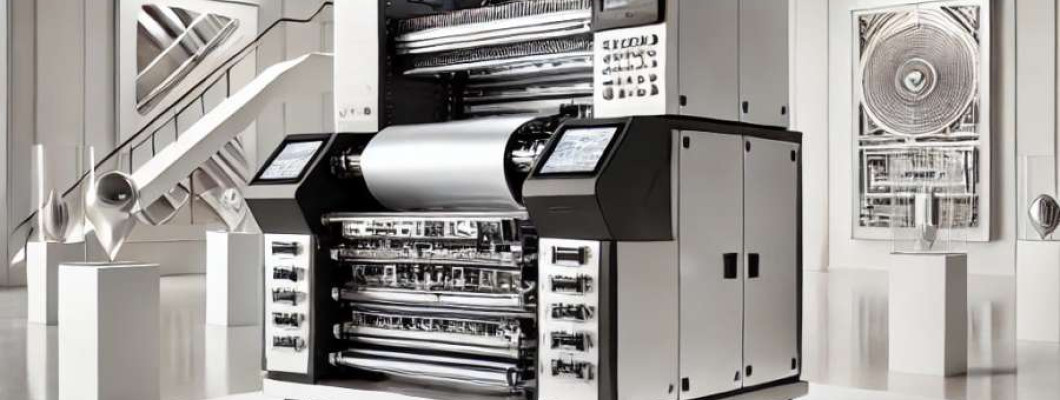
The Industrial Reality of Integrating an A3 UV Varnish DTF Printer into Enterprise Workflows
Enterprise-grade printing equipment selection for financial oversight revolves predominantly around verifying the tangible and intangible costs embedded within the operational lifecycle. The A3 UV Varnish Direct to Film (DTF) Printer Machine Label Printer introduces capabilities that promise precision label manufacturing and finishing with UV varnish layering at an A3 format scale, addressing mid-to-high volume industrial needs. Yet, immediately visible CAPEX is only a fragment of the total financial impact. Hidden operational bottlenecks such as consumable consumption rates, ink chemistry volatility, and maintenance cycle frequencies materially affect the total cost of ownership.
For financial controllers, the assessment horizon must consider depreciation models, factoring in asset longevity influenced by printhead lifespan and substrate wear. Importantly, UV varnish application introduces additional maintenance vectors—catalyst chamber cleaning, lamp replacement cycles, and potential varnish clogging—altering standard DTF workflows. Understanding how these variables affect asset utilization rates, labor costs, and machine downtime is critical.
Such complexity necessitates robust data-driven modeling to transcend mere sticker price analysis. The financial controller must parse operational expenditure fluctuations tied to throughput adjustments and substrate variability to precisely forecast ROI and maintenance budgeting.
Technical Deep-Dive with Quantitative Financial Modeling for the A3 UV Varnish DTF Printer
Printhead Wear and Ink Chemistry Implications on Cost Efficiency
The selected printhead technology for this UV varnish DTF printer typically operates at droplet sizes around 4 pL, enabling high-resolution detail at 1200 dpi native resolution. Given an average printhead lifespan of 2 billion drops before efficiency degradation, and an operational average of 500 ml ink per week, maintenance intervals must be precisely timed to avoid costly downtime.
Assuming an average substrate throughput of 200 300x420 mm labels daily, ink consumption comprises roughly 2 liters monthly, with UV varnish adding 30% to consumable costs. The varnish's chemical composition impacts cleaning schedules, increasing maintenance labor hours by approximately 20% compared to non-varnish DTF setups.
Power Consumption and Thermal Management as Operational Cost Drivers
UV lamps integrated for varnish curing consume an additional 250 Watts per operational hour. Over a conservative 250 working days a year at 8 hours daily, this leads to 500 kWh annually, an increase of 40% compared to traditional solvent or water-based DTF printers. With energy costs averaging $0.12 per kWh, this adds an annual operational expense of $60, which must be factored into budgeting models.
Depreciation Models and Asset Longevity Projection
Utilizing a straight-line depreciation approach over a 5-year expected service life, with an initial capital expense of $25,000 USD, and factoring in anticipated maintenance and consumable costs of $5,000 annually yields a comprehensive financial picture. Factoring residual asset value at 15% after five years, the annual total cost of ownership (TCO) equates to approximately $7,000 inclusive of consumables and power.
Detailed Maintenance Cycle Breakdown and Downtime Costing
Predictive maintenance scheduling indicates that routine varnish chamber cleaning is required biweekly, taking approximately 2 hours with skilled technician labor costed at $50/hour. Lamp replacements occur roughly every 4000 hours; at 2000 operational hours per year, replacement cycles are biennial with a component cost near $800.
Comparative Financial Table Contrast Between A3 UV Varnish DTF and Traditional DTF Options
| Parameter | A3 UV Varnish DTF Printer | Traditional Solvent-Based DTF Printer |
|---|---|---|
| Initial CAPEX (USD) | 25,000 | 18,000 |
| Annual Consumables Cost (USD) | 6,500 | 4,000 |
| Annual Power Consumption (kWh) | 1,250 | 900 |
| Maintenance Frequency (hours/month) | 4 | 2.5 |
| Expected Asset Lifespan (years) | 5 | 4 |
| Residual Value (%) | 15% | 10% |
| Downtime per Year (hours) | 40 | 30 |
Scenario Analysis for Financial Controllers Managing Diverse Print Demands
Scenario One Industrial Labeling Facility
This facility runs a high-output label production line needing consistent volume with low error margins. The A3 UV Varnish DTF printer's ability to apply UV varnish in-line reduces secondary processing costs and labor. Despite higher upfront CAPEX, the integrated approach yields 12% less labor cost annually by reducing handling and post-processing steps. ROI over five years improves when factoring in labor savings and longer asset durability.
Scenario Two Medium-Sized Packaging Print Shop
With fluctuating print jobs often requiring quick turnaround, the A3 UV varnish printer presents scheduling challenges due to varnish curing time and increased maintenance. However, print quality improvements and premium varnish finishes command higher client pricing, offsetting added operational expenditures. Financial controllers must weigh throughput reduction against revenue uplifts.
Scenario Three Entrepreneurial Label Maker Scaling Up
For a startup scaling production, the lower initial investment of traditional DTF systems offers quicker breakeven but higher recurring maintenance and consumable costs. Transitioning to the A3 UV Varnish printer as volume stabilizes offers long-term CAPEX amortization benefits and higher resale asset value, an important consideration in upgrade cycles.
Expert FAQ on Financial and Technical Nuances of the A3 UV Varnish DTF Printer
What hidden costs are most common with UV varnish DTF printers?
Cleaning solvents, increased labor for maintenance, and accelerated UV lamp replacements are frequently underestimated.
How can the financial controller predict asset downtime impact?
Implement machine uptime tracking combined with maintenance logs to model downtime costs precisely per hour lost in production.
Are consumable costs significantly higher compared with solvent-based DTF printers?
Yes, UV varnish and specialized inks can increase consumable costs by 30-50%, warranting strict inventory and usage monitoring.
Is it financially advisable to lease rather than purchase such a printer?
Leasing can improve CAPEX flexibility but may increase total cost of ownership due to higher monthly payments and less favorable depreciation benefits.
How does substrate choice affect operational costs?
Substrate weight and texture influence ink and varnish adhesion, potentially increasing reprint rates and material waste, factors tightly linked to cost efficiency.
Strategic Verdict and Financial Controller Recommendation
After rigorous financial analysis, the A3 UV Varnish DTF Printer Machine Label Printer stands out as an industrial-grade solution delivering a balanced equation between operational cost and asset longevity. Its integration of UV varnish capabilities, despite raising maintenance and consumable expenses, reduces secondary finishing labor and elevates product quality, enabling premium pricing strategies. The extended asset lifespan combined with a reasonable residual value supports attractive depreciation schedules beneficial for financial controllers managing enterprise print investment portfolios. This printer merits consideration as a durable, technically sound investment for medium to high-volume labeling operations prioritizing both precision and cost control.