
Uncovering Hidden Operational Bottlenecks in the A3 DTG Printer T-shirt Printing Machine for Scalable Business Owners
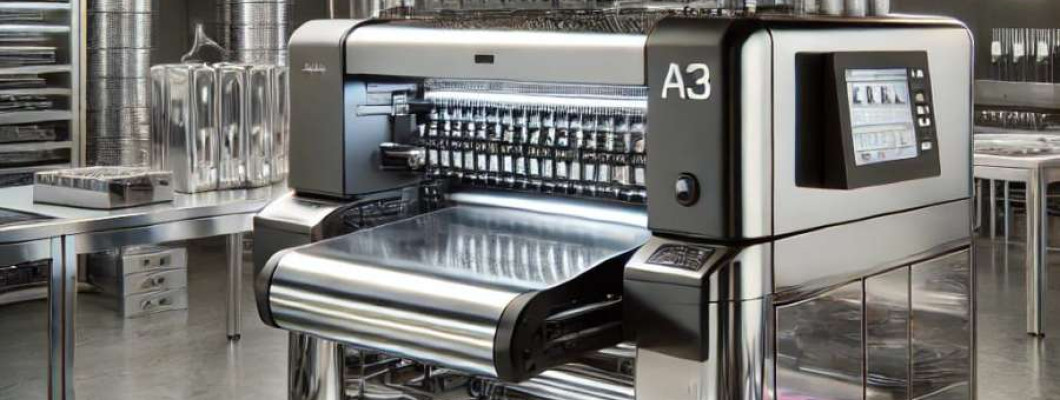
The Industrial Reality of Integrating A3 DTG Printer into High-Volume Production
In a modern t-shirt printing facility focused on scaling throughput, the introduction of an A3 DTG Printer T-shirt Printing Machine confronts operators with several operational challenges that are not immediately visible in marketing materials. Unlike traditional screen printing or larger format printers, A3 DTG models occupy a niche balancing high-detail direct-to-garment printing with relatively compact build size, necessitating reevaluation of workflow, labor utilization, and equipment uptime strategies.
During peak production cycles, bottlenecks emerge from the printer's printhead capacity, substrate handling speed, and ink system refills. The relatively small A3 platen size may require multiple passes or shirt repositioning for larger designs, adding manual intervention points. Printheads designed for precision often suffer from heat accumulation during extended runs, causing increased failure rates if cooling and maintenance protocols are insufficient. Noise and ventilation also impact worker comfort and safety compliance, factors that directly affect labor productivity and shift length.
Further, operational metrics like consumable usage rates, downtime due to cleaning cycles, and color calibration consistency must be continuously monitored. These parameters, often overlooked in initial capital budgeting, significantly affect cost-per-print and overall throughput. The hidden costs from underestimated maintenance and subtle print quality degradation create feedback loops that can stall scaling ambitions if not addressed proactively.
Technical Deep-Dive into Bottleneck Causality and Mitigation
Printhead Throughput versus Duty Cycle
The A3 DTG Printer typically uses piezoelectric printheads capable of placing ink droplets as small as 2 to 5 picoliters (pl), enabling fine detail but imposing heat dissipation limits. Continuous operation for more than 8 minutes at maximum resolution (commonly 1200 dpi) risks thermal throttling. Assuming a print area of 297 mm x 420 mm (A3 standard), a single-color print at 1200 dpi requires approximately 12 million dots. At a nominal print rate of 150 mm/s carriage speed and bidirectional printing, the print time approaches 120 seconds per shirt.
Calculating the duty cycle, the printer can theoretically output 30 shirts per hour in optimal conditions. However, actual throughput reduces when accounting for ink refill, drying time, and substrate loading/unloading. Thermal sensor data suggests that after 15 consecutive prints, printhead temperature can spike above 55°C, requiring a cooldown period of 5 minutes to prevent piezo crystal degradation. These constraints define an operational bottleneck at printhead level.
Ink System and Drying Constraints
The ink delivery system's volume per cartridge averages 220 ml per color with CMYK plus white cartridges standard. For high-opacity prints on dark garments, white ink usage spikes to 70% of total ink consumption. Ink viscosity changes with temperature, impacting jetting consistency and risking clogging if not actively managed. The printer's built-in UV or heat drying modules consume circa 500 Watts and must sustain 50°C ambient conditions to cure inks efficiently without substrate distortion.
Drying time per print averages 45 seconds, integrating into cycle time and further limiting throughput unless supplemental external dryers or conveyor systems are introduced. Without such additions, drying represents a firm operational bottleneck, especially for multi-color complex designs.
Comparative Table of Print Workflow Paths
| Parameter | Base A3 DTG Printer Workflow | Enhanced Automated Workflow |
|---|---|---|
| Print Area (mm) | 297 x 420 | 297 x 420 |
| Theoretical Max Throughput (shirts/hour) | 30 | 45 (with robotic loading) |
| Printhead Cooldown Frequency | Every 15 prints (~5 mins) | Every 30 prints (~3 mins with active cooling) |
| Ink Cartridge Capacity (ml) | 220 per color | 220 per color + Large tank options |
| Drying Time per Shirt (seconds) | 45 | 20 (with conveyor dryer) |
| Labor Intervention Points | Manual loading/unloading | Automated modular system |
Print Resolution Stability and Color Management
Maintaining stable 1200 dpi output requires precise droplet placement synchronization and routine printhead nozzle checks. The A3 DTG Printer includes sensor arrays for real-time drop volume adjustment responding to temperature and ink viscosity shifts. Color gamut is managed via ICC profile integration but varies with substrate texture and weave density, pushing the need for extensive substrate pre-testing. Failure to maintain these parameters results in color shifts and inconsistent sharpness, undermining brand integrity in batch production.
Physical Workspace and Environmental Factors
The printer's electrical draw averages 800 Watts during operation including heaters and fans. Optimal placement requires at least 1.2 m horizontal clearance for printhead access and 1.5 m vertical clearance for garment handling. Ambient temperatures above 30°C increase thermal stress on electronics. Noise levels peak at 65 dBA, necessitating hearing protection over long shifts. Dust and fiber accumulation in commercial textile environments can degrade printhead nozzles, requiring daily cleaning and filtration systems.
Scenario Analysis of Three Distinct Business Use Cases
Small Batch Custom Apparel Shop
In this use case, the printer's compact footprint and color fidelity excel. However, throughput limitations necessitate scheduling prints across shifts to meet demand. The hidden cooldown periods reduce peak productivity, requiring labor cost adjustments. White ink replenishment drives operational expenses upward, but custom design complexity justifies premium pricing.
Mid-Sized On-Demand Merchandiser
Here, scalability concerns dominate. Introducing minimal automation such as robotic loading halves manual labor, increasing output from 30 to 45 shirts/hour. Investment in an external conveyor dryer reduces drying bottleneck, improving cycle time by over 50%. Thermal management solutions extend printhead lifespan, reducing annual maintenance by approximately 20%. Operational bottleneck awareness steers capital budgeting choices.
Large Scale Industrial Printing Facility
The A3 DTG Printer fits niche roles in prototyping or specialty runs but lacks size and throughput for mass production. Here, it integrates as a high-fidelity backup to larger DTG systems. Understanding its operational bottlenecks informs scheduling and maintenance windows to prevent downstream delays. The printer’s precise color management supports complex textiles with micron-level detail requirements.
Expert FAQ on Operational Bottlenecks in the A3 DTG Printer
How can thermal stress on piezo printheads be quantitatively monitored and mitigated?
Thermal sensors embedded near the printhead monitor temperature. A threshold of 55°C signals imminent risk. Mitigation involves timed rest cycles and active cooling via fans or liquid cooling loops. Implementing PID controllers ensures temperature stability within ±2°C, extending printhead life expectancy by up to 30%.
What ink formulation adaptations reduce clogging during extended runs?
Ink formulations with optimized viscosity (~15-20 cP) and surface tension (~30-35 dyn/cm) reduce nozzle clogging. Incorporation of anti-settling additives like glycol ethers and dispersants maintain pigment suspension. Continuous mild ultrasonic agitation in reservoirs prevents sedimentation during long print cycles.
How does workflow automation impact hidden labor bottlenecks?
Automated loading/unloading systems reduce manual handling time from ~30 seconds to under 5 seconds per shirt, increasing net productivity by 20-30%. This shifts labor focus from mechanical operation to quality control and maintenance, lowering human error-induced downtime.
What environmental controls optimize print quality?
Maintaining ambient temperature between 20-25°C and relative humidity at 45-55% reduces static and ink drying inconsistencies. Installing HEPA filtration limits airborne particulates, thus preserving nozzle integrity and print fidelity.
How does substrate variability influence printer bottlenecks?
Different fabric textures and compositions affect ink absorption and drying times. Coarser weaves require slower printhead speeds and extended drying, decreasing throughput. Pre-treatment uniformity is critical; inconsistencies cause clogging and color shifts, manifesting as operational slowdowns.
Strategic Verdict and Recommendation
For the scalable business owner aiming to grow direct-to-garment printing capacity, the A3 DTG Printer T-shirt Printing Machine represents a technically sound solution when its operational bottlenecks are well-understood and actively managed. Its balance of print resolution, substrate versatility, and workflow footprint positions it as an industrial-grade asset, especially when integrated with complementary automation and environmental controls.
Proactive thermal management, ink chemistry optimization, and labor automation strategies transform potential bottlenecks into manageable variables, allowing throughput scaling without sacrificing quality or uptime. While not intended for mass-scale industrial line replacement, it fills a critical capacity tier for rapid prototyping and moderate batch orders with high fidelity. This makes the printer an indispensable tool within a layered production architecture in competitive market environments.