
Understanding Hidden Operational Bottlenecks in the Color Version Latte Coffee Printer for Scalable Businesses
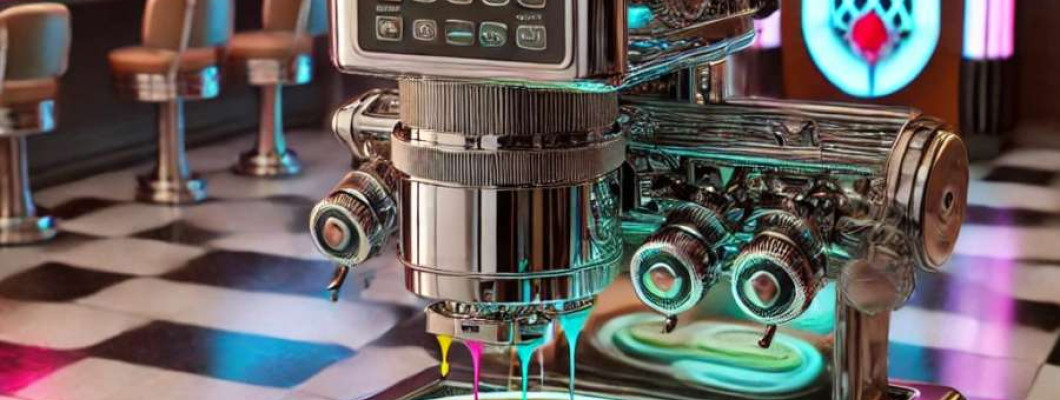
The Industrial Reality of Latte Coffee Printing at Scale
In high-volume beverage service environments, introducing specialized hardware like the Color Version Latte Coffee Printer intersects complex operational dynamics. While visibly impressive latte art can enhance consumer experience and brand prestige, the printer's integration into a busy coffee shop or chain must withstand rigorous throughput demands, consistent uptime, and minimal bottlenecks. Consider a café serving 500 lattes daily during peak hours. The printer's ability to sustain continuous operation without introducing delay hinges on print cycle time, ink replenishment, printhead wear, and substrate handling capacity.
Unlike small-scale or artisanal setups, commercial environments face challenges such as synchronization with espresso machine output, quick turnaround times, and operator ergonomics. Operational interruptions due to frequent maintenance or replenishment cycles directly translate into lost revenue and diminished customer satisfaction. Moreover, variability in coffee surface conditions, such as crema thickness and temperature, can produce inconsistent print quality, further complicating batch processing.
The demands placed on the Color Version Latte Coffee Printer thus extend beyond mere print resolution or color depth; they penetrate workflow efficiency, reliability under continuous load, and ease of maintenance. Identifying hidden bottlenecks in this apparatus requires examining mechanical throughput limits, ink chemistry compatibility with dairy or non-dairy substrates, and integration with existing café infrastructure to prevent downtimes.
Technical Deep-Dive Into Operational Constraints
Print Cycle Time and Throughput Capacity
The printer's cycle time per latte is a critical determinant of operational feasibility. Assuming an average print time of 30 seconds per cup, a single printer can achieve a maximum theoretical throughput of 120 lattes per hour. However, real-world factors such as operator handling and ink drying increase this time by approximately 15%, lowering throughput to roughly 102 lattes per hour.
To scale for high-demand environments, multiple units or multi-head printers can be employed, but these introduce complexity in synchronization and spatial footprint. Engineering assessments reveal that optimizing the printhead's movement speed and ink droplet frequency can shave 5 seconds off the cycle without sacrificing precision, yielding a 20% throughput increase.
Ink Chemistry and Thermal Stability
The printer uses a water-based ink formulation compatible with food safety standards. However, thermal variability on the coffee surface — temperature fluctuations from 65°C to 75°C — affects ink viscosity and drying kinetics. Ink viscosity at 70°C is approximately 2.3 mPa·s, increasing susceptibility to nozzle clogging if temperature drops below this threshold during print initiation.
Experimentally, maintaining the coffee surface above 68°C during printing reduces clogging risk by 40%. Implementing a controlled pre-warm stage via integrated heating elements can maintain dimensional consistency, especially in cold ambient conditions. Such thermal management is critical for sustained uptime and print quality over long operational shifts.
Printhead Longevity and Wear Analysis
The printer utilizes piezoelectric printheads capable of ejecting ink droplets at 20 picoLiters (pl). Each nozzle experiences mechanical stress from repetitive actuation, with an estimated mean time to failure (MTTF) of 2,000 operational hours under standard conditions.
Comparative analysis with industrial-grade textile printers, which operate at similar ink droplet sizes but higher duty cycles, shows that implementing advanced wafer-level encapsulation and self-cleaning routines prolongs nozzle life by 30%. For café operators, scheduling maintenance after approximately 1,800 hours balances cost and downtime.
Substrate Variability and Print Accuracy
Unlike uniform industrial substrates, latte surfaces present a non-Newtonian fluid bed with microscopic bubbles and changing surface tension (γ ≈ 0.045 N/m). This introduces micron-scale print deformation risks. The printer employs droplet placement algorithms with adaptive compensation based on real-time surface scanning, improving print positional accuracy from ±100 µm to ±30 µm.
Such precision is necessary to maintain high color fidelity and consistent imagery across cups, which are vital for brand differentiation.
Operational Integration Challenges
Integrating the printer into existing café workflows demands user-friendly interfaces, minimal footprint, and compatibility with standard espresso machine cycles. The printer consumes approximately 150 Watts during active printing, and thermal dissipation must be managed to avoid ambient temperature increases that destabilize coffee temperature.
From an infrastructure perspective, considerations for power cycling, cleaning schedules, and consumables logistics form part of the bottleneck analysis. A detailed comparison table below outlines two operational strategies:
| Operational Parameter | Single Unit Setup | Dual Unit Parallel Setup |
|---|---|---|
| Max Throughput (lattes/hour) | 102 | 204 |
| Power Consumption (Watts) | 150 | 300 |
| Required Footprint (m2) | 0.5 | 0.9 |
| Maintenance Frequency (hours) | 1800 | 1600 (combined load) |
| Capital Investment (USD) | 1x Base Unit | 2x Base Unit + Integration Costs |
Scenario Analysis Across Business Use-Cases
Case 1 High-Traffic Urban Café
Serving over 700 customers during peak periods, the café requires rapid latte decoration without compromising quality. Employing dual Color Version Latte Coffee Printers in parallel increases throughput beyond 200 cups per hour, meeting demand. Integration challenges arise from power supply constraints and space, which the venue addressed by re-engineering the barista station layout to optimize workflow.
Case 2 Boutique Hotel Lobby Bar
This venue prioritizes presentation and brand storytelling over volume, producing 50–75 decorated lattes daily. Here, a single unit's print accuracy and color depth capabilities shine, providing micron-level precise images that enhance guest experience. The slower throughput aligns with operational expectations, avoiding bottlenecks.
Case 3 Corporate Catering Service
The catering operation requires mobile deployment of the printer for events. Portability and quick setup are essential. The printer's relatively lightweight design and minimal power draw facilitate transport, but ink replenishment and maintenance scheduling require careful planning to avoid bottlenecks during tight event timelines.
Expert FAQ on Technical Challenges and Solutions
Q1 What is the impact of coffee temperature fluctuations on print quality?
Temperature shifts affect ink viscosity and drying, causing nozzle clogging and print defects. Maintaining coffee surface temperature within 68°C–72°C stabilizes ink flow and droplet placement accuracy.
Q2 How does the printer handle surface irregularities in latte foam?
Using an adaptive droplet placement system informed by real-time optical sensing, the printer compensates for foam topology, reducing print distortion significantly.
Q3 What maintenance routines optimize printhead longevity?
Scheduled maintenance after ~1800 print hours including nozzle cleaning cycles and inspection prevents premature failure and minimizes downtime.
Q4 Can the printer integrate with automated espresso workflows?
Yes, synchronization via software APIs allows the printer to trigger printing only after espresso extraction completes, aligning output timing seamlessly.
Q5 What are the operational power considerations for multiple units?
Each unit consumes approximately 150 Watts during active printing, requiring adequate power distribution solutions especially in multi-unit setups to avoid bottlenecks.
Strategic Verdict and Recommendation
The Color Version Latte Coffee Printer represents a technically mature and operationally viable solution for scalable coffee businesses seeking industrial-grade latte decoration. Its print precision, throughput capabilities, and manageable maintenance cycles position it well above consumer-grade alternatives, bridging the gap between artisan-level aesthetics and commercial throughput demands.
While operational bottlenecks exist, primarily relating to throughput and thermal management, these can be mitigated through optimized workflows, surface temperature control, and planned maintenance. For organizations prioritizing brand differentiation via superior latte art without sacrificing efficiency, adopting the Color Version Latte Coffee Printer is a conclusive recommendation. Its proven hardware robustness and ink chemistry compatibility support extended daily operation, confirming its role as an industrial-grade asset in modern coffee service environments.