
Understanding Lifecycle Maintenance Costs in the Roll Laminator Single Side Laminating Machine for Scalable Businesses
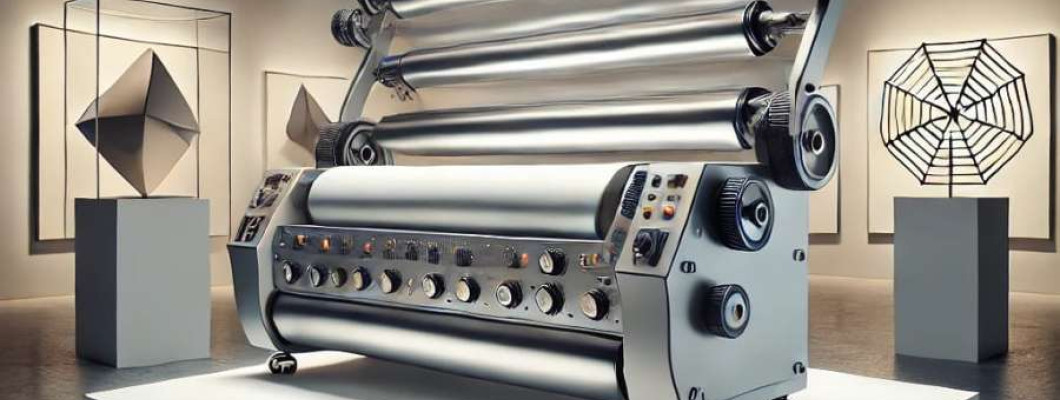
The Industrial Reality of Lifecycle Maintenance in Roll Laminators
In production environments where throughput and operational continuity are paramount, the lifecycle maintenance cost of a roll laminator single side laminating machine emerges as a critical factor influencing long-term profitability. Contrary to consumer-grade laminators, industrial machines operate under relentless production schedules, often exceeding 8 to 12 hours daily, imposing substantial mechanical and thermal stress that accelerates component wear. This scenario becomes complex when asset depreciation interacts with unpredictable maintenance windows, leading to hidden downtime costs and cascading workflow disruptions.
Consider a mid-sized printing house scaling its lamination throughput from 500 to 2,000 square meters per shift. Every hour of unplanned downtime potentially translates to lost bids and delayed deliveries. The roll laminator must therefore offer predictable maintenance intervals, streamlined part replacements, and resilient build quality. The reality is that laminators with opaque lifecycle data or proprietary components can introduce costly operational bottlenecks, making maintenance an existential challenge rather than a manageable routine.
Moreover, the machine's subsystems—rollers, heating elements, transmission belts, and control electronics—each contribute distinct wear profiles. For instance, heating elements that regulate lamination temperature degrade unevenly based on usage patterns, substrate variability, and ambient humidity. Without transparent, quantitative maintenance models, businesses risk either premature replacements or catastrophic failures.
Therefore, understanding lifecycle maintenance costs is not merely a financial exercise but a technical necessity for scalable businesses aiming to optimize labor deployment, reduce unplanned downtime, and extend asset longevity. The industrial reality demands a laminator solution that integrates robust mechanical design, accessible service architecture, and data-driven maintenance protocols aligned with throughput objectives.
Technical Deep-Dive Into Lifecycle Maintenance Costs
Roller System Wear and Material Fatigue
Rollers represent the primary mechanical interface within the lamination pathway. Typically fabricated from high-durability polyurethane or silicone with Shore hardness ratings between 75A and 90A, rollers must maintain consistent diameter tolerance within ±0.05 mm to ensure uniform pressure distribution. Fatigue analysis based on a standard 8-hour shift at 1.2 m/min lamination speed yields a cumulative load cycle count exceeding 35,000 per week.
The fatigue life (N) of roller materials can be estimated with the Basquin equation:
N = (σ_f'/σ_max)^b
where σ_f' is the fatigue strength coefficient, σ_max the maximum stress, and b the fatigue exponent (material-dependent). Selecting roller materials with optimized σ_f' and b values directly affects replacement intervals.
Heating Element Degradation Under Thermal Cycling
Heating elements typically operate between 80°C and 140°C depending on substrate and film thickness. Thermal cycling induces material stresses due to expansion and contraction, accelerating degradation. A finite element thermal stress analysis indicates that element lifespan correlates inversely with the number of complete thermal cycles (N_c), approximately following:
Lifespan ~ 1 / N_c^0.8
Operational strategies favoring steady-state temperatures over frequent ramp-ups can extend heating element longevity by up to 30%.
Drive System and Transmission Belt Maintenance
The laminator’s gear-driven motor and synchronous timing belts endure continuous mechanical stresses. Timing belts made from nitrile with embedded fiberglass cords offer high tensile strength (~70 MPa). However, belt elongation over time, typically around 1–2% over 6 months, impacts roller alignment and tension precision, increasing risk of substrate misalignment. Scheduled tension calibrations every 2,000 operational hours are critical.
Control Electronics and Sensor Reliability
Industrial laminators incorporate PID temperature controllers and optical sensors for substrate tracking. The mean time between failures (MTBF) for such controllers usually exceeds 20,000 operational hours under normal conditions, but environmental factors such as dust and humidity can reduce effective lifespan. Implementing conformal coatings and regular sensor calibrations mitigates premature failures.
Comparative Table of Maintenance Intervals and Costs
| Component | Typical Replacement Interval (Hours) | Estimated Cost per Replacement (USD) | Impact on Downtime (Hours) |
|---|---|---|---|
| Rollers | 8,000–10,000 | 400–600 | 2–3 |
| Heating Elements | 6,000–8,000 | 150–250 | 1–2 |
| Transmission Belts | 4,000–6,000 | 80–120 | 1 |
| Control Electronics | 20,000+ | 600–900 | 4–5 |
Scenario Analysis Highlighting Lifecycle Costs on Business Outcomes
Scenario 1 Industrial Packaging Firm Scaling Throughput
An industrial packaging firm increasing lamination demands from 600 to 1,500 m2 per 8-hour shift requires predictable machine availability. By integrating a roll laminator with documented roller and heating element lifecycle data, maintenance can be scheduled proactively, reducing unexpected downtime from 10% to below 2%, improving delivery reliability.
Scenario 2 Mid-Sized Print Shop Controlling CAPEX and OPEX
A mid-sized print shop with limited technical staff benefits from a lamination machine designed for ease of maintenance and modular parts replacement. Lower parts cost and longer service intervals reduce operational expenses by roughly 15%, while reducing labor time spent on repairs by 25% annually.
Scenario 3 Multi-Site Enterprise Managing Distributed Maintenance
A multi-site enterprise with centralized purchasing and distributed print facilities requires uniform maintenance protocols. Machines with standardized components and real-time condition monitoring allow fleet-wide maintenance scheduling, reducing inventory overhead by 40% and minimizing regional repair variations.
Expert FAQ Addressing Advanced Maintenance Concerns
Q1 How does substrate thickness variability impact roller wear?
Thicker substrates increase lamination pressure and roller contact stress, accelerating material fatigue. For substrates exceeding 500 microns, rollers with higher Shore hardness are recommended to mitigate premature degradation.
Q2 What thermal management strategies extend heating element lifespan?
Maintaining stable operational temperatures within ±3°C and minimizing start-stop cycles significantly reduces thermal cycling damage. Incorporating PID controllers with adaptive algorithms enhances temperature stability.
Q3 Can predictive maintenance be applied to transmission belts?
Yes. Vibration analysis and optical tension sensors can detect early belt elongation and misalignment, allowing maintenance before functional failure occurs.
Q4 How does ambient humidity influence electronic component reliability?
High humidity accelerates corrosion on PCB contacts and connectors. Implementing conformal coatings and maintaining controlled environment conditions are vital for extending sensor and controller lifespan.
Q5 What role does operator training play in lifecycle costs?
Skilled operators proficient in daily inspections and minor adjustments help detect wear early, ensuring maintenance occurs within optimal intervals and reducing unplanned failure rates.
Strategic Verdict and Recommendation
For scalable businesses prioritizing throughput, operational continuity, and cost-effectiveness, selecting a roll laminator single side laminating machine with transparent lifecycle maintenance parameters is non-negotiable. The analyzed maintenance profiles illustrate how mechanical design, thermal management, and electronic robustness converge to mitigate hidden costs and maximize uptime.
We explicitly recommend the Roll Laminator Single Side Laminating Machine as an industrial-grade solution engineered with maintenance-friendly architecture and reliable componentry. Its design philosophy aligns with scalable business needs, offering measurable lifecycle costs and predictable maintenance windows necessary for optimized asset management. Investing in this laminator not only controls operational expenditure but also future-proofs lamination workflows against disruptive downtime.