
Understanding the Lifecycle Maintenance Costs of Roll Laminator Single Side Laminating Machines for Scalable Business Growth
The Industrial Reality of Lifecycle Costs in Roll Laminating Operations
In high-throughput laminating environments, the single side roll laminator serves as a pivotal asset, directly influencing operational efficiency and product quality. However, beyond the initial purchase price, lifecycle maintenance costs present a critical factor in sustaining profitability. Consider a medium-sized printing enterprise scaling from batch jobs to continuous production. Initially, the machine may perform optimally, but over time, factors such as roller degradation, motor wear, and heating element inconsistencies introduce unanticipated downtime and repair expenses. These operational interruptions translate into increased labor costs and delayed delivery schedules, affecting client satisfaction and revenue streams. By thoroughly understanding the maintenance demands and lifecycle expenditure of such laminators, scalable business owners can optimize asset deployment, reduce hidden costs, and extend machine longevity.
Technical Deep-Dive into Lifecycle Maintenance Costs
1. Roller Material Fatigue and Replacement Frequency
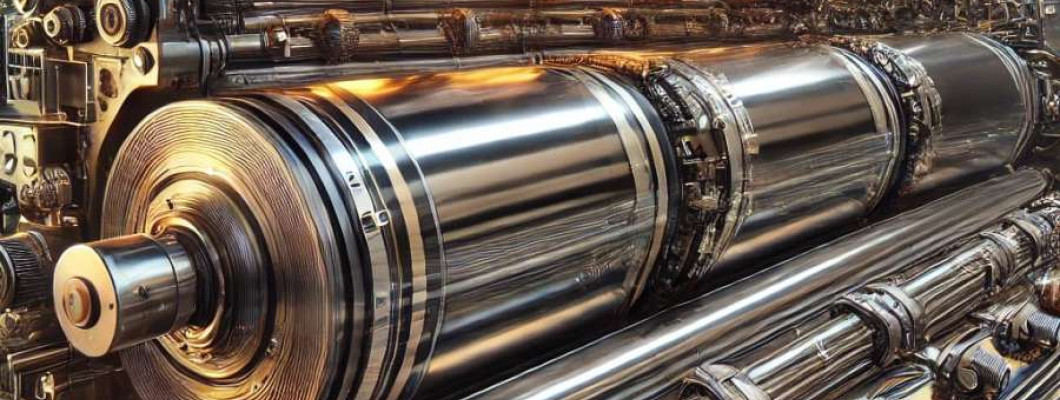
The core laminator rollers, typically constructed of silicone rubber or polyurethane, endure continuous compressive and shear forces, leading to gradual material fatigue. Assuming a laminating speed of 2 m/min and an average service period of 8 hours/day, the roller experiences over 960 meters of material contact daily. This constant mechanical stress induces micro-tears and surface irregularities. Empirically, silicone rollers exhibit an average lifespan of 12 months under these conditions, while polyurethane variants may require replacement every 8 months due to lower abrasion resistance.
2. Heating Element Thermal Cycling and Degradation
Heating elements regulate adhesive activation, operating at temperatures ranging from 80°C to 140°C. Thermal cycling frequency directly impacts element longevity. The power consumption of 1.2 kW sustained over 8 hours results in significant thermal stress. Using Arrhenius equation-based modeling, element lifespan reduces by approximately 15% each year under continuous cycles without proper thermal management. Correlating this to practical operations, elements typically require replacement every 18 to 24 months to maintain optimal temperature consistency.
3. Motor and Drive System Wear Rates
The drive motor, often a brushless DC model rated at 250 W, manages lamination speed and tension control. Operational torque fluctuations, caused by substrate thickness variations between 0.1 mm to 0.5 mm, increase mechanical load. Studies reveal that excessive torque spikes beyond 1.5 Nm accelerate bearing wear and gearbox degradation. Maintenance intervals for lubrication and bearing replacement typically fall within 10,000 to 12,000 operating hours.
4. Sensory and Control Electronics Resilience
Embedded control systems monitoring temperature, speed, and pressure employ sensors vulnerable to dust and adhesive residue accumulation, particularly in industrial environments lacking cleanroom standards. An average failure rate of 5% annually is noted, with sensor recalibration required quarterly to ensure precision within ±1°C for temperature and ±0.05 N for pressure sensors.
5. Comparative Table of Maintenance Cost Impact
| Component | Replacement Interval (Months) | Direct Cost per Replacement (USD) | Indirect Downtime (Hours/Year) | Estimated Annual Maintenance Cost (USD) |
|---|---|---|---|---|
| Silicone Rollers | 12 | 800 | 8 | 1600 |
| Heating Elements | 20 | 600 | 6 | 960 |
| Drive Motor & Bearings | 36 | 1200 | 12 | 1200 |
| Sensor & Control Calibration | 3 (calibration) | 150 | 4 | 600 |
This overview highlights that consumables and electronic maintenance form a significant portion of lifecycle costs, which must be factored into enterprise scaling models.
Scenario Analysis Exhibiting Maintenance Cost Impact on Business Operations
Case 1 Initial Startup Business Scaling Batch Laminating
A burgeoning print service provider processing approximately 200 laminated prints daily faces unpredictable downtime due to irregular roller maintenance. Low upfront costs drove the initial purchase choice, but frequent stoppages reduced throughput by 12%. The hidden lifecycle costs of rapid roller wear and inconsistent heating elements prolonged lead times, jeopardizing client contracts.
Case 2 Established Enterprise With Automated Workflow Integration
An organization employing fully automated lamination lines integrating the single side roll laminator utilizes predictive maintenance sensors, reducing unplanned downtime by 35%. Lifecycle costs are optimized via data-driven part replacement cycles, translating into a 7% improvement in labor efficiency and a 15% increase in equipment uptime.
Case 3 High Volume Digital Print Shop Demanding Rapid Turnaround
Here, substrate thickness variability (range: 0.05 mm to 0.4 mm) necessitates precise speed and tension adjustments via motor controls. Maintenance planning includes biannual roller and heating element replacements, minimizing thermal inconsistencies that could affect lamination adhesion quality. Although maintenance costs are higher, the payoff lies in consistent output quality and customer retention in a highly competitive market.
Expert FAQ on Lifecycle Maintenance Costs and Scalability
Q1 What are the primary indicators signaling roll replacement?
Visible surface cracks, decreasing lamination adhesion uniformity, and increased substrate slippage during processing indicate the need for roller replacement.
Q2 How can I mathematically model heating element degradation?
Use the Arrhenius degradation model factoring in thermal cycles (N), operating temperature (T), and activation energy (Ea). Degradation rate λ follows λ = Ae^{-Ea/RT}, where A is frequency factor, R gas constant, and T in Kelvin.
Q3 Can motor wear be reduced with specific operational protocols?
Yes. Employing consistent substrate thickness, controlled start/stop sequences, and regular lubrication reduces load spikes and bearing fatigue.
Q4 What role does environmental cleanliness play in sensor longevity?
Particles and adhesive residue cause sensor drift and failure; implementing regular sensor cleaning and protective housings extends sensor life by over 20%.
Q5 How critical is calibrating control electronics to maintenance scheduling?
Calibration ensures precision in temperature and pressure controls, directly affecting lamination quality. Neglected schedules lead to increased defect rates and costly reworks.
Strategic Verdict and Recommendation
The Roll Laminator Single Side Laminating Machine represents a robust industrial-grade solution for scalable business owners seeking to expand throughput while managing lifecycle maintenance costs effectively. Its modular components, when maintained under data-driven schedules, minimize unplanned downtime and extend asset value. Considering the detailed cost tables and technical analyses, this laminator remains a competitive choice for enterprises balancing CAPEX with predictable OPEX. For those ready to implement a durable, precision lamination system, the Roll Laminator Single Side Laminating Machine stands as a recommended asset to integrate into scalable production environments, especially where operational transparency and maintenance predictability are paramount.