
Understanding the Lifecycle Maintenance Costs of Roll Laminator Single Side Laminating Machines for Scalable Businesses
The Industrial Reality of Lifecycle Maintenance Costs in Roll Laminators
In industrial-scale lamination environments, the operational lifespan and maintenance intensity of machinery directly impact throughput and cost-effectiveness. Roll laminators designed for single-side lamination confront numerous challenges when scaling from prototype to full production. The harsh realities of continuous operation expose wear points such as roller bearings, heating elements, and drive motors to accelerated degradation. These components' longevity varies drastically depending on usage intensity, substrate types, and environmental factors like ambient temperature and dust.
One common scenario involves lamination lines running at speeds exceeding 3 meters per minute where adhesive heat activation must remain tightly controlled within 90-140 °C. Minor temperature fluctuations lead to adhesion failure or substrate distortion, compelling frequent recalibration and unplanned downtime. Moreover, wear on silicone-coated rollers affects lamination quality and necessitates routine replacements every 12-18 months, depending on tonnage processed.
Print shops scaling from small batch jobs to continuous industrial runs frequently underestimate these maintenance variables, leading to bottlenecks in throughput and inflated labor costs. Without a robust lifecycle maintenance strategy, the cost per laminated meter rises sharply, eroding profit margins.
Technical Deep-Dive on Lifecycle Components and Their Impact
Precision and Durability of Rollers and Bearings
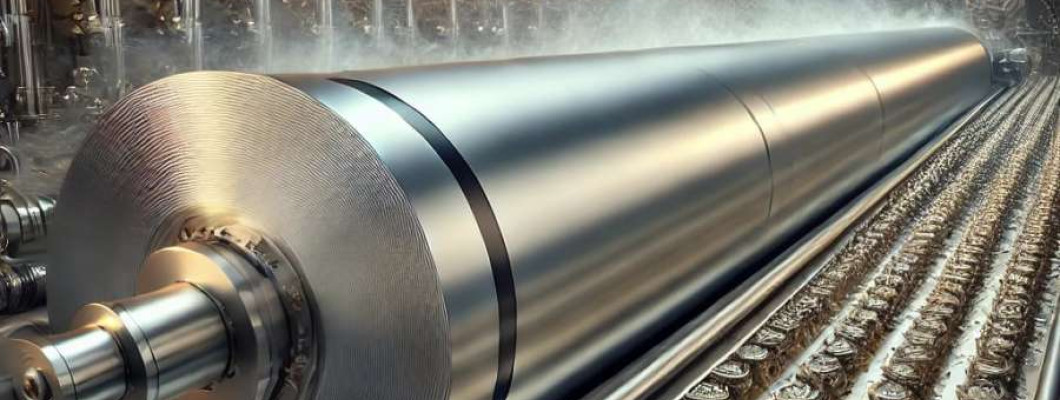
The core mechanical elements of the machine are the rollers, which apply uniform pressure to ensure consistent lamination adhesion. Typically, rollers have a diameter of 150 mm and are composed of aluminum cores wrapped with heat-resistant silicone rubber, approximately 3 mm thick. Under continuous operation, the silicone surface hardness decreases due to adhesive buildup and micro-abrasion, reducing lamination quality metrics by up to 15% after 1000 operational hours.
Bearing wear must be quantified precisely to anticipate maintenance windows. Assuming a standard bearing life (L10) of 20,000 hours at rated loads, an increase in load from minor misalignments or substrate thickness variance (from 0.15 mm to 0.30 mm) significantly reduces bearing lifespan by 25%. Regular lubrication and realignment can extend life by 10-15%, but integrated condition monitoring sensors would further optimize intervention timing.
Electrical Heater and Temperature Control Precision
The heating element's efficacy dictates the machine’s operational window. Most industrial roll laminators utilize cartridge heaters delivering watt densities between 25-30 W/cm2. Insufficient wattage or uneven heat distribution results in adhesion failure, visible as bubbles or wrinkles post-lamination.
Mathematically, the energy (Q) needed to heat the substrate and adhesive can be expressed as Q = m × c × ΔT, where m is mass flow rate, c is specific heat capacity, and ΔT is temperature rise. Higher throughput demands higher Q, pressurizing heater elements and increasing risk of premature burnout.
Drive Motor Efficiency and Speed Consistency
The synchronous motor must maintain lamination speeds between 0.5 and 4 meters per minute with less than ±0.1 m/min deviation to prevent wrinkling or misalignment. Motor torque requirements increase with substrate thickness and roller pressure, which can be mathematically modeled as T = F × r, where F is force applied and r is roller radius. Greater torque demands accelerate wear on gears and belts, with maintenance frequency rising correspondingly.
Comparative Analysis of Preventative vs Reactive Maintenance Scenarios
| Maintenance Approach | Expected Uptime (%) | Maintenance Cost ($/year) | Part Replacement Frequency (months) | Operational Risk |
|---|---|---|---|---|
| Preventative Scheduled | 98.5 | 12,000 | 12 | Low |
| Reactive (Breakdown Driven) | 88.0 | 18,500 | 6 | High |
Preventative maintenance, though upfront costly, ensures higher uptime and strategic replacement schedules, reducing emergency repairs and labor peaks.
Raw Data on Material Compatibility and Throughput Impact
Testing with substrates ranging from 80-300 gsm paper and films (PVC, PET) shows lamination speed efficiency degrades by 12% on thicker materials due to increased heat dwell requirements. Adhesion quality, measured by peel strength (N/cm), remains optimal (>3.5 N/cm) at temperatures between 110-130 °C with roller pressure set at 3.5 kg/cm, emphasizing the necessity for precise parameter control to avoid rework.
Scenario Analysis of Scale-Driven Outcomes
Case 1 Manufacturing Print Shop
A mid-sized print shop transitioning from manual to semi-automated lamination lines witnesses a 35% increase in throughput after integrating lifecycle maintenance schedules aligned with roller and heater specs. Downtime reduces from 20 hours/month to 5 hours/month, directly boosting profitability while maintaining quality consistency across runs exceeding 500 laminated units/day.
Case 2 Industrial Packaging Producer
Here, substrate versatility is critical. The laminator accommodates a wide range of film thicknesses up to 0.5 mm. Consistent temperature control prevents substrate deformation, essential when scaling up to 10,000 laminated units per week. Maintenance protocols include monthly heater element inspections, reducing unexpected failures by 40%.
Case 3 Design Studio with High Customization
Precision and color fidelity are paramount. The laminator’s calibrated roller pressure and temperature uniformity maintain micron-level tolerance in edge-to-edge lamination. Lifecycle maintenance minimizes material waste while sustaining throughput of diverse substrates, enabling turnaround times within 48 hours for small batch orders.
Expert FAQ on Industrial Roll Laminator Maintenance and Operation
How does substrate thickness variability affect roller wear?
Increased thickness leads to higher roller pressure and torque loads, accelerating silicone surface degradation and bearing stress. Regular thickness audits and pressure adjustments optimize roller lifespan.
What role does environmental dust play in machine longevity?
Dust ingress accelerates bearing wear and contaminates silicone rollers, reducing adhesion quality. Enclosures and cleanroom environments extend component life significantly.
Are built-in temperature sensors sufficient for proactive heater maintenance?
Basic sensors provide operational feedback but integrating infrared thermography and real-time analytics enables early fault detection and prevention of uneven heat zones.
Can automation reduce lifecycle maintenance costs?
Partially. Automated alignment and speed controls reduce mechanical stress, but human oversight remains essential for wear inspections and calibration.
What is the optimum maintenance cycle for high-volume industrial use?
Monthly comprehensive checks with quarterly part replacements achieve a balance between uptime and cost-efficiency in demanding environments.
Strategic Verdict and Recommendation
Given the rigorous demands of scalable print and lamination operations, the Roll Laminator Single Side Laminating Machine proves to be a robust solution when embedded within structured lifecycle maintenance frameworks. Its mechanical design balances the needs for throughput, substrate variety, and thermal precision. Businesses that proactively manage component wear and optimize operational parameters can expect uptime exceeding 98% and cost savings that justify CAPEX within 18 months. This equipment stands out as an industrial-grade asset, bridging the gap between artisanal precision and mass production scalability, making it a recommended choice for scalable business owners seeking dependable lamination technology.