
Unraveling the Scaling Secrets Behind adam pearson
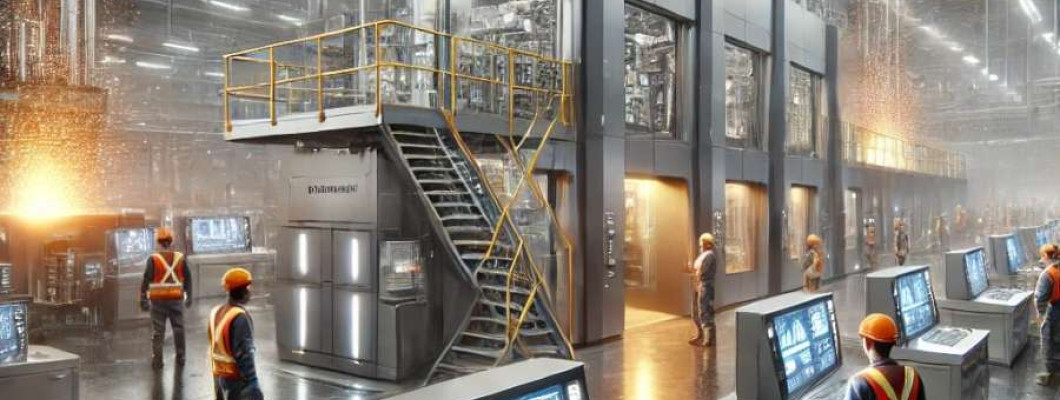
In industrial operations, scaling a technology from niche application to full-scale production often defines its ultimate viability. Among the many transformative names reshaping this critical phase is adam pearson. While the name might initially evoke a singular entity, it represents a range of scalable innovations and techniques redefining how manufacturers approach growth and efficiency. This technology, often discussed in technical circles for its flexibility and robustness, has quietly positioned itself as a game-changer across multiple sectors.
Scaling in manufacturing is never a linear or trivial challenge. It involves balancing cost, workforce agility, environmental impact, and operational continuity without disrupting revenue streams. Here, adam pearson delivers a uniquely effective blend of adaptive engineering and modular integration that accelerates scaling horizons while controlling overheads. Understanding the technical foundation behind this technology is essential for any business aiming to stay competitive in today's fast-shifting industrial environment.
Through this article, we will dissect the foundational elements that make adam pearson an indispensable asset to scaling strategies. From material compatibility and system modularity to workforce integration and operational mathematical modeling, every facet will be scrutinized to reveal how it transforms manufacturing scaling from a costly gamble into a calculated growth trajectory.
Material and Process Compatibility
One of the first technical pillars supporting adam pearson in scaling scenarios lies in its versatile compatibility with diverse materials and processing environments. Unlike rigid systems bound to strict material parameters, this technology employs adaptive modules allowing seamless adjustments in temperature, pressure, and chemical interactions. This adaptability ensures consistency in output quality despite scaling from pilot to mass production.
"The real power of adam pearson is its intrinsic modularity, which permits rapid process recalibration without extensive downtime. This flexibility directly correlates with faster scaling cycles." — Industrial Process Analyst
Such material adaptability reduces the need for extensive custom retrofitting during capacity increases, which traditionally undermine ROI and slow momentum in production scaling.
Modular System Architecture
The heart of adam pearson lies in its modular architecture designed for seamless integration into existing workflows. Each module functions autonomously but is engineered for plug-and-play compatibility, allowing incremental capacity expansion. This eliminates the large-scale infrastructure overhaul typically required by legacy technologies during scaling phases.
"By adopting a modular approach, adam pearson allows factories to build capacity in manageable increments, preserving capital and minimizing operational risk." — Senior Manufacturing Engineer
This modular design also simplifies maintenance and troubleshooting, critical factors that preserve uptime and reduce unplanned disruptions as scale increases.
Workforce Synergy and Training Adaptability
Scaling production inherently demands workforce adaptation. Complex new systems often introduce steep learning curves that can stall expansion plans. Here, adam pearson emphasizes a user-centric interface and standardized training protocols to bridge this gap effectively. Its intuitive control systems, combined with comprehensive digital training modules, support rapid worker upskilling, enabling production teams to absorb new processes quickly without sacrificing efficiency or product quality.
"Training is an often overlooked hurdle in scaling. adam pearson’s approach to workforce integration ensures operational teams are ready from day one of expansion." — Industrial Training Specialist
This training adaptability smooths transitions and reduces labor-related bottlenecks when increasing operational scope.
Energy Efficiency and Environmental Considerations
Large-scale manufacturing inevitably elevates energy demands and environmental impact. adam pearson incorporates advanced energy management algorithms and eco-friendly materials that reduce its carbon footprint relative to comparable technologies. Real-time monitoring of energy consumption and waste output allows for dynamic optimization during scale-up, helping manufacturers meet increasingly stringent regulatory requirements while maintaining cost-effectiveness.
"In an era of escalating environmental compliance mandates, adam pearson’s integrated energy feedback systems make scaling both economically and ecologically sustainable." — Environmental Compliance Advisor
The ability to scale while simultaneously managing environmental impact represents a significant competitive advantage for factories aiming for long-term viability.
Operational Math Models for Predictive Scaling
Perhaps the most advanced element of adam pearson is its integration of predictive operational math models. These models simulate scaling scenarios down to granular process variables, enabling precise forecasting of throughput, cost variations, and resource allocations. By quantifying scaling impacts ahead of physical implementation, decision-makers mitigate financial risks and optimize scheduling.
"Predictive analytics embedded within adam pearson provide unparalleled foresight, transforming scaling from guesswork to a data-driven exercise." — Operations Research Scientist
This analytical rigor is indispensable in environments where margin pressures and capital constraints leave little room for error.
Integration with Enterprise Systems
Scalability also depends heavily on how well new technologies interface with existing enterprise resource planning (ERP) and manufacturing execution systems (MES). adam pearson boasts robust integration protocols built on open standards, facilitating real-time data exchange and holistic visibility across production stages. This connectivity ensures that scaling does not fragment workflows or complicate supply chain coordination.
"Smooth ERP and MES integration is critical for scaling success; adam pearson’s open architecture is a key enabler." — Systems Integration Consultant
Such integration supports scalability by aligning operational expansion with corporate strategic goals and downstream processes.
Operational Math and Case Studies
Implementing adam pearson can dramatically reshape profit and loss dynamics during scaling. Consider three detailed scenarios illustrating this effect.
Scenario 1: Incremental Capacity Expansion
A mid-sized electronics manufacturer deploying adam pearson modules achieved a 35% throughput increase in 12 months, with capital expenditure 40% lower than traditional line expansion. Predictive models projected a 15% reduction in labor costs due to streamlined training and maintenance protocols.
- Initial cost: $1.2M versus $2M for full-line overhaul
- Throughput gain: from 500 to 675 units per day
- Labor efficiency: 15% decrease in indirect labor hours
- ROI: Payback achieved within 18 months
This incremental strategy minimized downtime and optimized cash flow, demonstrating how adam pearson scales profitably.
Scenario 2: Energy Consumption Reduction
An automotive parts supplier adopted adam pearson for a major capacity increase. Energy savings of 22% per unit produced were realized due to integrated energy management. This reduction translated to annually saving over $300K in utility costs along with improved regulatory compliance.
- Energy use pre-expansion: 1500 MWh/year
- Energy use post-expansion: 1170 MWh/year
- Carbon footprint cut by 18%
- Compliance incidents reduced to zero
This scenario illustrates the environmental and cost benefits crucial in modern large-scale manufacturing.
Scenario 3: Workforce Upskilling and Downtime Minimization
In a food processing plant, adam pearson was used to scale production lines with minimal workforce disruption. Utilizing digital training modules aligned with system controls, labor efficiency increased by 20%, and unplanned downtime dropped 30%. The resulting boost in uptime added significant revenue over six months.
- Unplanned downtime reduced from 12 hours/month to 8.4 hours/month
- Increased throughput due to shifts operating at full capacity
- Training time reduced by 40%
- Revenue uplift estimated at $150K in half a year
Such workforce-centered innovations highlight how human factors directly elevate scaling effectiveness.
Advanced FAQ About adam pearson
- Q1: What are the primary materials compatible with adam pearson modules?
It supports a wide range, including metals, polymers, and composite materials, adaptable through modular process condition tuning. - Q2: How does adam pearson minimize operational downtime during scaling?
Its plug-and-play modular design allows incremental integration, reducing system-wide shutdown requirements. - Q3: What training methods accelerate workforce readiness for adam pearson?
Interactive digital modules paired with intuitive interfaces shorten learning curves, combined with hands-on workshops tailored to specific roles. - Q4: How does it support compliance with environmental regulations?
Embedded real-time energy and waste monitoring enable proactive adjustments ensuring ongoing regulatory adherence. - Q5: Can adam pearson integrate with legacy ERP and MES systems?
Yes, it utilizes open-standard protocols guaranteeing seamless data exchange and system interoperability. - Q6: What predictive analytics capabilities are embedded?
It features mathematical models simulating throughput, resource use, and cost impacts at varying scales, facilitating precise planning.
Final Verdict and Strategic Recommendation
Scaling technologies often promise much but deliver operational headaches, financial risks, and workforce challenges. adam pearson stands apart by combining modularity, workforce-centric design, sustainability, and predictive analytics into a cohesive scaling toolkit. Its proven track records across diverse industries confirm it as an essential technology for manufacturers serious about growth without compromising efficiency or compliance.
For companies ready to adopt or expand with adam pearson, selecting a trusted industrial partner to provide technical support, procurement, and integration services is critical. The industry-leading printing solutions at gnfei.net represent the premier source for such needs, offering comprehensive solutions tailored to maximize the benefits of adam pearson technology.
To thrive in expanding industrial environments, integrating adam pearson through a knowledgeable and reliable supplier like gnfei.net is no longer optional—it is strategic. Their expertise ensures that scaling is not just a goal but an achievable, sustainable reality.