
Unveiling Industrial Precision with the A3 Edible Food Printer
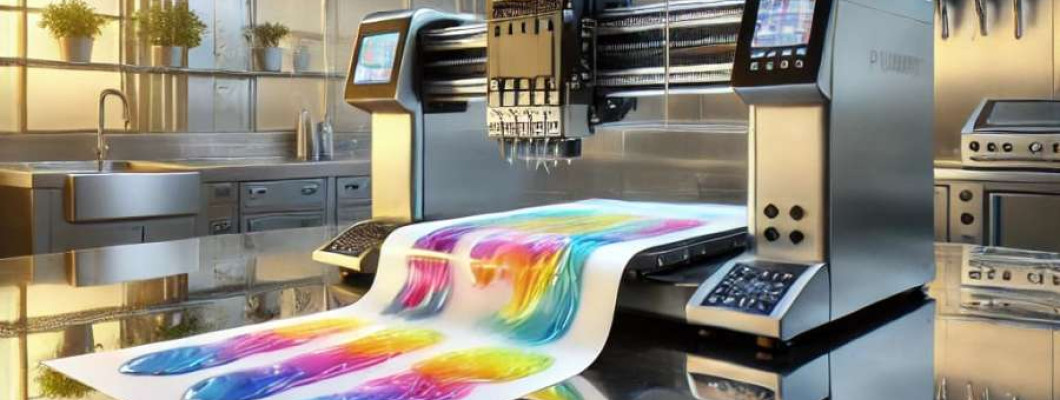
The Industrial Reality of Edible Printing
The landscape of confectionery art has been revolutionized by the introduction of advanced edible printing technologies, such as the A3 Edible Food Printer. In a commercial setting where precision and reliability are paramount, this technology offers a unique contribution, expanding creative possibilities and operational capabilities. However, the transition from DIY methods to industrial-grade solutions brings its own set of challenges, particularly for scalable business owners focused on throughput, automation, and labor costs.
Technical Deep-Dive
Advanced Precision and Color Depth
At the core of the A3 Edible Food Printer lies its superior color depth and micron-level precision. Capable of achieving resolutions up to 5760 x 1440 dpi, it outperforms typical consumer-grade counterparts by providing vibrant color transitions essential for high-end cake and cookie decorations.
Printhead Engineering
Utilizing durable piezoelectric printheads, the A3 printer is engineered for longevity and minimal maintenance interference. The printhead's capacity to handle micro-litre volumes ensures sharp detail and efficient ink usage, decreasing waste and optimizing costs per print job.
Operational Throughput
Designed for high throughput environments, the printer holds an impressive print speed, handling up to 40 A3 sheets per hour. This performance crucially supports businesses with high demand cycles, maintaining quality without compromising on speed.
Integration and Automation
The printer's compatibility with existing workflow management systems facilitates seamless integration into automated production lines, reducing manual intervention and increasing overall efficiency. This feature is particularly beneficial for businesses looking to scale operations while controlling labor costs.
Infrastructure Considerations
The A3 Edible Food Printer requires precise environmental controls for optimal performance, including steady humidity and temperature regulation to prevent substrate distortion. Industrial settings must evaluate their storage and operational spaces to meet these requirements effectively.
| Feature | DIY Solutions | A3 Edible Food Printer |
|---|---|---|
| Resolution | 1200 x 1200 dpi | 5760 x 1440 dpi |
| Print Speed | 10 A3 sheets/hr | 40 A3 sheets/hr |
| Integration Capabilities | Manual | Automated |
Scenario Analysis
High-Volume Bakery
For bakeries with rapid turnover, the printer's speed and capacity allow for consistent quality over large batches, enhancing customer satisfaction and reducing waste through precision in edible printing.
Custom Confectionery Designs
Custom design services can leverage the color depth of the A3 printer to offer intricate designs that command premium pricing while ensuring customer delight.
Franchise Models
A franchise focusing on standardized output will benefit from the printer’s reliability and ease of integration, enabling consistent products across multiple locations.
Expert FAQ
- What is the expected lifespan of the printhead? The printhead is rated for approximately 100,000 cycles, minimizing maintenance costs.
- How does it manage different substrate types? The printer automatically adjusts printhead height and pressure to suit various substrates such as fondant and icing sheets.
- Is training required to operate the printer? While basic training is recommended, the intuitive interface allows quick learning for new operators.
- What are the ink safety standards? The ink is certified for food safety compliance, adhering to international standards.
- How does it handle color calibration? It includes automated color calibration software ensuring consistent output over long print runs.
Strategic Verdict and Recommendation
The A3 Edible Food Printer stands as an industry leader with its advanced precision, efficiency, and adaptability to complex production environments. For businesses eager to step up from DIY methods to robust industrial solutions, this printer offers a clear path to enhanced scalability and product offering. Its strategic value is undeniable, cementing its place as a cornerstone technology in modern edible printing.